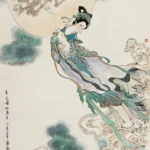
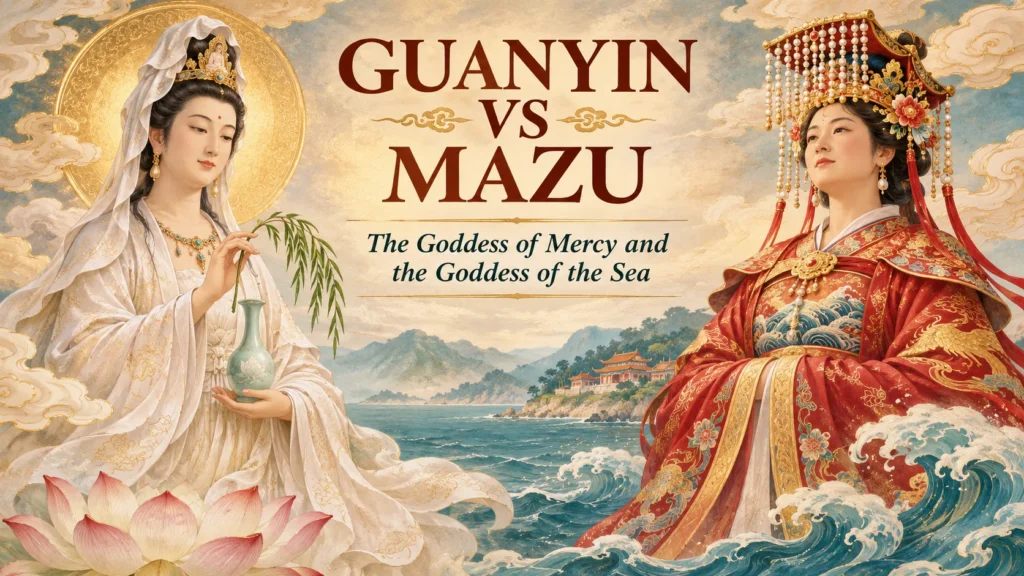
Guanyin and Mazu are two of the most widely revered female figures in Chinese religious culture. Both are associated with compassion, protection, miraculous rescue, and the safety of people facing danger at sea. Their images sometimes appear in the same temples, and certain traditional legends even suggest that Mazu is a manifestation of Guanyin.
Yet their similarities conceal an important distinction. Guanyin originated within Mahayana Buddhism, while Mazu developed from the worship of a legendary woman from the southeastern coast of China. Their relationship illustrates how Buddhist teachings, local religious traditions, maritime culture, and popular devotion have interacted throughout Chinese history.
What is the difference between Guanyin and Mazu?
Guanyin is the Buddhist bodhisattva of compassion, known in Sanskrit as Avalokiteshvara. Mazu is a Chinese sea goddess traditionally identified with Lin Moniang, a woman believed to have lived in tenth-century Fujian. Although both are invoked for protection and some folk traditions connect their identities, they have different historical origins and religious roles.
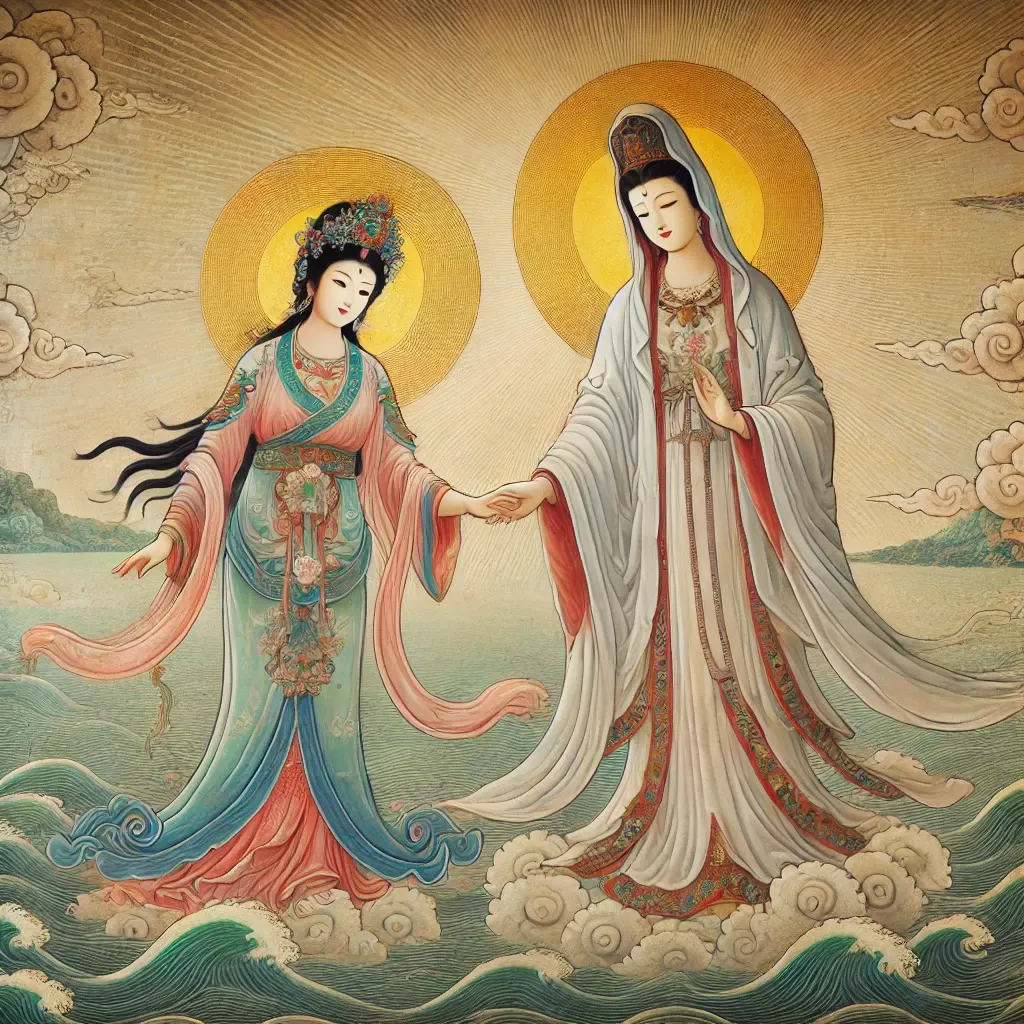
Guanyin vs Mazu: Key Differences
The clearest way to distinguish these two figures is to examine their origins, religious identities, and traditional responsibilities.
| Aspect | Guanyin | Mazu |
|---|---|---|
| Chinese name | 观音 (Guānyīn) | 妈祖 (Māzǔ) |
| Other names | Guanshiyin, Avalokiteshvara | Lin Moniang, Tianhou, Tianfei |
| Origin | Indian Mahayana Buddhism | Coastal Fujian, China |
| Religious identity | Bodhisattva | Deified regional protector and sea goddess |
| Primary role | Compassion and relief from suffering | Maritime protection and community welfare |
| Historical background | Early Mahayana Buddhist scriptures and devotion | Song-era religious traditions associated with a legendary historical woman |
| Common appearance | Flowing robes, lotus, water vessel or Buddhist crown | Ceremonial robes, imperial crown and attendant guardians |
| Protection at sea | One aspect of a broader compassionate mission | A central feature of her religious identity |
| Major sacred center | Mount Putuo, Zhejiang | Meizhou Island, Fujian |
| Main religious context | Buddhism and Chinese popular religion | Chinese folk religion and Daoist traditions |
The distinction between a bodhisattva and a sea goddess is particularly important. These categories come from different religious frameworks, even though they may overlap in everyday worship.
Who Is Guanyin?
Guanyin, also called Guanshiyin (观世音), is the Chinese form of Avalokiteshvara, one of the most important bodhisattvas in Mahayana Buddhism. Her Chinese name is commonly understood as referring to the perception of the cries or sounds of the world.
In Buddhist thought, Guanyin embodies compassion toward sentient beings. A bodhisattva is not simply a deity responsible for a particular natural phenomenon, but a figure committed to helping beings overcome suffering and progress toward awakening.
Chapter 25 of the Lotus Sutra, commonly known as the Universal Gate chapter, describes Avalokiteshvara responding to people in distress. Its accounts include dangers involving fire, violence, imprisonment, and hazardous journeys across water.
These teachings helped establish Guanyin as a protector whose assistance was not restricted to one occupation, region, or category of human suffering.
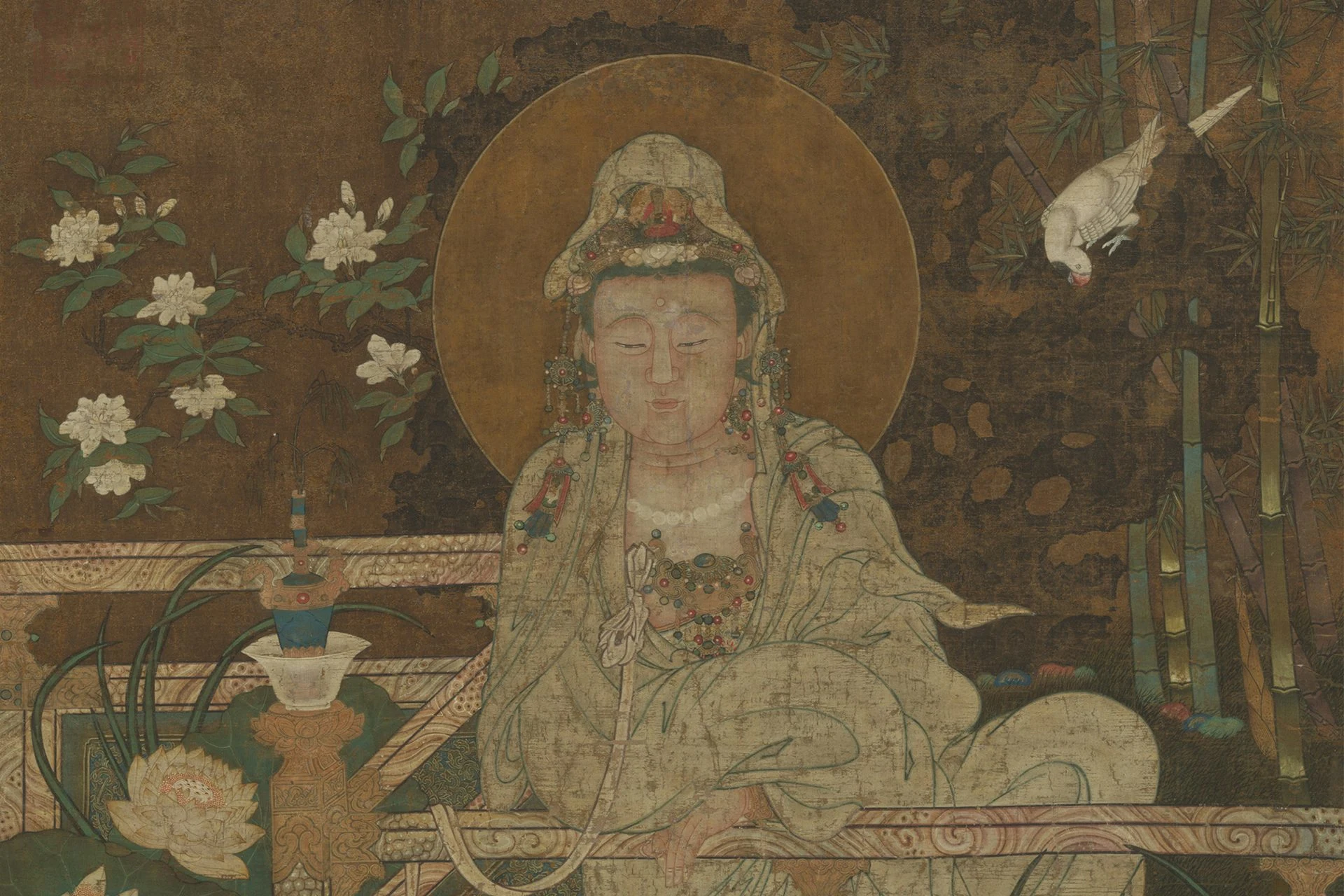
Why Is Guanyin Usually Depicted as Female?
Early representations of Avalokiteshvara in India and parts of Asia commonly used masculine or princely imagery. Over the centuries, feminine representations became increasingly prominent in China.
The development involved Buddhist ideas about the bodhisattva’s ability to appear in different forms, changing artistic traditions, and Chinese stories that emphasized maternal compassion and protection.
Consequently, Guanyin is often called the Goddess of Mercy in English. This description reflects her widespread feminine appearance and devotional role, although bodhisattva of compassion is the more precise Buddhist classification.
Guanyin is also associated with Amitabha Buddha and appears alongside Amitabha and Mahasthamaprapta in the Pure Land devotional group known as the Three Saints of the West.
Who Is Mazu?
Mazu is a protective goddess whose religious tradition emerged along the southeastern coast of China. She is conventionally identified with Lin Mo, or Lin Moniang (林默娘), a woman associated with Meizhou Island in present-day Fujian Province.
Traditional accounts place her life between 960 and 987 CE. These dates belong to her received religious biography, and the surviving historical evidence does not independently establish every detail of the familiar legends about her life.
Stories portray Lin Moniang as unusually compassionate, spiritually gifted, and capable of helping people endangered by storms and other maritime disasters.
After her death, according to the tradition, local communities began venerating her as a supernatural protector. As maritime trade expanded, devotion to Mazu spread beyond Fujian to other coastal regions and overseas Chinese communities.
From Local Protector to Empress of Heaven
Mazu’s religious status developed substantially during China’s imperial period. Successive governments recognized her cult and granted increasingly prestigious honorific titles, including Tianfei, the Celestial Consort, and Tianhou, the Empress of Heaven.
These titles reflect the growing importance of Mazu worship in maritime society and its recognition by the imperial state.
Her influence eventually extended well beyond sailors and fishermen. Families and communities also turned to her for health, childbirth, personal protection, and other everyday concerns.
In 2009, Mazu belief and customs were inscribed on UNESCO’s Representative List of the Intangible Cultural Heritage of Humanity. The inscription recognizes the importance of the living cultural traditions associated with Mazu, including ceremonies, oral narratives, and community practices.
Why Are Both Guanyin and Mazu Associated with the Sea?
The ocean was central to the development of many Chinese coastal communities. Fishing, trade, migration, and long-distance travel depended on sea routes that exposed travelers to unpredictable weather and other dangers.
Religious protection offered sailors and their families a way to respond to uncertainty and express hope for a safe return. Both Guanyin and Mazu became important figures within this devotional landscape, but their maritime associations developed from different foundations.
Guanyin as a Protector of Seafarers
Guanyin’s association with maritime protection has a scriptural foundation. The Universal Gate chapter of the Lotus Sutra describes merchants and travelers crossing dangerous waters and receiving assistance through devotion to Avalokiteshvara.
In China, this protective association became particularly visible in the traditions surrounding Mount Putuo, an island sacred to Guanyin in the Zhoushan archipelago.
Guanyin is therefore sometimes described as Guanyin of the Southern Sea (南海观音). The title reflects an important maritime dimension of her devotion, without limiting her wider Buddhist role.
Mazu as a Maritime Guardian
For Mazu, protection at sea is at the center of her religious biography. Numerous legends describe her rescuing fishermen, guiding vessels, appearing during storms, and protecting travelers from shipwreck.
Chinese maritime communities established temples dedicated to Mazu in ports and coastal settlements. Migrants carried her worship overseas, where her temples often became important centers of community identity and social life.
While Guanyin protects seafarers as part of her broader mission of compassion, Mazu’s reputation developed especially through maritime protection.
Is Mazu an Incarnation of Guanyin?
Some Chinese folk traditions identify Mazu as a manifestation of Guanyin or associate her birth with Guanyin’s supernatural intervention. These beliefs are an important part of the historical interaction between the two devotional traditions.
One group of birth legends describes Mazu’s parents as devoted worshippers of Guanyin. Following a miraculous dream or divine blessing, Mazu’s mother becomes pregnant and gives birth to an extraordinary child.
Other accounts present Mazu herself as a manifestation of the bodhisattva’s compassion. Such narratives provide a Buddhist interpretation of Mazu’s exceptional abilities and protective mission.
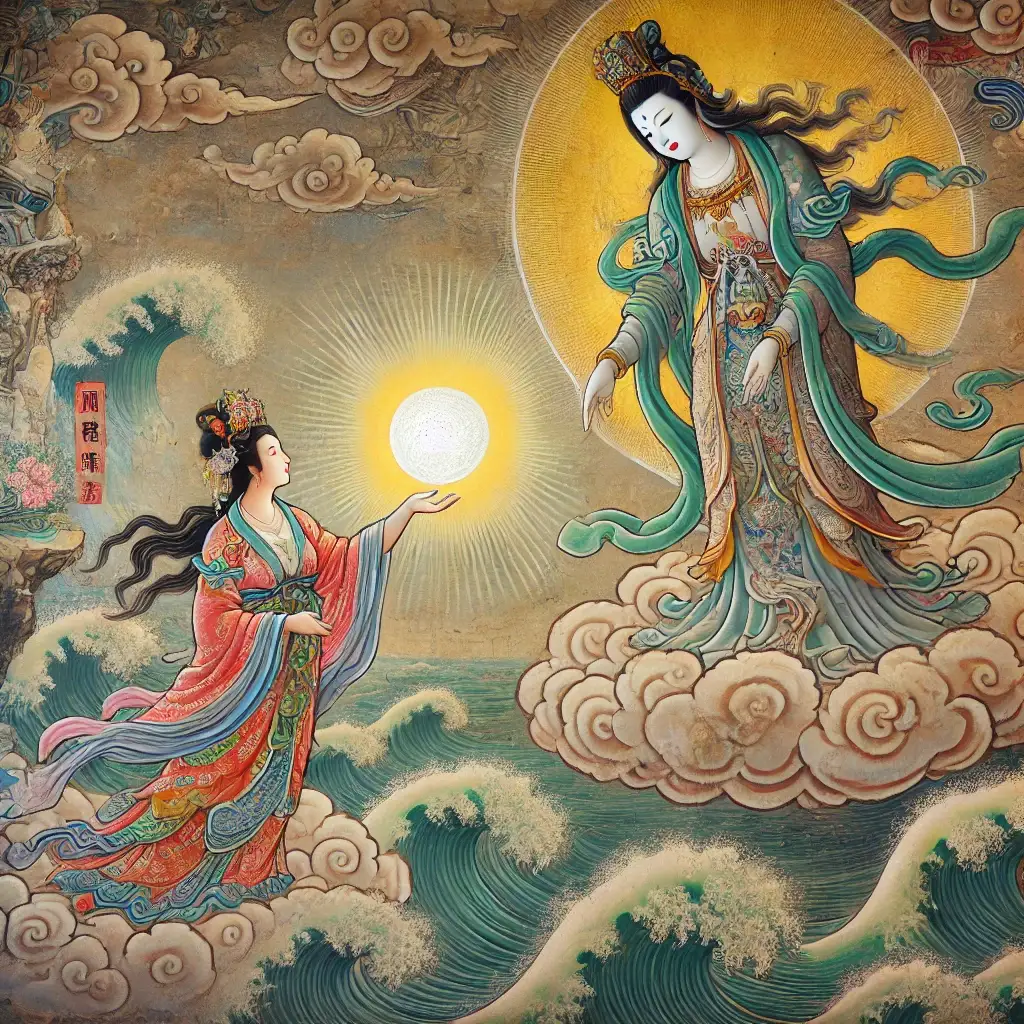
These connections are found in temple traditions as well as scholarly studies of Mazu narratives. They help explain why Guanyin may be honored alongside Mazu in some temples.
However, the identification of Mazu as Guanyin’s incarnation is not a universal Buddhist teaching. The classical Buddhist scriptures that established Avalokiteshvara’s religious identity arose long before the emergence of Mazu worship in China.
Is Mazu Buddhist or Taoist?
Mazu is most accurately understood as a goddess of Chinese popular religion whose worship has been incorporated into different religious traditions, including Daoism and Buddhist-influenced devotional practices.
Daoist ritual traditions and imperial religious institutions helped shape her titles, iconography, and public worship. However, her religious importance cannot be explained exclusively through Daoism.
Mazu worship also developed through local communities, family traditions, temple associations, maritime networks, and stories transmitted across generations.
Guanyin, by contrast, has a clearly identifiable Buddhist origin. Her presence in folk temples reflects the broad adoption of Buddhist figures within Chinese religious culture.
The distinction becomes clearer when we separate a figure’s historical origin from the different communities and traditions that later adopted her worship.
How to Tell Guanyin and Mazu Apart in Chinese Art
Guanyin and Mazu can both appear as serene female figures wearing elaborate robes. Nevertheless, several traditional artistic features can help distinguish them.
Guanyin’s Common Symbols
- Lotus flower: associated with purity and Buddhist awakening.
- Water vessel: a frequent attribute of compassionate and purifying activity.
- Willow branch: found in certain traditional images of Guanyin.
- White robes: characteristic of the popular White-robed Guanyin tradition.
- Amitabha image: a small Buddha figure sometimes placed within her crown or headdress.
Some manifestations of Guanyin have multiple arms and eyes, while others appear in simple standing or seated forms.
Mazu’s Common Symbols
- Imperial-style crown: reflecting her elevated status and honorific titles.
- Ceremonial robes: often decorated with elaborate imperial motifs.
- Formal seated posture: frequently seen in traditional temple statues.
- Qianliyan: the guardian associated with extraordinary sight.
- Shunfeng’er: the guardian associated with extraordinary hearing.
Mazu is frequently represented as a dignified celestial ruler accompanied by protective attendants. However, her imagery varies considerably by region and historical period.
Neither clothing color nor facial appearance alone is sufficient to identify a statue. Inscriptions, ritual context, accompanying figures, and the identity of the temple provide more reliable evidence.
Why Are Guanyin and Mazu Worshipped Together?
Chinese religious life has historically allowed considerable interaction among Buddhism, Daoism, ancestral traditions, and local deity worship.
A temple primarily dedicated to Mazu may also contain an altar for Guanyin or other protective figures. Taipei’s Guandu Temple, for example, maintains a hall dedicated to Guanyin and explicitly recognizes traditional narratives linking her with Mazu.
For devotees, the presence of both figures need not create a theological contradiction. Their protective roles may complement each other within the practical and communal life of a temple.
Families might seek Mazu’s protection during a journey while also turning to Guanyin in times of illness, grief, or personal hardship. These practices are not necessarily governed by a fixed division of responsibilities.
Shared worship is therefore better understood as an expression of religious coexistence than as evidence that Guanyin and Mazu are interchangeable.
Who Is More Powerful, Guanyin or Mazu?
There is no universally accepted religious hierarchy that directly ranks Guanyin and Mazu against each other.
Within Mahayana Buddhism, Guanyin occupies a distinguished position as a bodhisattva associated with compassion and liberation from suffering. Within Mazu devotional traditions, Mazu is revered as a powerful celestial protector with authority over maritime safety and other aspects of human welfare.
Some local legends place Mazu in a relationship of dependence upon Guanyin, describing Guanyin as a spiritual benefactor or the source of Mazu’s divine mission. Such narratives reflect particular religious interpretations rather than a hierarchy accepted by all devotees.
Comparing their supernatural power as though they belong to a single standardized pantheon overlooks the different traditions from which their identities developed.
Frequently Asked Questions
Are Guanyin and Mazu the same goddess?
No. Guanyin is the Buddhist bodhisattva Avalokiteshvara, while Mazu is a Chinese sea goddess associated with Lin Moniang. Some folk legends connect them, but their historical origins and religious identities are distinct.
Is Mazu a form of Guanyin?
Some Chinese popular religious traditions regard Mazu as a manifestation of Guanyin. This interpretation is found in certain legends and temple traditions, but it is not a universal Buddhist doctrine.
Who is older, Guanyin or Mazu?
Guanyin is historically older. Devotion to Avalokiteshvara developed within early Mahayana Buddhism centuries before the emergence of Mazu worship during China’s Song dynasty.
Is Guanyin also a goddess of the sea?
Guanyin has long been invoked by sailors and travelers seeking protection at sea. However, maritime protection represents only one aspect of her broader identity as the Buddhist bodhisattva of compassion.
Was Mazu a real person?
Mazu is traditionally identified with Lin Moniang, a woman believed to have lived in tenth-century Fujian. Her familiar biography combines possible historical memories with later religious legends, and not all its details can be independently verified.
Can people worship both Guanyin and Mazu?
Yes. The veneration of both figures is documented in Chinese popular religious practice, particularly in communities where Buddhist and local maritime traditions coexist.
Is Guanyin the mother of Mazu?
Not in a universally recognized religious genealogy. Certain legends associate Mazu’s miraculous conception or birth with Guanyin, but these stories do not establish a literal mother-daughter relationship.
What is the main difference between Guanyin and Mazu?
The main difference is their religious origin. Guanyin comes from Mahayana Buddhism and represents universal compassion. Mazu emerged from Chinese coastal religious traditions and is especially revered for maritime protection.
Conclusion
Guanyin and Mazu occupy distinct but interconnected positions within Chinese religious culture. Guanyin represents the compassionate response to suffering developed within Mahayana Buddhism, while Mazu embodies the protective traditions that emerged from China’s maritime communities.
The legends connecting them reveal how religious ideas travel between traditions, acquire local meanings, and become part of everyday devotional life. Their coexistence also demonstrates that Chinese religious culture cannot always be divided into rigid, mutually exclusive categories.
Understanding both their differences and their shared associations provides a richer appreciation of Chinese Buddhism, folk religion, and the enduring cultural importance of compassion and protection.
References and Further Reading
- The Lotus Sutra. Chapter 25: The Universal Gate of the Bodhisattva Avalokitesvara. BDK English Tripitaka.
- UNESCO. Mazu Belief and Customs. Representative List of the Intangible Cultural Heritage of Humanity, 2009.
- Smithsonian National Museum of Asian Art. Diving Deeper into Buddhism: Guanyin.
- Princeton University Art Museum. Guanyin Seated in Royal-Ease Pose.
- Yü, Chün-fang. Kuan-yin: The Chinese Transformation of Avalokitesvara. Columbia University Press, 2001.
- From Abstract Form to Concrete Materialization: An Analysis of Mazu’s Image in Statues and Images. Religions, 13(11), 1035, 2022.
- Guandu Temple. Deities: Guanyin Buddha. Official temple introduction.