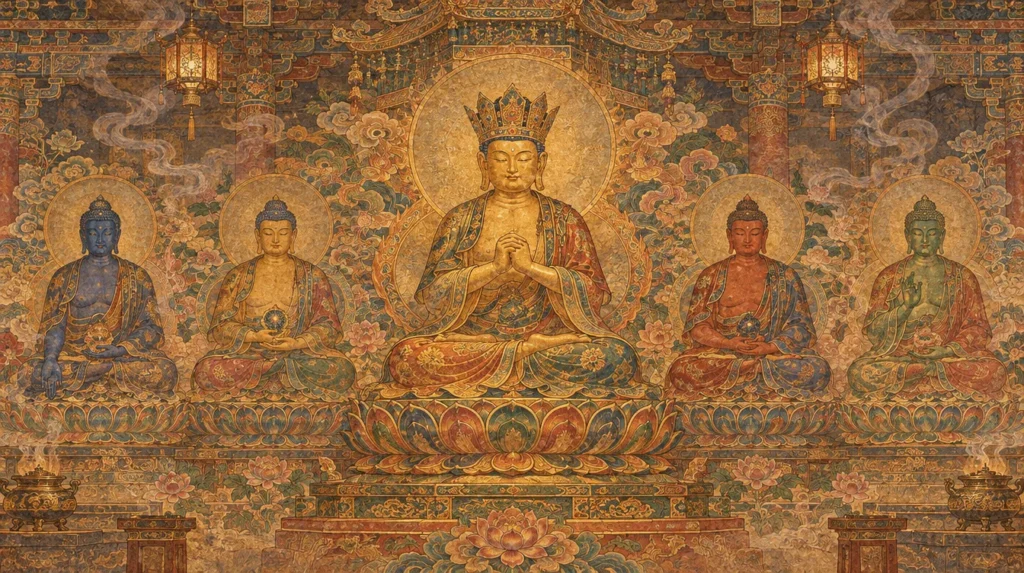
The Five Dhyani Buddhas—known in Chinese Buddhism as the Five Buddhas of the Five Directions (Wǔfāngfó, 五方佛) or the Five Wisdom Tathāgatas (Wǔzhì Rúlái, 五智如来)—are a foundational cosmic group representing five distinct aspects of enlightened wisdom. Rather than five competing deities or five separate historical teachers like Śākyamuni, they form a unified mandala of awakened reality anchored at the center and the four cardinal directions.
Although many English readers encounter them first through Tibetan Vajrayāna art, the Five Dhyani Buddhas have a deep history in China. Introduced during the Tang dynasty (618–907) through Esoteric Buddhist scriptures, they shaped Chinese temple sculpture, cave paintings at Dunhuang and Dazu, and living monastic ceremonies such as the Yujia Yankou (瑜伽焰口) ritual, where presiding masters still wear the Five-Buddha Crown (Wǔfóguān, 五佛冠).
| At a Glance | Details |
|---|---|
| Chinese Names | 五方佛 (Wǔfāngfó, “Buddhas of the Five Directions”); 五智如来 (Wǔzhì Rúlái, “Five Wisdom Tathāgatas”) |
| Sanskrit Term | Pañcatathāgata (Five Tathāgatas) or Pañcajina (Five Conquerors) |
| Classification | Cosmic Buddhas of Mahāyāna and Esoteric (Vajrayāna / Tangmi) Buddhism |
| Core Function | Represent five facets of Buddha-wisdom that transform five root mental afflictions |
| Primary Chinese Contexts | Tang Esoteric Buddhism (Tangmi), Huayan cosmology, temple art, and Yujia Yankou / Shuilu deliverance rituals |
Why Are They Called “Dhyani Buddhas”?
The phrase Five Dhyani Buddhas is standard in English, but it is a modern scholarly convention rather than an ancient scriptural title. It was popularized in the early nineteenth century by the British scholar-official Brian Houghton Hodgson, who drew on Nepalese Buddhist usage linking these figures to meditation (dhyāna).
In classical Sanskrit texts, they are called the Five Tathāgatas (Pañcatathāgata, “Thus-Gone Ones”) or Five Conquerors (Pañcajina). Chinese Buddhism translates this framework directly through spatial and doctrinal terms:
- Wǔfāngfó (五方佛): “Buddhas of the Five Directions,” emphasizing their arrangement across the center, east, south, west, and north.
- Wǔzhì Rúlái (五智如来): “Five Wisdom Tathāgatas,” emphasizing that each Buddha embodies a specific mode of enlightened cognition.
For a broader look at how Sanskrit Buddhist titles entered Chinese, see our guide to Sanskrit names of Chinese Buddhist deities.
The Five Dhyani Buddhas: Names, Directions, and Wisdoms
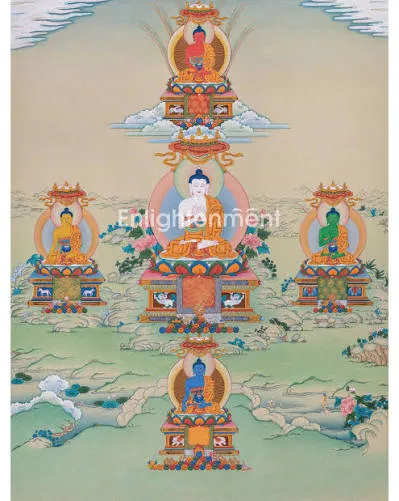
In Chinese Buddhism, the most widely used roster comes from the Vajradhātu (Diamond Realm, 金刚界) tradition. Vairocana sits at the center as the cosmic source, while the other four Buddhas occupy the cardinal points around him.
| Direction | Sanskrit Name | Chinese Name | Mudrā (Hand Gesture) | Wisdom Embodied | Affliction Transformed |
|---|---|---|---|---|---|
| Center | Vairocana | 毗卢遮那佛 (Pílúzhēnà Fó) / 大日如来 (Dàrì Rúlái) | Wisdom Fist (Zhìquán Yìn, 智拳印) or Teaching (Dharmacakra) | Dharma Realm Nature Wisdom (法界体性智) | Ignorance / Delusion |
| East | Akṣobhya | 阿閦佛 (Āchù Fó) / 不动如来 (Bùdòng Rúlái) | Earth-Touching (Chùdì Yìn, 触地印 / Bhūmisparśa) | Great Perfect Mirror Wisdom (大圆镜智) | Anger / Hatred |
| South | Ratnasaṃbhava | 宝生佛 (Bǎoshēng Fó) / 宝生如来 (Bǎoshēng Rúlái) | Wish-Granting (Yǔyuàn Yìn, 与愿印 / Varada) | Equality Wisdom (平等性智) | Pride / Greed |
| West | Amitābha | 阿弥陀佛 (Āmítuó Fó) / 无量寿如来 (Wúliàngshòu Rúlái) | Meditation (Chándìng Yìn, 禅定印 / Dhyāna) | Wondrous Observing Wisdom (妙观察智) | Craving / Attachment |
| North | Amoghasiddhi | 不空成就佛 (Bùkōng Chéngjiù Fó) / 不空成就如来 | Fearlessness (Shīwúwèi Yìn, 施无畏印 / Abhaya) | All-Accomplishing Wisdom (成所作智) | Jealousy / Envy |
1. Vairocana (Center) — Pílúzhēnà Fó / Dàrì Rúlái
Vairocana (毗卢遮那佛, Pílúzhēnà Fó; also translated by meaning as Dàrì Rúlái, 大日如来, “Great Sun Tathāgata”) stands at the center of the Five Buddhas. In both Huayan (Avataṃsaka) and Esoteric Chinese Buddhism, he represents the Dharmakāya—the universal, timeless truth-body of Buddhahood from which all other Buddhas and worlds emanate.
In Diamond Realm iconography, Vairocana makes the Wisdom Fist mudrā (Zhìquán Yìn, 智拳印), in which the right hand encloses the raised index finger of the left hand, symbolizing the unity of awakened wisdom and the phenomenal world.
2. Akṣobhya (East) — Āchù Fó / Bùdòng Rúlái
Akṣobhya (阿閦佛, Āchù Fó; meaning-translated as Bùdòng Rúlái, 不动如来, “Immovable Tathāgata”) presides over the eastern pure land of Abhirati (妙喜世界). His name reflects unshakable composure—the refusal to be swayed by anger or hostility.
He is shown in the earth-touching gesture (bhūmisparśa mudrā), with his right hand reaching downward over his knee. In Chinese Yogācāra and Esoteric doctrine, Akṣobhya embodies Great Perfect Mirror Wisdom (大圆镜智), a mind that reflects reality clearly without distortion or prejudice.
3. Ratnasaṃbhava (South) — Bǎoshēng Fó / Bǎoshēng Rúlái
Ratnasaṃbhava (宝生佛, Bǎoshēng Fó, “Jewel-Born Buddha”) governs the south. He embodies Equality Wisdom (平等性智), the insight that dissolves ego-centered pride and recognizes the shared Buddha-nature of all beings.
His signature gesture is the wish-granting mudrā (varada mudrā), with the right palm turned outward and downward in a posture of open generosity.
4. Amitābha (West) — Āmítuó Fó
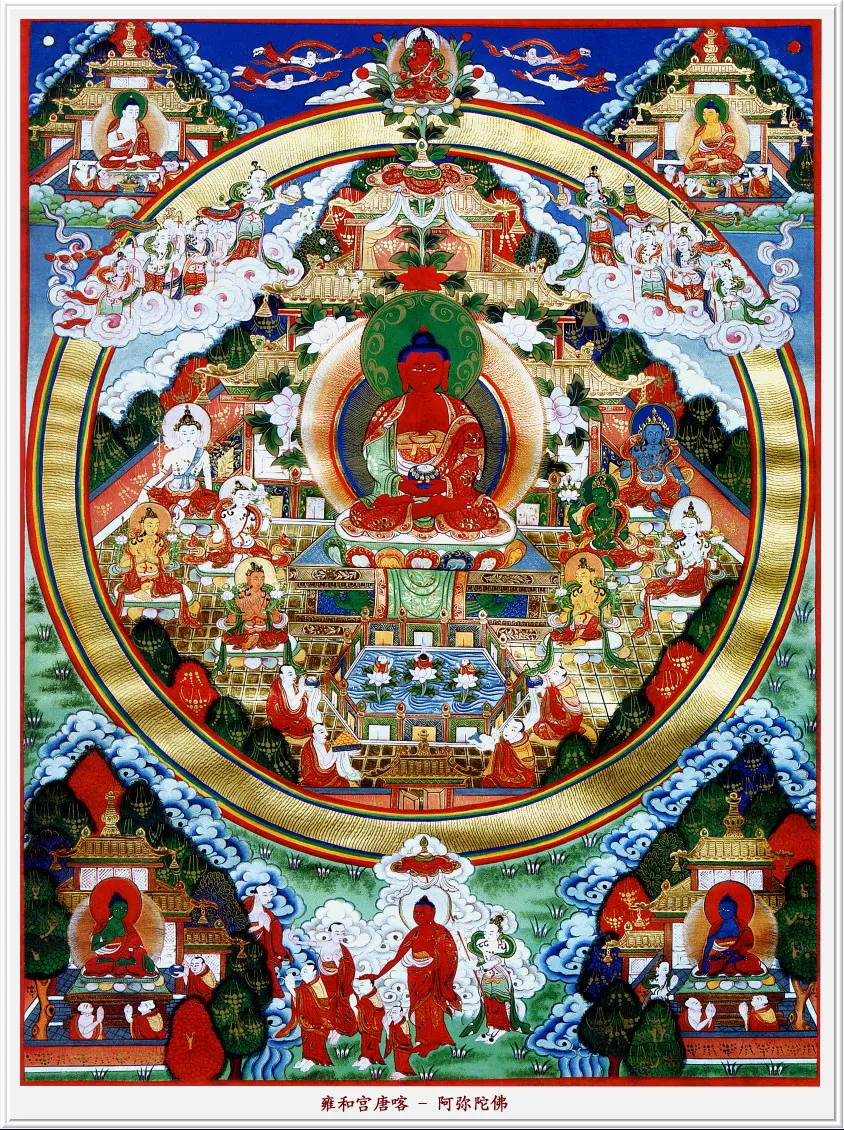
Amitābha (阿弥陀佛, Āmítuó Fó)—whose name means “Infinite Light” (无量光) and, as Amitāyus, “Infinite Life” (无量寿)—is by far the most widely venerated of the five in everyday Chinese Buddhism. As the presiding Buddha of the Western Pure Land of Ultimate Bliss (西方极乐世界), he stands at the heart of Chinese Pure Land devotion and is closely paired with Guanyin, the bodhisattva of compassion.
Within the Five Dhyani Buddhas system, Amitābha displays the meditation mudrā (dhyāna mudrā), with hands resting in the lap, and embodies Wondrous Observing Wisdom (妙观察智)—the discerning clarity that sees the unique needs of every being without attachment.
5. Amoghasiddhi (North) — Bùkōng Chéngjiù Fó
Amoghasiddhi (不空成就佛, Bùkōng Chéngjiù Fó, “Buddha of Unfailing Accomplishment”) presides over the north. He embodies All-Accomplishing Wisdom (成所作智), turning awakened insight into effective, compassionate action for the benefit of others.
He is identified by the fearlessness mudrā (abhaya mudrā), with the right hand raised at chest level and the palm facing outward, signaling protection and the overcoming of envy and doubt.
Diamond Realm vs. Womb Realm in Tang Chinese Buddhism
During the eighth century, three Indian masters working in the Tang capital of Chang’an—Śubhakarasiṃha (善无畏), Vajrabodhi (金刚智), and Amoghavajra (不空)—translated the core scriptures of Tang Esoteric Buddhism (Tángmì, 唐密). That transmission preserved two complementary five-Buddha mandalas:
- The Diamond Realm (Jīngāngjiè, 金刚界): Based on the Vajraśekhara Sūtra (金刚顶经). This is the standard five-Buddha list used above: Vairocana (center), Akṣobhya (east), Ratnasaṃbhava (south), Amitābha (west), and Amoghasiddhi (north).
-
The Womb Realm (Tāizàngjiè, 胎藏界): Based on the Mahāvairocana Tantra (大日经). Here, Vairocana (大日如来) remains in the center, but the four directional Buddhas carry different names reflecting stages of spiritual awakening:
- East: Ratnaketu (Bǎochuáng Rúlái, 宝幢如来, “Jewel Banner”)
- South: Saṃkusumitarāja (Kāifūhuāwáng Rúlái, 开敷华王如来, “Blossoming Flower King”)
- West: Amitāyus (Wúliàngshòu Rúlái, 无量寿如来, “Infinite Life”)
- North: Divyadundubhimeghanirghoṣa (Tiāngǔ Léiyīn Rúlái, 天鼓雷音如来, “Heavenly Drum Thunder-Sound”)
While both systems were later carried from China to Japan by the monk Kūkai (forming Shingon Buddhism), Chinese monastic practice primarily retained the Diamond Realm names for temple liturgy and altar arrangements.
How the Five Dhyani Buddhas Appear in Chinese Temple Art and Ritual
Even after institutional Tang Esoteric lineages declined in China following the late-Tang Buddhist persecutions, the Five Dhyani Buddhas never disappeared from Chinese Buddhism. Instead, they were woven into mainstream Mahāyāna architecture, sculpture, and ritual.
Temple Halls and Grottoes
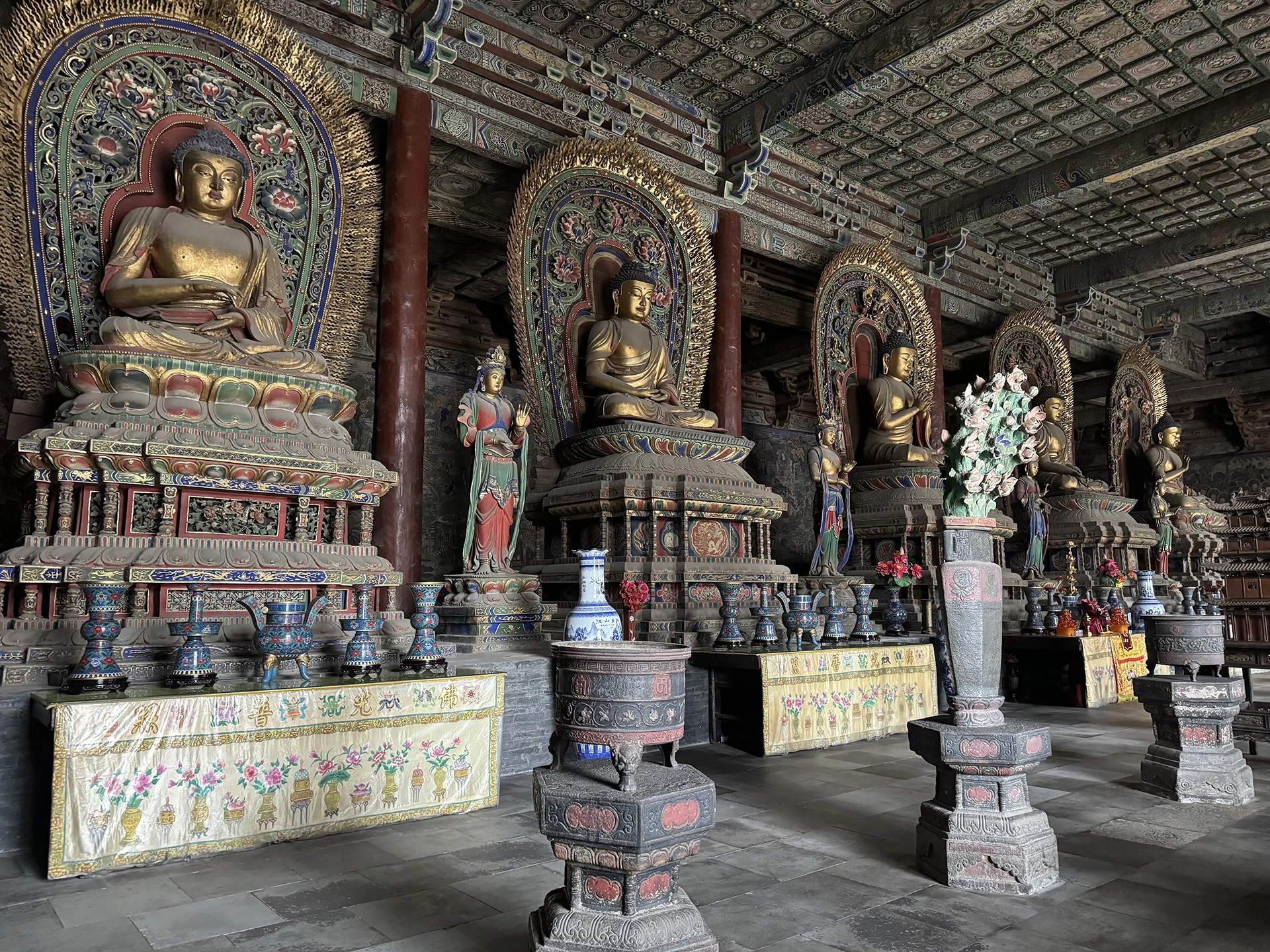
- Dunhuang and Dazu: Tang and Song murals at the Mogao Caves in Dunhuang and stone carvings at the Dazu Rock Carvings in Chongqing depict Five-Buddha mandalas and Vairocana-centered triads.
- Ming and Qing Monasteries: Some major halls—such as the Five-Buddha Hall (五方佛殿) or Vairocana Pavilion (毗卢阁)—enshrine all five seated in a row, often crowned with ornate diadems rather than plain monastic hair, signaling their cosmic Sambhogakāya/Dharmakāya status.
- Distinguishing Them from Buddha Triads: Visitors often confuse a five-Buddha altar with the more common three-Buddha altar inside a monastery’s Main Hall. To tell them apart, compare the spatial five-Buddha arrangement with the Three Buddhas of the Three Ages, which groups Śākyamuni with either Dīpaṃkara and Maitreya (across time) or Bhaiṣajyaguru and Amitābha (across space).
The Five-Buddha Crown (Wǔfóguān, 五佛冠) in Living Ritual
The most recognizable survival of the Five Dhyani Buddhas in modern Chinese Buddhism is the Five-Buddha Crown (Wǔfóguān, 五佛冠; also called Pílú Mào, 毗卢帽). This five-petaled ceremonial diadem features miniature images or emblems of the Five Dhyani Buddhas across its five panels.
Monks do not wear it for ordinary chanting. It is reserved for high-ranking ritual masters officiating major deliverance ceremonies—most famously:
- Yujia Yankou (瑜伽焰口, “Yoga of the Flaming Mouth”): An evening esoteric rite in which the presiding master visualizes himself as united with the cosmic Buddhas and Guanyin to open the throats of hungry ghosts and feed them consecrated food and Dharma.
- Shuilu Fahui (水陆法会, “Water and Land Dharma Assembly”): One of the grandest liturgical assemblies in Chinese Buddhism, dedicated to liberating all suffering beings across land, water, and the underworld.
In Chinese popular culture, the Five-Buddha Crown also became famous through literature and opera as the ornate hat worn by Tang Sanzang (Xuanzang) in Journey to the West. While that visual motif borrows directly from real monastic ritual vestments, the novel treats it as an iconic costume rather than a strictly esoteric liturgical object. For more on how Buddhist imagery blended into Chinese storytelling, see Buddhist influence on Chinese mythology.
Common Misconceptions
-
“The Five Dhyani Buddhas are five different historical founders of Buddhism.”
No. Śākyamuni is the historical Buddha who lived in ancient India. The Five Dhyani Buddhas are cosmic, doctrinal expressions of awakened wisdom—five facets of a single enlightened reality rather than five separate biographies. -
“‘Dhyani Buddha’ is a traditional Chinese or Sanskrit Buddhist term.”
No. The term Dhyāni-Buddha was coined in nineteenth-century English scholarship. Chinese Buddhist texts refer to them as Wǔfāngfó (五方佛) or Wǔzhì Rúlái (五智如来). -
“The Five Dhyani Buddhas belong only to Tibetan Buddhism.”
While Tibetan Vajrayāna preserves an extensive mandala and tantric system around them, the Five Dhyani Buddhas entered China directly from India in the eighth century during the Tang dynasty and remain active in Chinese monastic liturgy today. -
“They are the same as the Four Heavenly Kings.”
No. The Four Heavenly Kings in Chinese Buddhism are protective devas (heavenly beings) who guard the four directions of Mount Sumeru and stand in the entrance hall of Chinese monasteries. The Five Dhyani Buddhas are fully awakened Buddhas representing ultimate wisdom.
Explore Related Topics
- Browse our full directory of Buddhist deities in Chinese mythology to see how Buddhas, bodhisattvas, and Dharma protectors fit together.
- Compare spatial five-Buddha altars with the Three Buddhas of the Three Ages.
- Learn how Indian Buddhist names were translated into Chinese in Sanskrit names of Chinese Buddhist deities.
Frequently Asked Questions
What are the Five Dhyani Buddhas called in Chinese Buddhism?
In Chinese Buddhism, they are called Wǔfāngfó (五方佛, “Buddhas of the Five Directions”) or Wǔzhì Rúlái (五智如来, “Five Wisdom Tathāgatas”). Individually, in the standard Diamond Realm system, they are Pílúzhēnà Fó / Dàrì Rúlái (Vairocana), Āchù Fó (Akṣobhya), Bǎoshēng Fó (Ratnasaṃbhava), Āmítuó Fó (Amitābha), and Bùkōng Chéngjiù Fó (Amoghasiddhi).
Is Śākyamuni one of the Five Dhyani Buddhas?
Not directly in the standard five-Buddha roster. Śākyamuni is the historical Buddha (Nirmāṇakāya, emanation body) who taught in our world, whereas the Five Dhyani Buddhas represent cosmic aspects of awakened wisdom (Dharmakāya and Sambhogakāya). In some Chinese temple traditions, however, Vairocana at the center is understood as the cosmic truth-body underlying Śākyamuni.
Why is Amitābha the most famous of the Five Dhyani Buddhas in China?
Amitābha (阿弥陀佛, Āmítuó Fó) became the central figure of Chinese Pure Land Buddhism, which emphasizes mindful recitation of his name (niànfó, 念佛) for rebirth in the Western Pure Land. Because Pure Land practice became accessible to both monastics and laypeople across China, Amitābha is far better known in daily devotion than Akṣobhya, Ratnasaṃbhava, or Amoghasiddhi.
What is the Five-Buddha Crown worn by Chinese Buddhist monks?
The Five-Buddha Crown (Wǔfóguān, 五佛冠) is a five-paneled ceremonial crown bearing the images or symbols of the Five Dhyani Buddhas. In Chinese Buddhism, it is worn by the presiding ritual master during deliverance ceremonies such as the Yujia Yankou (瑜伽焰口) and Shuilu Fahui (水陆法会) to symbolize invoking the five wisdoms of the Buddhas to liberate suffering spirits.
How can you tell the Five Dhyani Buddhas apart in statues and paintings?
The most reliable clues are their hand gestures (mudrās) and directional positions. Vairocana sits at the center making the wisdom-fist or teaching gesture; Akṣobhya touches the earth (east); Ratnasaṃbhava extends his palm downward in generosity (south); Amitābha rests his hands in meditation (west); and Amoghasiddhi raises his right palm outward in fearlessness (north).