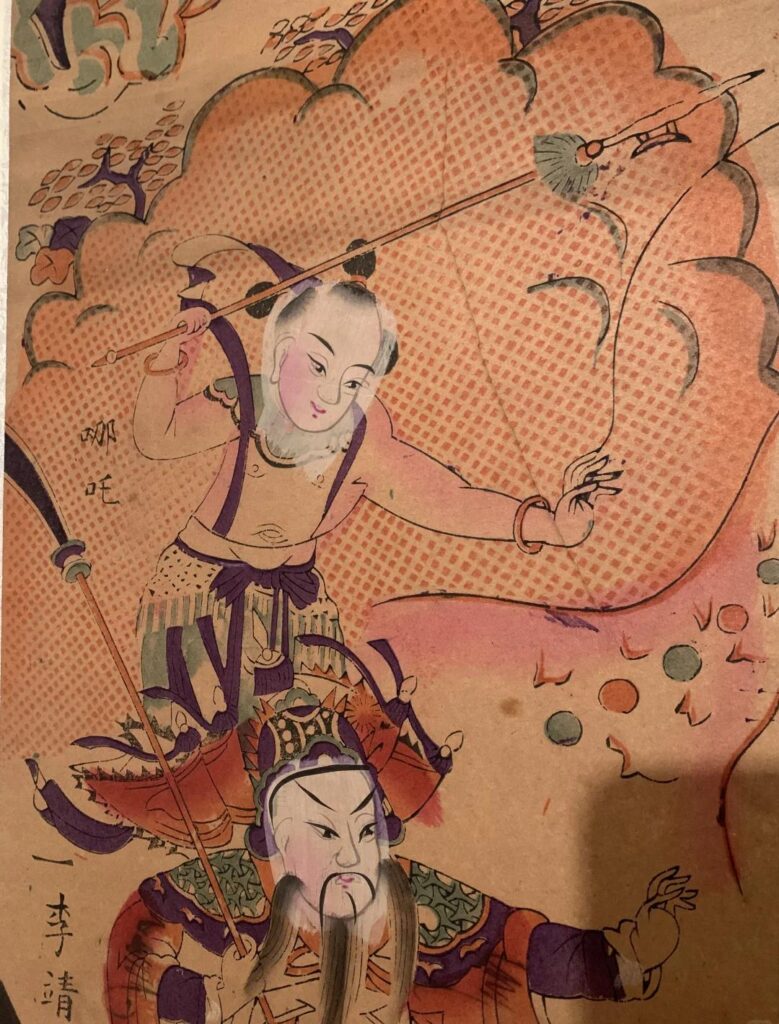
Ne Zha is one of those mythological figures who never seems to grow old. He is usually imagined as a fierce young deity, riding on wind-and-fire wheels, holding a fire-tipped spear, and carrying the restless energy of a child who refuses to accept the fate handed to him.
In Chinese mythology, Ne Zha is more than a warrior god. He is a symbol of rebellion, sacrifice, rebirth, family conflict, and self-determination. That is why his story still feels surprisingly modern, even after centuries of retelling in Buddhist, Daoist, folk, literary, and cinematic traditions.
Who Is Ne Zha in Chinese Mythology?
Ne Zha, also written as Nezha, is a youthful protective deity in Chinese mythology and folk religion. He is often called the Third Prince, or San Taizi, because he is traditionally described as the third son of Li Jing, the Pagoda-Bearing Heavenly King.
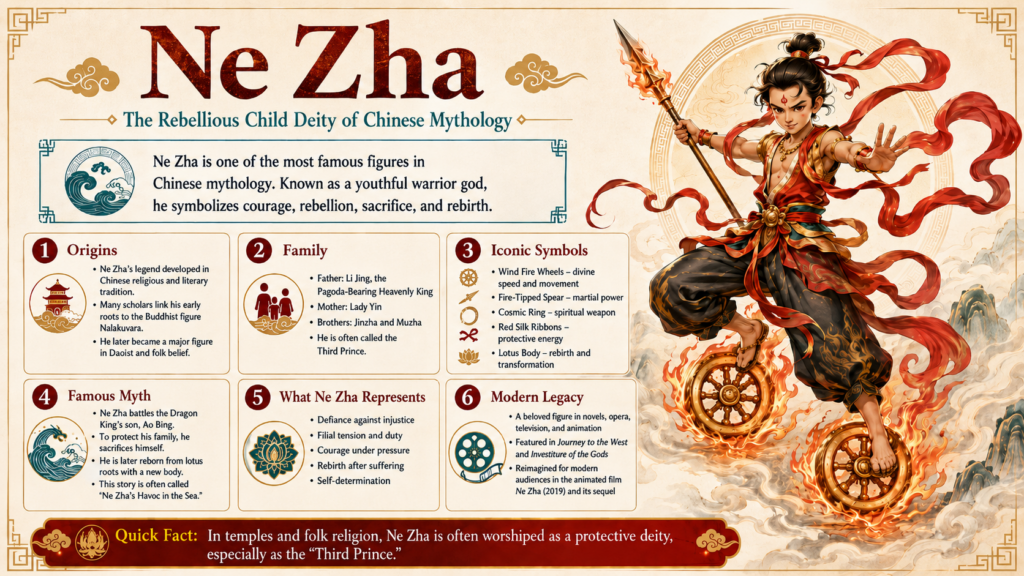
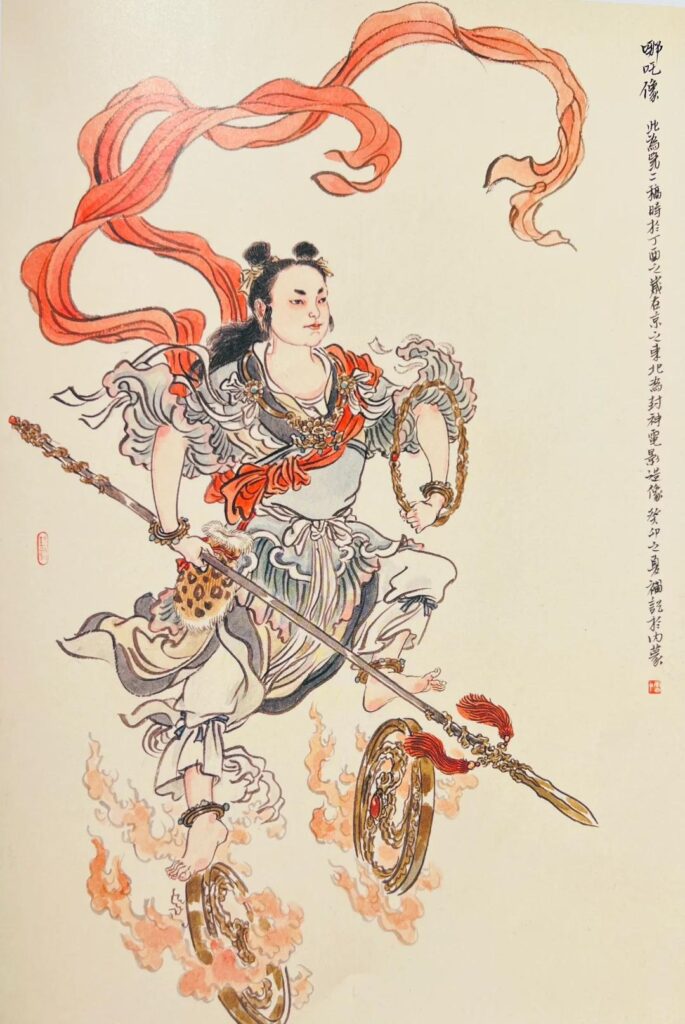
His image is instantly recognizable: a childlike warrior with a spear, a cosmic ring, a red silk sash, and the famous Wind Fire Wheels beneath his feet. In temples, paintings, novels, and animation, Ne Zha is usually not portrayed as a calm, distant god. He is fiery, emotional, impatient, brave, and sometimes dangerously impulsive.
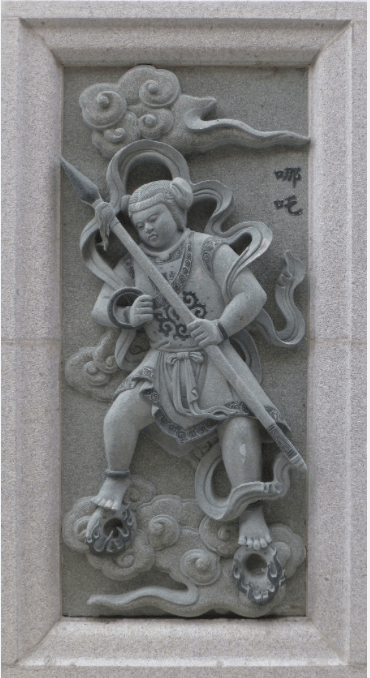
That emotional intensity is part of his appeal. Ne Zha is not perfect. He makes mistakes, challenges authority, suffers deeply, and returns stronger.
The Origins of Ne Zha: From Nalakuvara to a Chinese Child God
Although Ne Zha is now deeply associated with Chinese mythology, his earliest roots are often traced to Buddhist traditions. Scholars connect the name Ne Zha with Nalakuvara, a figure associated with Indian and Buddhist mythology. A 2024 academic study notes that Nezha’s original name appears as Nalakuvara or Nalkubala in Buddhist sutras, and that early Chinese Buddhist depictions showed him as a fiery, powerful deity with multiple heads and arms.
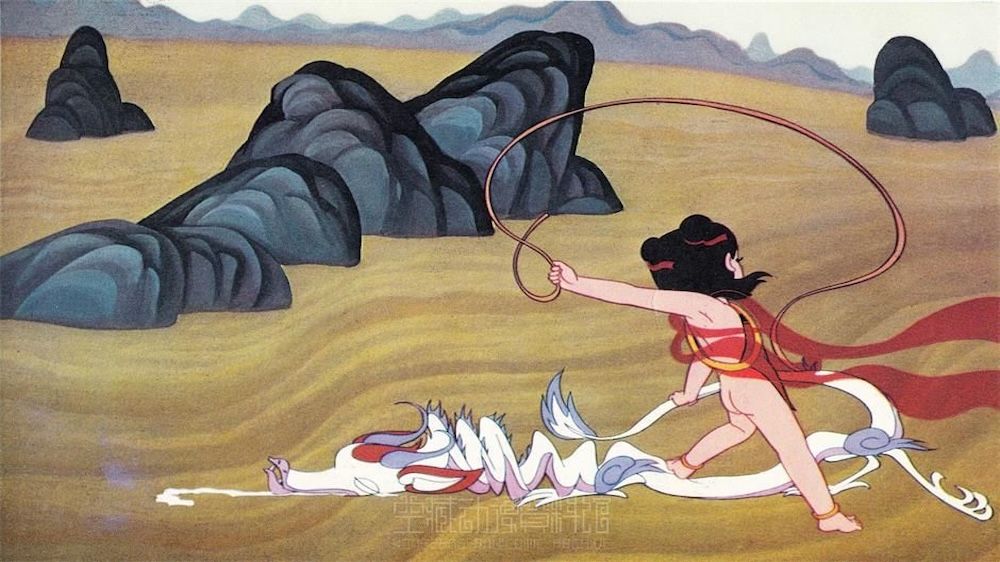
Over time, Ne Zha’s image changed dramatically. As Buddhism spread through China and blended with Daoism and local folk beliefs, Ne Zha became more localized. His father was identified with Li Jing, his divine role was absorbed into Chinese religious systems, and his appearance gradually shifted toward the child warrior familiar today.
This blending of cultures is one reason Ne Zha feels so layered. He is Buddhist, Daoist, folk, literary, and modern all at once.
Ne Zha’s Family: Li Jing, Lady Yin, and the Third Prince
In the best-known Chinese versions, Ne Zha is born to the military commander Li Jing and Lady Yin. His birth is anything but ordinary. Lady Yin carries him for three years and six months, and when he finally emerges, he is not born as an ordinary baby. In many versions, he appears from a strange ball of flesh or a lotus-like form, already gifted with supernatural power.
Li Jing is shocked and often suspicious of his son from the beginning. This strained father-son relationship becomes one of the emotional centers of the Ne Zha myth.
Ne Zha also has two older brothers, Jinzha and Muzha. Together, this family appears in important mythological novels, especially Journey to the West and Investiture of the Gods. Many modern stories about Ne Zha draw heavily from these Ming-dynasty works, where his conflict with dragons, immortals, and his own father becomes part of his path toward divinity.
Ne Zha’s Powers and Symbols
Ne Zha’s powers are closely tied to movement, fire, and divine combat. He is not a passive god who waits to be worshiped. He charges forward.
His most famous symbols include:
Wind Fire Wheels — magical wheels under his feet that allow him to fly or move at incredible speed.
Fire-Tipped Spear — his main weapon, often linked with his aggressive and martial nature.
Cosmic Ring — sometimes called the Universe Ring, used as a powerful weapon against enemies.
Red Armillary Sash — a flowing divine sash that adds movement and spiritual force to his image.
Lotus Body — after death, Ne Zha is reborn through lotus roots or lotus imagery, turning tragedy into transformation.
Together, these symbols make Ne Zha feel like a god of speed, fire, youth, and second chances.
Ne Zha and the Dragon King: The Famous Havoc in the Sea
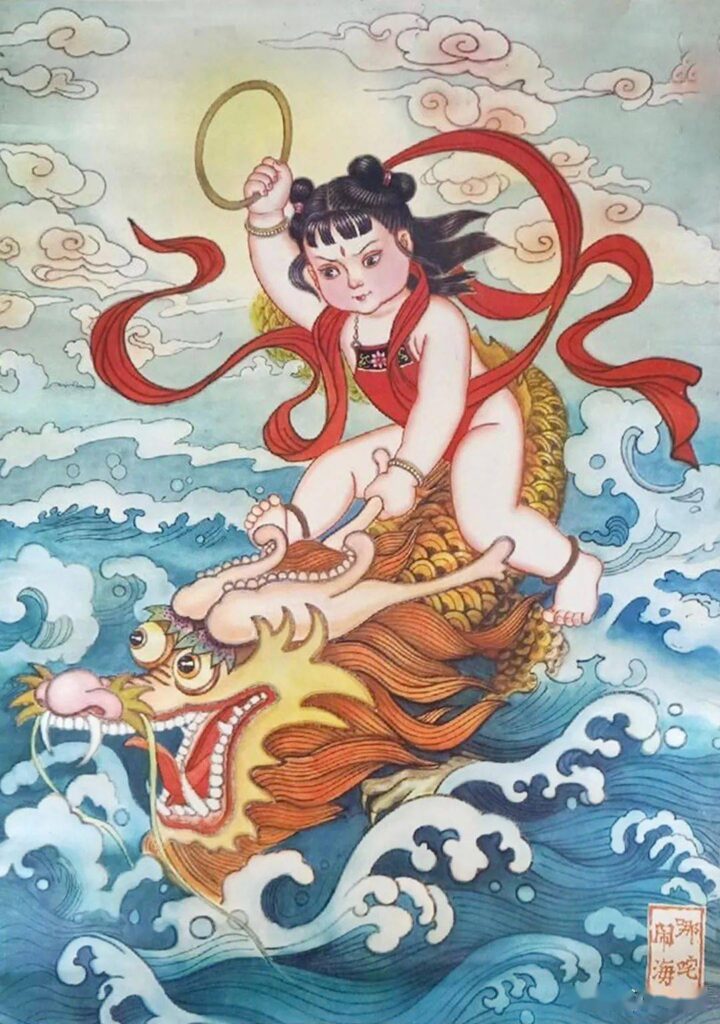
The most famous Ne Zha story is often called “Ne Zha’s Havoc in the Sea.” In this episode, Ne Zha clashes with the Dragon King of the East Sea and his son, often known as Ao Bing.
In many tellings, Ne Zha’s power disturbs the Dragon King’s underwater palace. A conflict follows, and Ne Zha kills the Dragon Prince. The Dragon King demands punishment and threatens Ne Zha’s family and community.
Rather than allow his parents and people to suffer, Ne Zha sacrifices himself. He returns his body to his parents, paying the debt with his own life. It is one of the darkest and most unforgettable moments in the myth.
This is why Ne Zha is not simply a rebellious boy. His rebellion is tied to responsibility. He defies authority, but he also accepts the cost of his actions.
Lotus Rebirth: Why Ne Zha Returns Stronger
Ne Zha’s death is not the end of the story. After his sacrifice, he is resurrected with a new body made from lotus roots or lotus flowers. The World of Chinese notes that different versions explain this rebirth differently: in Journey to the West, the Buddha helps restore him; in Investiture of the Gods, a Daoist master plays that role.
The lotus body is one of the most powerful symbols in Ne Zha’s myth. In Chinese religious imagination, the lotus often suggests purity, transformation, and spiritual rebirth. For Ne Zha, it also means independence. He is no longer only the son of his parents. He becomes something remade, divine, and self-defined.
That is why modern audiences often read Ne Zha as a symbol of personal transformation. He falls, burns, breaks, and returns.
What Does Ne Zha Symbolize?
Ne Zha’s story can be read in several ways.
First, he represents rebellion against unfair authority. He challenges dragons, gods, fate, and even his father. This makes him especially appealing in modern culture, where many people see him as a figure of resistance.
Second, he represents filial tension. Traditional Chinese culture places great importance on filial piety, but Ne Zha’s relationship with Li Jing is painful and complicated. He is both a son who sacrifices himself for his family and a child who rebels against paternal control.
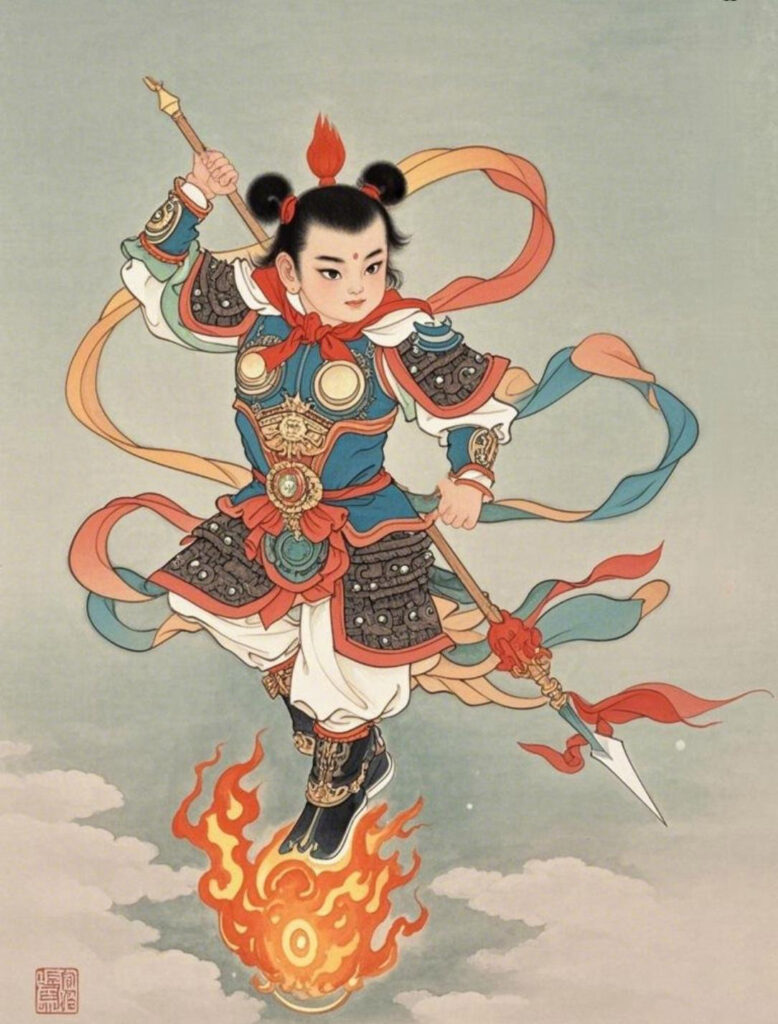
Third, he represents rebirth after suffering. His lotus resurrection turns death into renewal. This is one reason his story remains emotionally powerful: Ne Zha does not avoid tragedy, but he refuses to be ended by it.
Ne Zha in Journey to the West and Investiture of the Gods
Two classic novels helped shape the Ne Zha we know today: Journey to the West and Investiture of the Gods.
In Journey to the West, Ne Zha appears during the Monkey King’s rebellion in Heaven. At first, he fights Sun Wukong, but later he becomes one of the divine helpers who assist in battles against demons.
In Investiture of the Gods, Ne Zha plays a larger role. His birth, conflict with the Dragon King, death, lotus rebirth, and conflict with Li Jing are all central to his mythological identity. These episodes are the foundation for many later films, cartoons, temple stories, and popular retellings.
Ne Zha in Modern Film and Popular Culture
Ne Zha has appeared in television dramas, animation, video games, temple festivals, comics, and films. But his modern global popularity grew dramatically with the 2019 animated film Ne Zha, directed by Jiaozi.
The 2019 film reimagines him as a child born with a demonic fate. Instead of simply telling the old myth again, the movie turns Ne Zha into a misunderstood outsider who must decide whether he will accept society’s judgment or define himself. A scholarly analysis of the film notes that the 2019 version presents Ne Zha as a self-determined hero and reframes the myth around modern ideas of subjectivity and self-empowerment.
Then came Ne Zha 2. Reuters reported in February 2025 that Nezha 2 had overtaken Pixar’s Inside Out 2 to become the highest-grossing animated film globally at that point. Box Office Mojo later listed the film’s worldwide gross at over $2.26 billion, with the vast majority coming from international markets, especially China.
That success says something important: Ne Zha is no longer only a local mythological figure. He has become one of the most commercially powerful characters in modern animation.
Ne Zha Worship Today
Ne Zha is still worshiped in parts of China, Taiwan, and Chinese communities abroad. In folk religion, he is often honored as a guardian deity who protects children, households, travelers, and drivers.
In Taiwan, he is widely known as the Third Prince or Marshal of the Central Altar. His temple image often shows him as a young warrior standing on wheels, dressed in bright armor, full of movement and energy. In some areas, devotees connect him with protection from illness, evil spirits, dangerous journeys, and troubled waters.
This living worship keeps Ne Zha from becoming only a literary character. He remains a deity people pray to, celebrate, and invite into community festivals.
Why Ne Zha Still Matters
Ne Zha endures because he speaks to a very human feeling: the desire to be more than what others say you are.
He is born strange. He is feared. He is blamed. He makes mistakes. He suffers under family pressure and divine judgment. Yet his story does not end with shame or punishment. It becomes a story of return.
That is why Ne Zha works so well in ancient myth and modern animation alike. He is a child god, a warrior, a rebel, a protector, and a symbol of rebirth. His fire has never really gone out.
FAQ About Ne Zha
Who is Ne Zha?
Ne Zha is a youthful deity in Chinese mythology, often known as the Third Prince. He is famous for his fiery temper, supernatural powers, Wind Fire Wheels, battle with the Dragon King, and lotus rebirth.
Is Ne Zha a god?
Yes. In Chinese folk religion, Daoism, and Buddhist-influenced traditions, Ne Zha is worshiped as a protective deity. He is often associated with protection, courage, youth, and divine martial power.
What is Ne Zha famous for?
Ne Zha is best known for “Havoc in the Sea,” where he fights the Dragon King’s son, sacrifices himself to protect his family, and is later reborn through a lotus body.
What are Ne Zha’s weapons?
His most famous weapons are the fire-tipped spear, the Universe Ring or Cosmic Ring, the red sash, and the Wind Fire Wheels that allow him to move through the air.
Why is Ne Zha reborn from a lotus?
The lotus rebirth symbolizes purification, transformation, and a new spiritual body. It also marks Ne Zha’s transition from a troubled child into a divine warrior.
Is Ne Zha from Buddhism or Daoism?
Ne Zha has roots connected to Buddhist traditions, especially the figure Nalakuvara, but his legend later blended with Daoism, Chinese folk religion, and literary mythology.
What is the meaning of Ne Zha’s story?
Ne Zha’s story explores rebellion, family duty, sacrifice, rebirth, and the struggle to define oneself. Modern versions often emphasize identity, resilience, and challenging unfair expectations.
Is Ne Zha 2019 based on the original myth?
The 2019 animated film is inspired by the traditional Ne Zha myth, especially ideas from Investiture of the Gods, but it changes the story into a modern tale about fate, prejudice, and self-determination.
Why is Ne Zha popular today?
Ne Zha feels modern because he is a misunderstood outsider who refuses to accept a predetermined fate. His story appeals to younger audiences, animation fans, and readers interested in Chinese mythology.