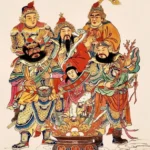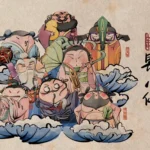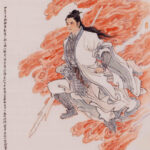
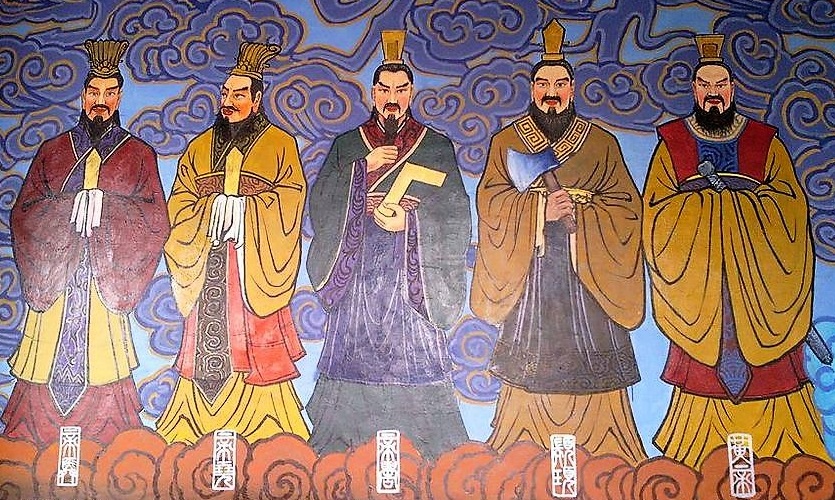
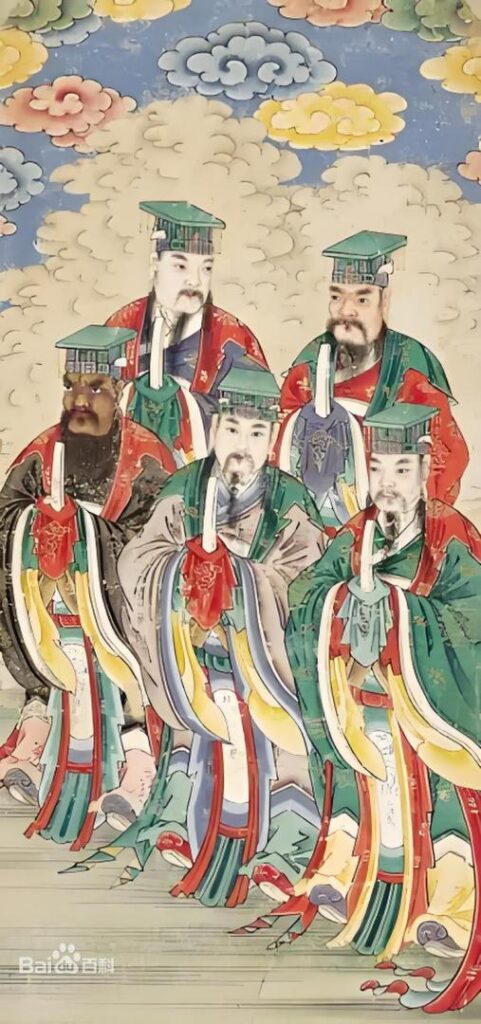
The Wufang Shangdi are one of the most fascinating divine groups in Chinese mythology. Their name, 五方上帝, is often translated as “The Five August Emperors” or “The Five Emperors of the Five Directions.” At first glance, they may look like five separate gods, each linked with a color, direction, season, element, and celestial sign. But behind that structure is a much deeper idea: the universe itself has order, personality, and sacred geography.
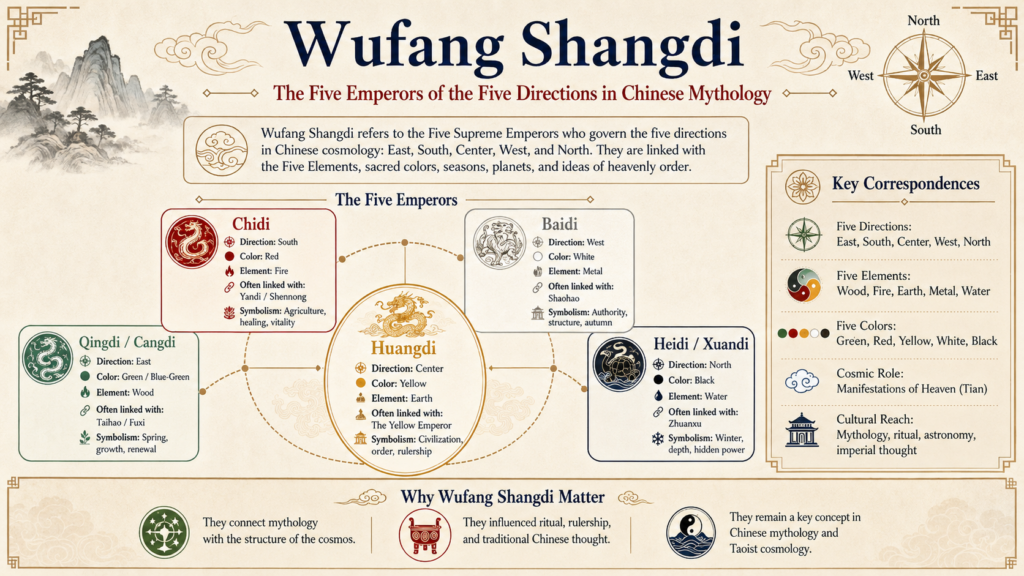
In traditional Chinese thought, heaven was not just a distant sky. It was a living cosmic principle, often expressed through Tian — Heaven, divine order, and supreme authority. The Wufang Shangdi were understood as powerful manifestations of that heavenly order. They ruled over the center and the four directions, connecting mythology, astronomy, state ritual, imperial authority, and the Five Elements system.
For readers new to Chinese mythology, the Wufang Shangdi can feel complicated because there are several overlapping traditions. Sometimes they are presented as celestial gods. Sometimes they are linked with ancient sage-kings such as Huangdi, Shennong, Shaohao, Taihao, and Zhuanxu. Rather than treating this as a contradiction, it is better to see it as a layered tradition: myth, ritual, cosmology, and history all speaking through the same symbolic framework.
What Does Wufang Shangdi Mean?
The term Wufang Shangdi can be broken down simply:
- Wu means “five”
- Fang means “directions” or “regions”
- Shangdi means “High God,” “Supreme Emperor,” or “August Emperor”
So, Wufang Shangdi means the Five Supreme Emperors of the Five Directions.
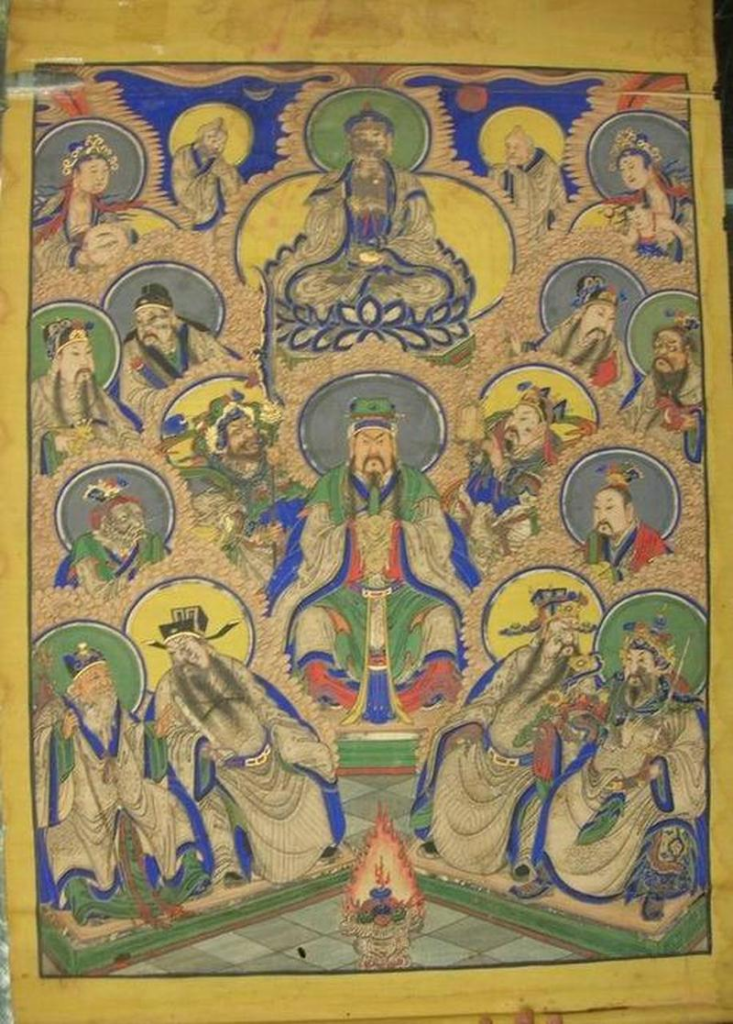
They are also known by other names, including Wudi , “The Five Emperors,” Wushen, “The Five Gods,” and Wusedi, “The Five Colored Deities.” These names reflect how closely the system is tied to color symbolism. Each emperor is associated with a specific color, direction, element, season, and cosmic function.
In some religious and philosophical traditions, the Five Emperors are also connected with a broader heavenly hierarchy. They may be understood as assistants or manifestations of a higher heavenly deity, such as Haotian Shangdi or Tianhuang Dadi, depending on the ritual and textual context.
The Five Wufang Shangdi and Their Correspondences
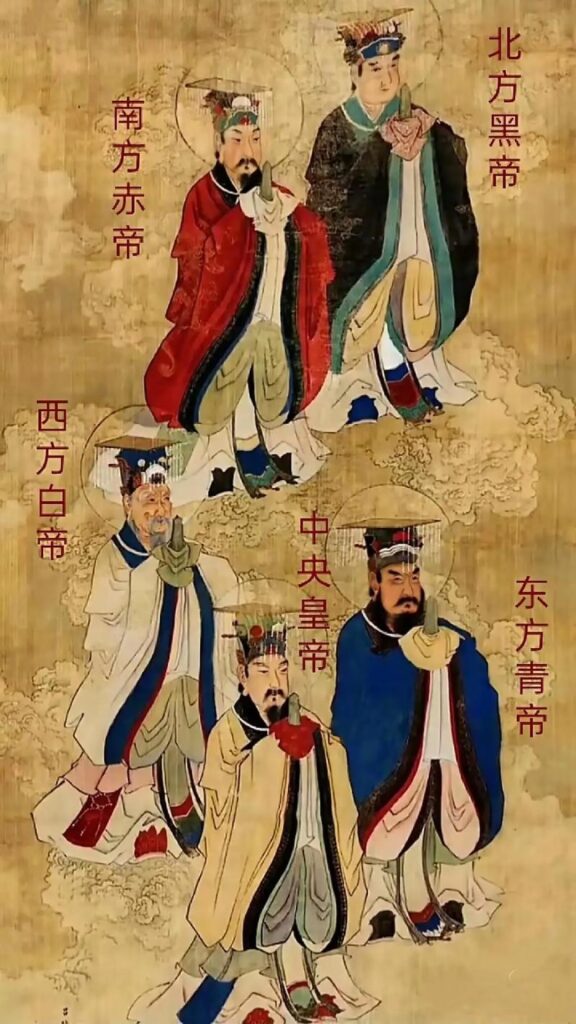
The Wufang Shangdi are usually arranged according to the five-direction model: east, south, center, west, and north. This system is deeply connected to Wuxing, the Five Elements or Five Phases: wood, fire, earth, metal, and water.
| Emperor | Direction | Color | Element | Common Identity |
|---|---|---|---|---|
| Qingdi / Cangdi | East | Green / Blue-green | Wood | Taihao / Fuxi |
| Chidi | South | Red | Fire | Yandi / Shennong |
| Huangdi | Center | Yellow | Earth | Yellow Emperor |
| Baidi | West | White | Metal | Shaohao |
| Heidi / Xuandi | North | Black / Dark | Water | Zhuanxu |
This arrangement shows why the Wufang Shangdi are more than mythological characters. They form a symbolic map of the cosmos. Each emperor represents a direction of space, a natural force, and a moral-political ideal.
Huangdi: The Yellow Emperor of the Center
Among the Wufang Shangdi, Huangdi, the Yellow Emperor, is probably the most famous. He occupies the center, corresponds to the color yellow, and is associated with the element earth. In Chinese imperial culture, yellow later became the color most closely linked with the emperor, partly because of this central and cosmic symbolism.
Huangdi is often treated as a founding ancestor of Chinese civilization. Myths credit him with bringing order, institutions, and culture to humanity. He is associated with clothing, marriage, language, medicine, warfare, and rulership. In many traditions, he is not merely a king but a civilizing force.
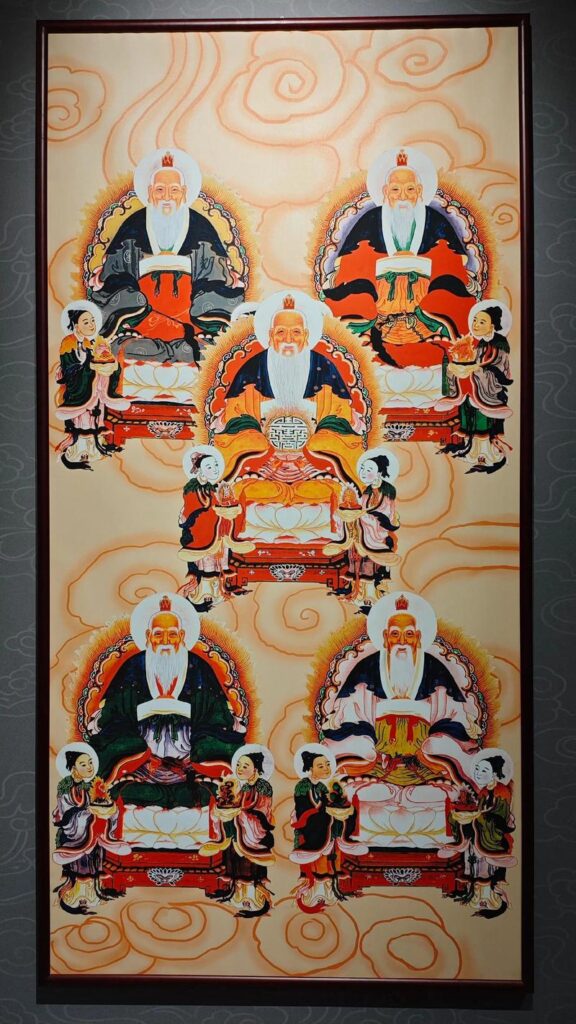
The Yellow Emperor also has an important ancestral role. Han Chinese tradition has long connected cultural identity with the legacy of Huangdi and Yandi, often calling them founding ancestors of Chinese civilization. This is why Huangdi is not only a mythological figure but also a symbol of cultural origin.
Qingdi or Cangdi: The Green Emperor of the East
Qingdi, also known as Cangdi, rules the east. His color is green or blue-green, and his element is wood. In ancient Chinese color language, the character qing could refer to both blue and green, which is why Qingdi may appear as either the Green Emperor or the Blue-green Emperor in English translations.
He is closely tied to spring, growth, fertility, and renewal. In some traditions, Qingdi is identified with Taihao, often connected with Fuxi, one of the great culture heroes of early Chinese mythology.
Qingdi is also linked with the Azure Dragon, one of the major celestial and directional symbols in Chinese cosmology. This dragon represents the east and spring, making Qingdi a powerful figure of natural rebirth and seasonal change.
Chidi: The Red Emperor of the South
Chidi, the Red Emperor, rules the south and corresponds to the element fire. He is often identified with Yandi or Shennong, the Divine Farmer.
Shennong is one of the most beloved figures in Chinese mythology because he is credited with teaching people agriculture and herbal medicine. According to legend, he tasted countless plants to understand their effects on the human body. Some stories say he had a transparent stomach, allowing him to observe how herbs worked inside him.
His myth has a strong human warmth. While Huangdi represents political order and civilization, Chidi represents survival, farming, healing, and the practical knowledge needed for daily life. This is why he remains important in traditions connected with agriculture and Chinese medicine.
Baidi: The White Emperor of the West
Baidi, the White Emperor, rules the west. His color is white, and his element is metal. He is commonly identified with Shaohao, a legendary ruler sometimes described as a son or descendant of Huangdi.
Baidi’s mythology is especially interesting because it often contains bird symbolism. In some accounts, Shaohao established a kingdom associated with birds, appointing different birds to official positions. This gives his mythology a distinctive atmosphere compared with the other emperors.
Baidi is also connected with Venus in some traditions and may be represented by a white dragon or, in certain artistic contexts, a tiger. Because textual traditions about Baidi vary, he is sometimes treated as a more complex or debated figure within the Five Emperors system.
Heidi or Xuandi: The Black Emperor of the North
Heidi, also called Xuandi in some traditions, rules the north. His color is black or dark, and his element is water. He is associated with winter, depth, coldness, and hidden power.
In later symbolic systems, the north is closely linked with the Dark Warrior, or Xuanwu, a powerful image combining turtle and snake symbolism. This figure became important in Daoist and popular religious imagery.
Heidi is sometimes identified with Zhuanxu, a legendary emperor and descendant of Huangdi. In this form, the Black Emperor is not only a directional god but also part of the ancient sage-king lineage that helped shape early Chinese mytho-history.
Wufang Shangdi and the Five Elements
One reason the Wufang Shangdi matter so much is their connection with the Five Elements, or Wuxing. These are not “elements” in the modern chemical sense. They are better understood as five dynamic phases or patterns of change:
- Wood
- Fire
- Earth
- Metal
- Water
The Wufang Shangdi give this system divine personality. Wood becomes Qingdi in the east. Fire becomes Chidi in the south. Earth becomes Huangdi in the center. Metal becomes Baidi in the west. Water becomes Heidi in the north.
This structure was not only religious. It shaped Chinese medicine, astrology, political theory, ritual practice, Feng Shui, and ideas about the proper order of government.
Wufang Shangdi in State Ritual and Imperial Thought
The Wufang Shangdi were not just figures from stories. They played a serious role in ancient Chinese ritual systems.
In historical texts, sacrifices to the Five Emperors were treated as major state rituals. They appeared alongside sacrifices to Heaven, Earth, the sun, the moon, ancestral temples, and important territorial gods. This shows that the Wufang Shangdi belonged to the highest level of religious-political worship.
For rulers, the Five Emperors also provided a model of cosmic legitimacy. A true emperor was expected to rule in harmony with Heaven, the seasons, the elements, and the moral order of the universe. The Wufang Shangdi embodied this ideal. They were not simply powerful; they were ordered, balanced, and cosmically placed.
Xiantian and Houtian Five Emperors
A helpful way to understand the Wufang Shangdi is through the distinction between Xiantian and Houtian forms.
The Xiantian Five Emperors are the pre-celestial or heavenly emperors. They are divine beings who rule the five cosmic directions. In Daoist language, they may be connected with primordial heavenly powers.
The Houtian Five Emperors are the post-celestial or earthly emperors. These are legendary sage-kings or culture heroes, such as Taihao, Shennong, Huangdi, Shaohao, and Zhuanxu. They are human or semi-human rulers who later became divine or were absorbed into the sacred cosmological system.
This distinction explains why the same names can appear in different ways. Sometimes the Five Emperors are cosmic gods. Sometimes they are ancient rulers. In Chinese mythology, these categories often overlap.
Why the Wufang Shangdi Still Matter
The Wufang Shangdi remain important because they reveal how ancient Chinese culture imagined the universe. The world was not random. Space had direction. Direction had color. Color had element. Element had season. Season had ritual. Ritual had political meaning.
That is the beauty of the Wufang Shangdi system. It turns the cosmos into a structured, symbolic whole.
For anyone studying Chinese mythology, Taoist cosmology, ancient state ritual, or the Five Elements, the Wufang Shangdi offer a powerful entry point. They show how mythology was never only about gods and legends. It was also a way to understand nature, society, kingship, ancestry, and the invisible order behind the visible world.
FAQ About Wufang Shangdi
Who are the Wufang Shangdi?
The Wufang Shangdi are the Five Emperors of the Five Directions in Chinese mythology. They are associated with the east, south, center, west, and north, as well as the colors green, red, yellow, white, and black.
What does Wufang Shangdi mean?
Wufang Shangdi means “Five Supreme Emperors of the Five Directions.” The term refers to five divine rulers connected with cosmic order, the Five Elements, directions, seasons, and ancient Chinese ritual thought.
Are Wufang Shangdi Taoist gods?
They are important in Taoist-related cosmology, but they also appear in broader Chinese religious, Confucian ritual, and mythological traditions. Their meaning changes depending on the text, ritual system, and historical period.
What are the five colors of Wufang Shangdi?
The five colors are green or blue-green for the east, red for the south, yellow for the center, white for the west, and black or dark for the north.
Which emperor is Huangdi?
Huangdi is the Yellow Emperor. In the Wufang Shangdi system, he rules the center, corresponds to the color yellow, and is associated with the earth element.
Is Shennong one of the Wufang Shangdi?
Yes, in the Houtian Five Emperors tradition, Shennong is commonly identified with Chidi, the Red Emperor of the south. He is associated with agriculture, herbal medicine, and the fire element.
What is the difference between Wufang Shangdi and Wudi?
Wudi means “Five Emperors,” while Wufang Shangdi more specifically means “Five Supreme Emperors of the Five Directions.” The terms often overlap, but Wufang Shangdi emphasizes the directional and cosmic structure.
Why are the Wufang Shangdi important?
They are important because they connect mythology, astronomy, ritual, imperial authority, the Five Elements, and Chinese ideas of cosmic order. They helped shape how ancient China understood Heaven, rulership, nature, and sacred space.