
Eight Immortals: Names, Symbols, Powers and Meaning
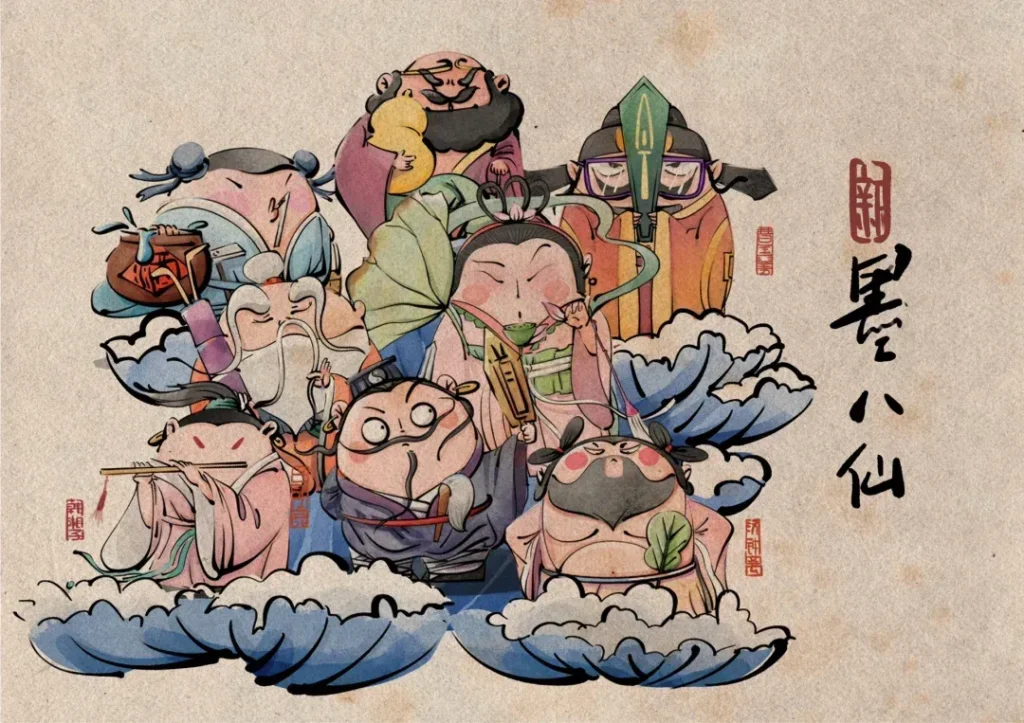
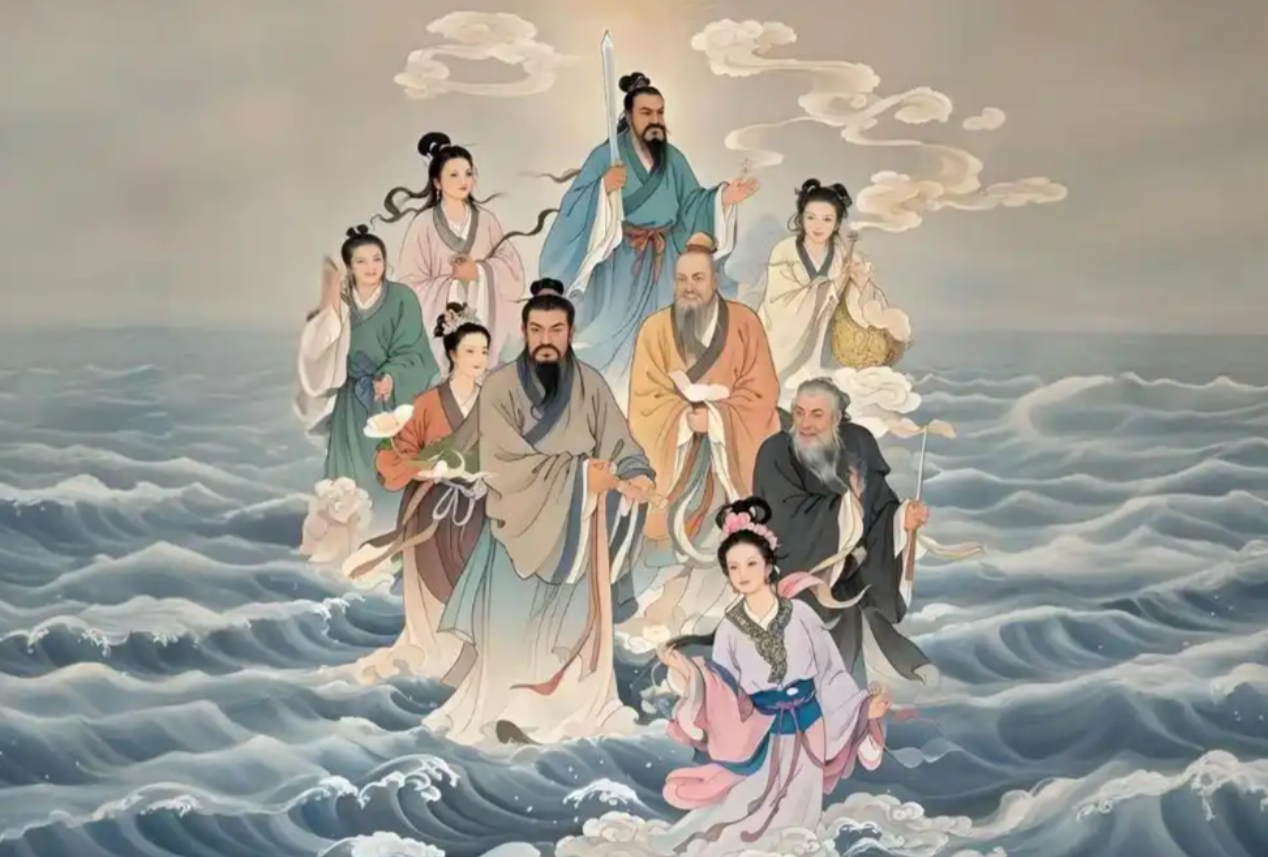
The Eight Immortals, or Ba Xian 八仙, are a traditional group of eight legendary immortals associated with Daoism, Chinese popular religion, folklore, drama and decorative art.
- Li Tieguai
- Zhongli Quan
- Lü Dongbin
- Zhang Guolao
- Lan Caihe
- He Xiangu
- Han Xiangzi
- Cao Guojiu
What Does “Eight Immortals” Mean?
The Chinese name is Bā Xiān, written 八仙. The character 八 means “eight,” while 仙, pronounced xian, is usually translated as “immortal” or “transcendent.”
A xian is not simply the Chinese equivalent of a Western god. The term more often describes a human, legendary adept, hermit or sacred figure who has passed beyond ordinary human limitations through cultivation, transformation, divine instruction, spiritual attainment or later deification.
Some immortals are closely connected with religious Daoism. Others belong more broadly to folklore, local worship, literature and Chinese popular religion. They do not all hold fixed offices in a single celestial hierarchy, and they should not be treated as eight identical creator gods.
Eight Immortals Names and Symbols
The group contains figures from very different social and legendary backgrounds. Scholars, officials, wanderers, musicians, recluses and unconventional performers all appear among them. This diversity is an important part of the group’s cultural appeal.
He Xiangu is normally the only unambiguously female member of the standard Eight Immortals. Lan Caihe is more difficult to classify: different literary and artistic traditions portray the figure as a young man, a woman, an elderly man or an androgynous wanderer.
| English name | Chinese | Pinyin | Common identity or background | Signature attribute | Main symbolic association |
|---|---|---|---|---|---|
| Li Tieguai | 李铁拐 | Lǐ Tiěguǎi | Disabled wanderer or beggar associated with healing legends | Iron crutch and medicine gourd | Healing, compassion and transformation |
| Zhongli Quan | 钟离权 | Zhōnglí Quán | General, recluse or master of immortality traditions | Feather fan | Transformation, revival and longevity |
| Lü Dongbin | 吕洞宾 | Lǚ Dòngbīn | Scholar, swordsman and influential Daoist immortal | Sword and fly whisk | Discipline, protection and spiritual insight |
| Zhang Guolao | 张果老 | Zhāng Guǒlǎo | Elderly eccentric, recluse or wonder-worker | Fish drum and white mule | Longevity and unconventional wisdom |
| Lan Caihe | 蓝采和 | Lán Cǎihé | Wandering singer or unconventional street performer | Flower basket | Freedom, spontaneity and detachment |
| He Xiangu | 何仙姑 | Hé Xiāngū | Female immortal associated with cultivation and sacred plants | Lotus or flower basket | Purity, spiritual refinement and nature |
| Han Xiangzi | 韩湘子 | Hán Xiāngzǐ | Musician traditionally connected with the scholar Han Yu | Flute | Music, inspiration and cultivation |
| Cao Guojiu | 曹国舅 | Cáo Guójiù | Courtly figure associated with the Song imperial family | Jade court tablet or clappers | Rank, conscience and renunciation |
These objects are conventional identifiers rather than a completely uniform system of supernatural powers. Individual paintings, porcelain designs, sculptures, operas and stories may modify or exchange certain attributes.
The Eight Members and Their Legendary Powers
Each immortal has several origin stories. The summaries below describe widely circulated traditions, not definitive historical biographies. Religious accounts, regional legends, theatrical works and later novels often preserve different explanations of how each figure attained immortality.
Li Tieguai 李铁拐 · Lǐ Tiěguǎi
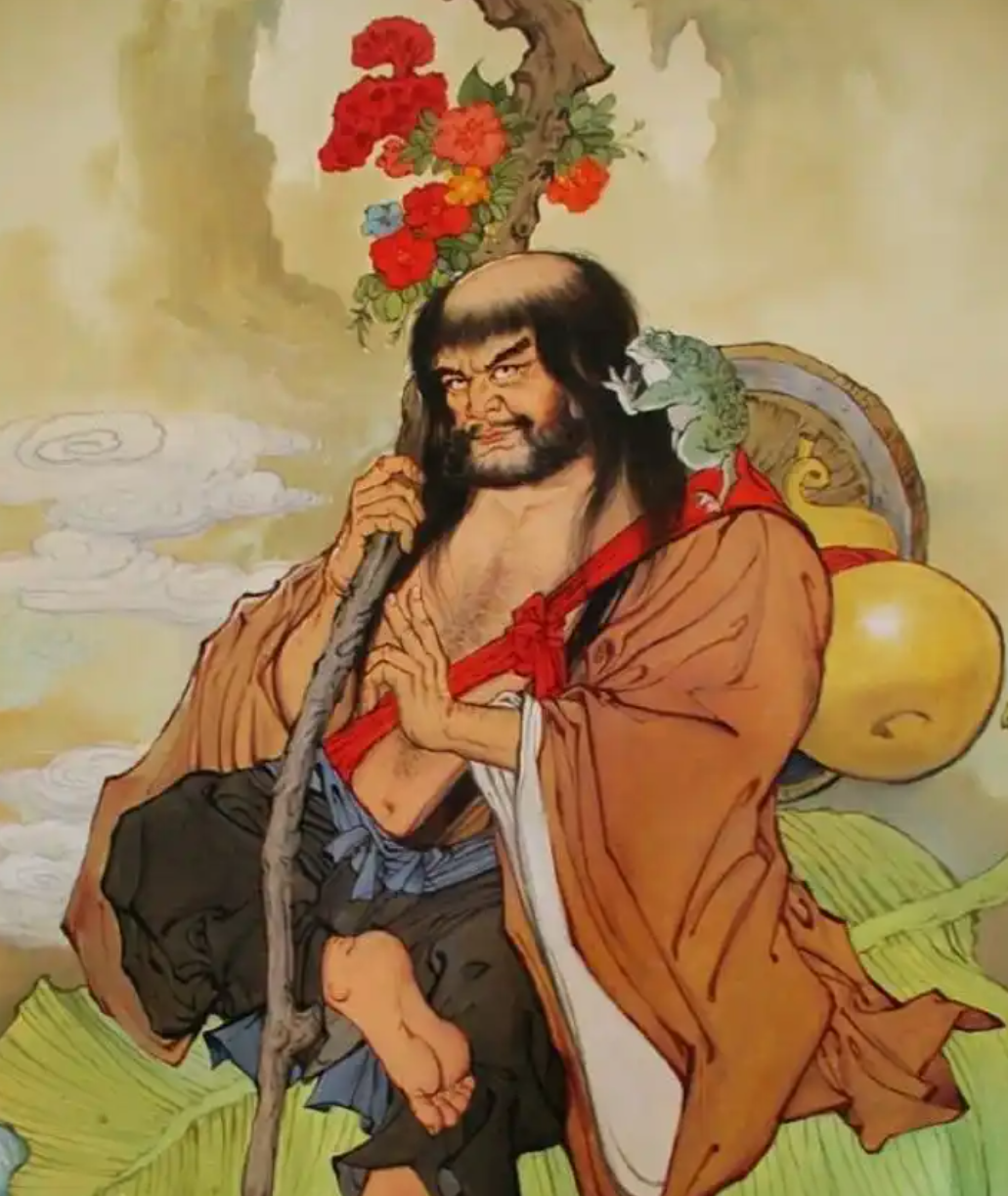
Li Tieguai, whose name means “Iron-Crutch Li,” is usually portrayed as a disabled wanderer with an unkempt appearance. His gourd is associated with medicine, healing substances, spirits or miraculous vapors.
A common legend says that his spirit left his body during meditation. When he returned, his original body had been destroyed, so he entered the body of a recently deceased disabled beggar. Other accounts frame his transformation differently.
His appearance conveys a recurring lesson: spiritual worth cannot be judged by physical beauty, wealth or social status. He is consequently associated with healing, compassion and aid for people who have been rejected or overlooked.
Zhongli Quan 钟离权 · Zhōnglí Quán
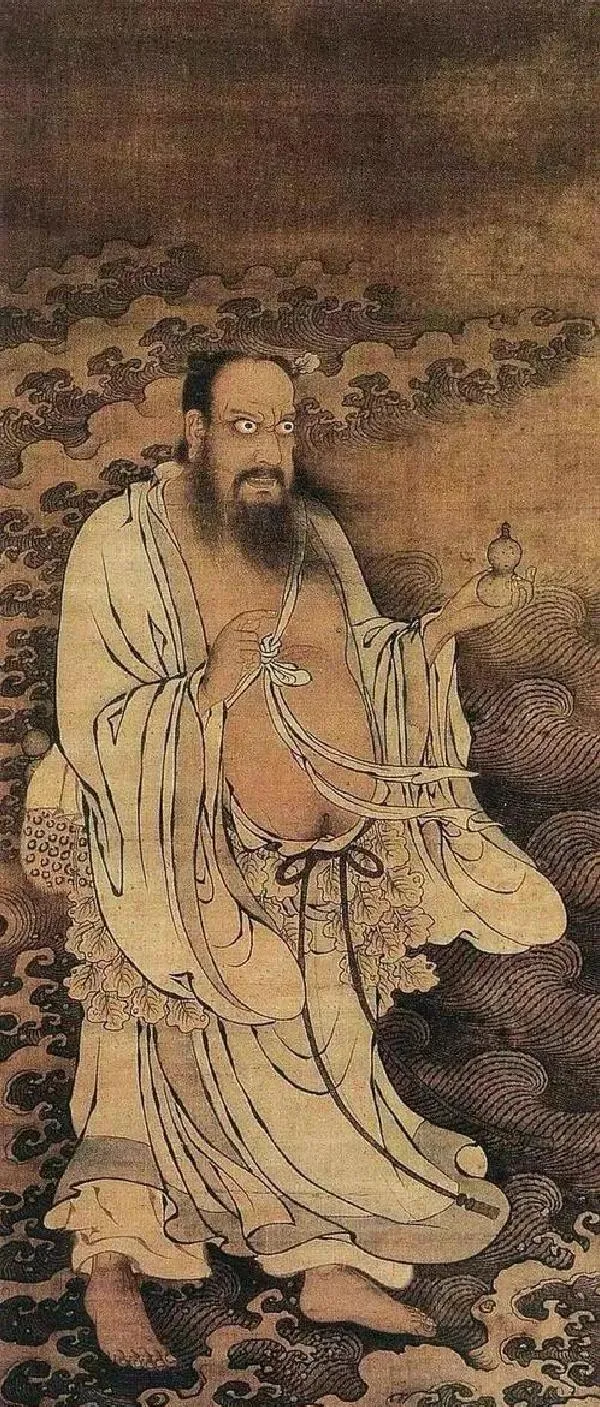
Zhongli Quan, also known as Han Zhongli, is commonly shown as a broad, bearded man carrying a large feather fan. Some legends describe him as a former military commander who withdrew from worldly life after defeat and learned the methods of transcendence.
The fan is his main artistic identifier. Later tales give it powers of revival, transformation or restoration, although these abilities are not described identically in every source.
Zhongli Quan is frequently presented as a teacher of Lü Dongbin. Some traditions make him the senior figure or leader of the Eight Immortals, while others give greater prominence to Lü Dongbin.
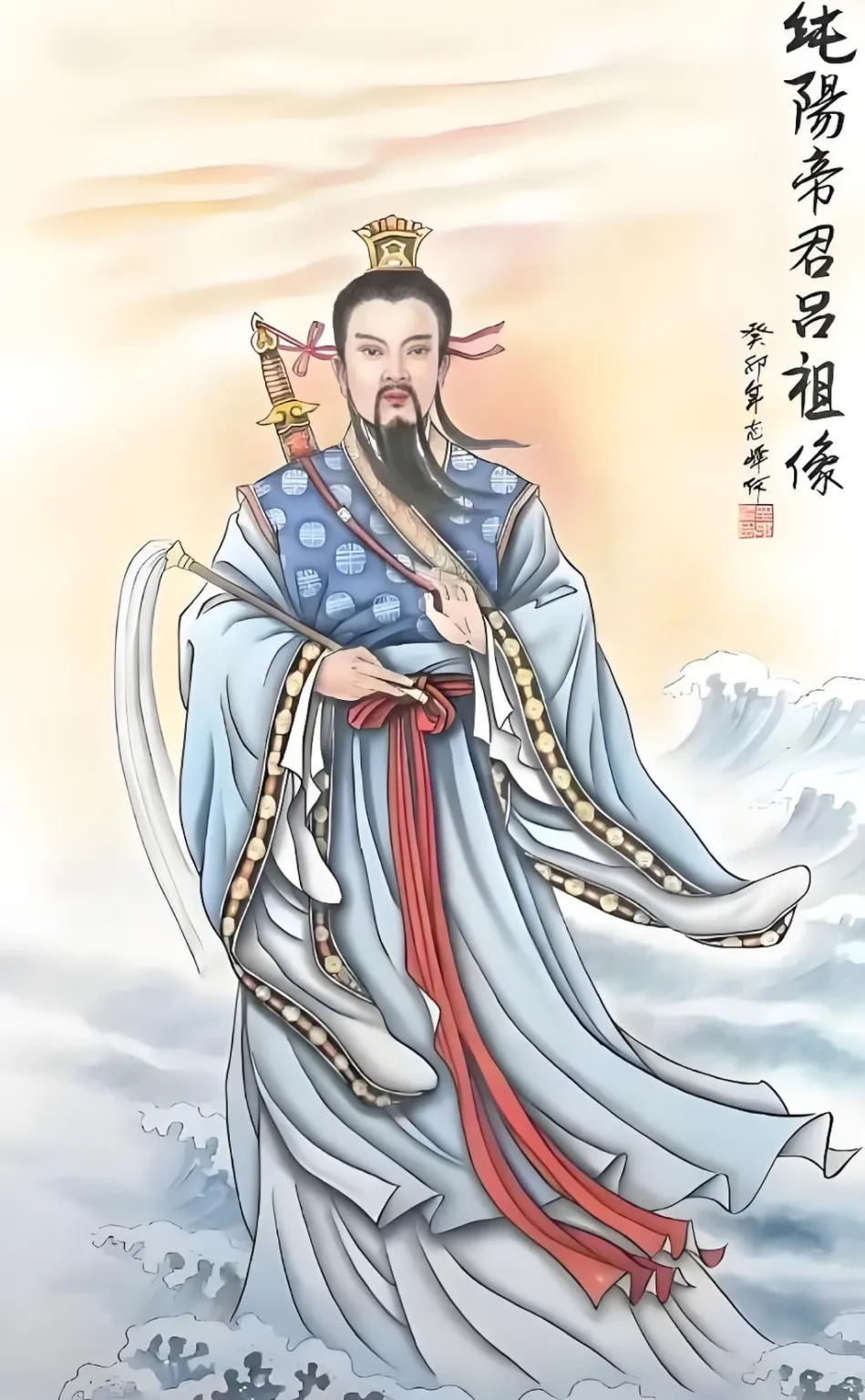
Lü Dongbin 吕洞宾 · Lǚ Dòngbīn
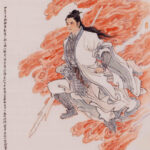
Lü Dongbin is one of the most influential and independently worshipped members of the group. He normally appears as a learned man in scholar’s robes, carrying a sword across his back and sometimes holding a Daoist fly whisk.
His legends frequently involve dreams, moral tests, encounters with Zhongli Quan and the rejection of official ambition. The sword can be understood as a weapon against harmful spirits, but it also represents discernment—the ability to cut through illusion and deception.
Lü Dongbin developed a religious identity extending well beyond the collective Eight Immortals stories. Different Daoist communities and popular traditions honor him under additional titles and emphasize different teachings.
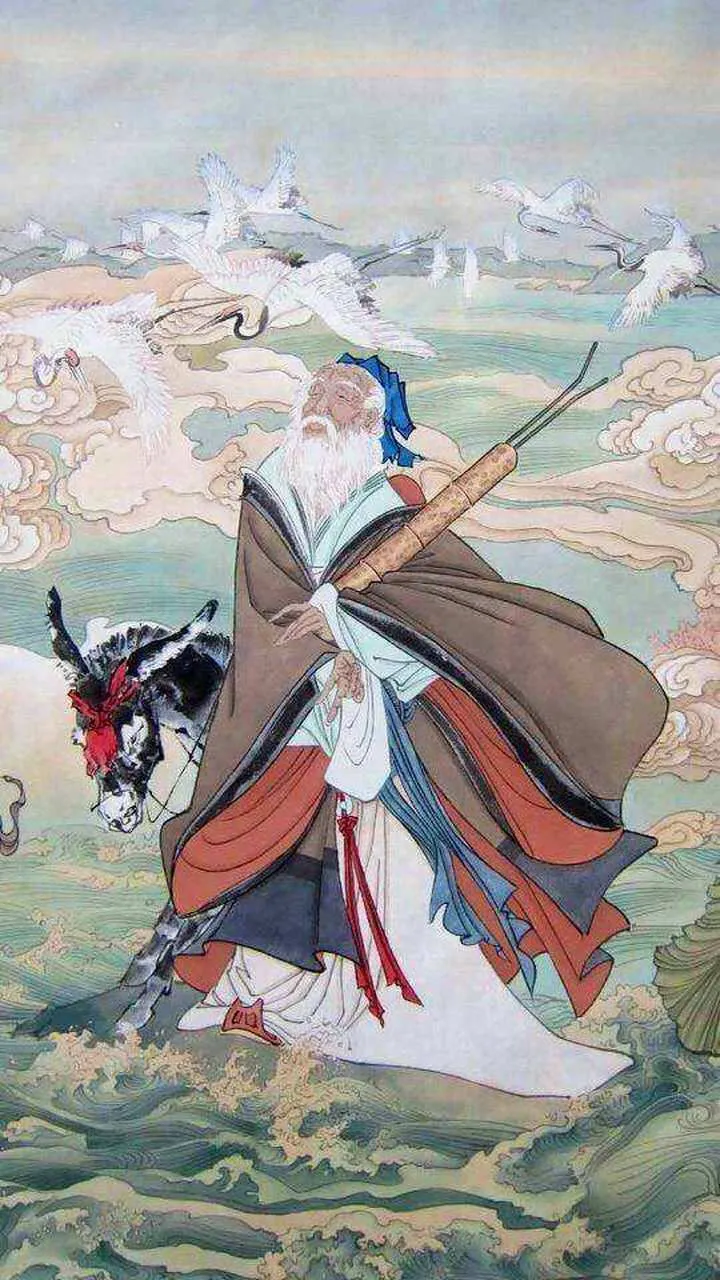
Zhang Guolao 张果老 · Zhāng Guǒlǎo
Zhang Guolao is the elderly eccentric of the group. He is often shown holding a bamboo fish drum and is famous for riding a white mule, sometimes while facing backward.
One legend says that the magical mule could be folded like paper when it was not needed and restored by sprinkling water on it. His strange travel habits and disregard for ordinary expectations reinforce his identity as an unconventional wonder-worker.
Some traditions connect him with a Tang-period recluse, but the immortal known from art and folklore combines uncertain historical memories with miracle stories. He primarily symbolizes longevity, age and wisdom that does not follow conventional rules.
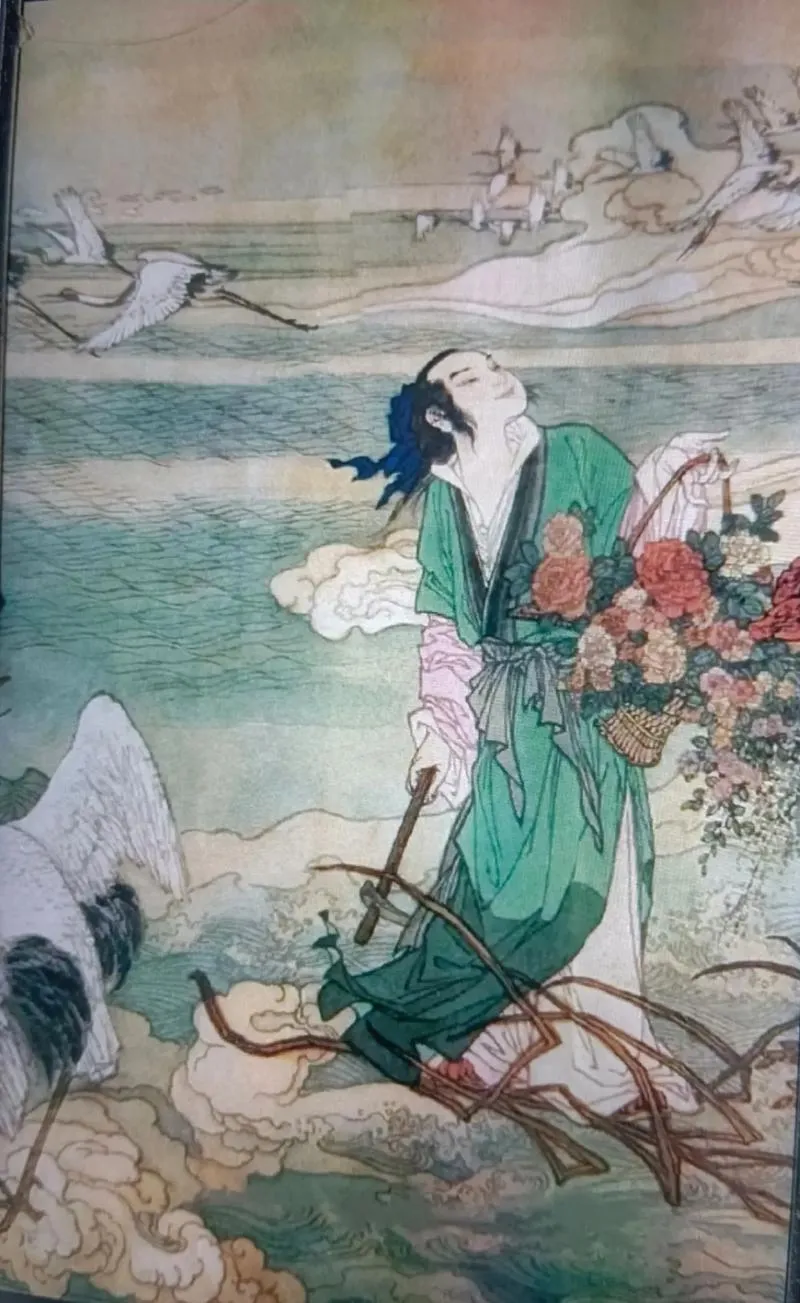
Lan Caihe 蓝采和 · Lán Cǎihé
Lan Caihe is commonly described as a wandering singer, beggar or street performer who carries a basket of flowers. Stories emphasize eccentric clothing, spontaneous singing, generosity and indifference to money.
The figure’s gender is represented differently across artistic and literary traditions. Lan Caihe may appear as a young man, a woman, an older man or an androgynous person. Assigning one fixed gender to every version would erase an important feature of the tradition.
The flower basket connects Lan Caihe with nature, beauty and transience. The wandering lifestyle symbolizes freedom from possessions, rigid social roles and ordinary expectations.
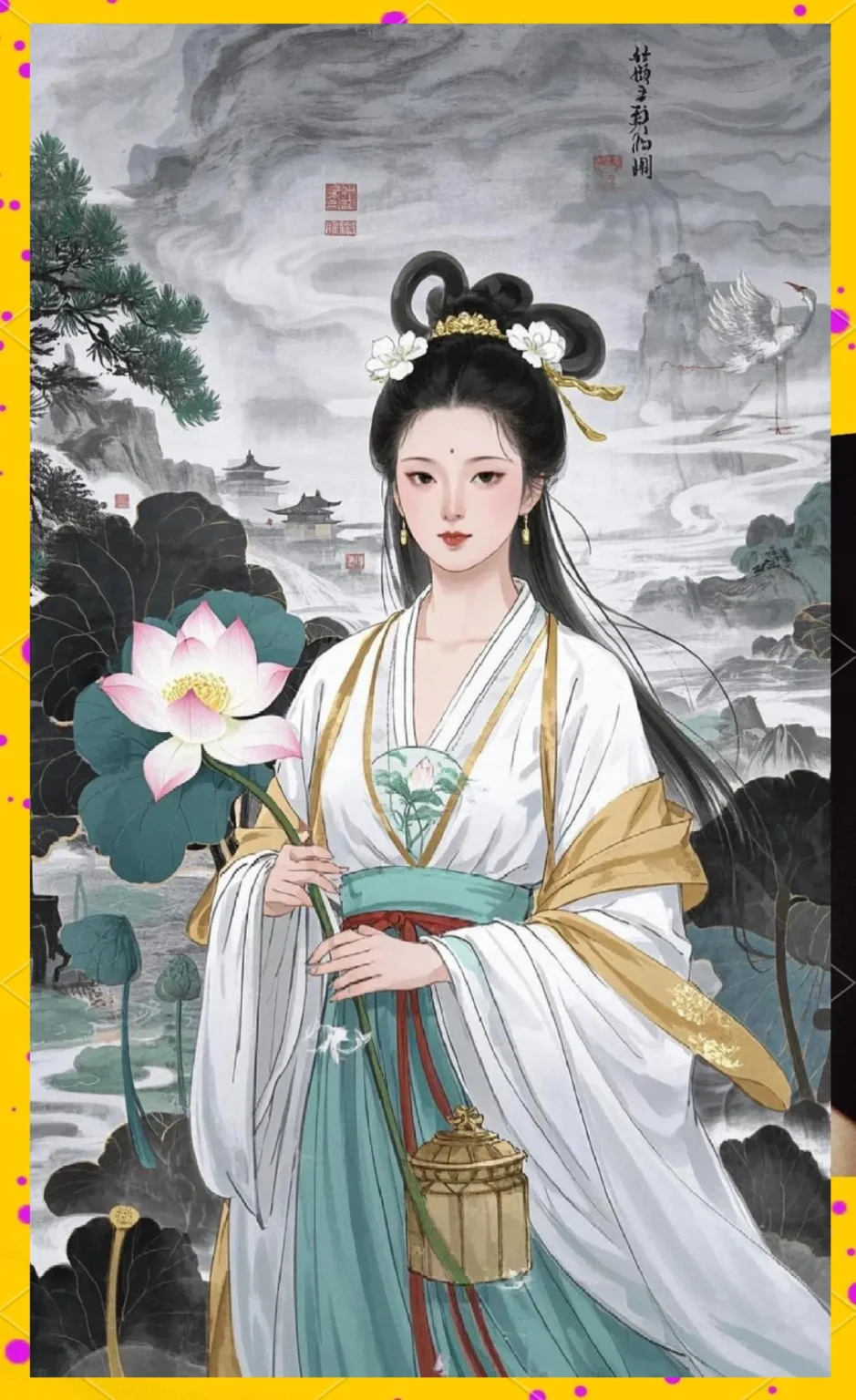
He Xiangu 何仙姑 · Hé Xiāngū
He Xiangu is normally the only consistently and unambiguously female member of the standard group. She is most frequently shown holding a lotus or flower basket, although peaches, herbs and a reed instrument appear in certain traditions.
Her legends describe different birthplaces and different paths to immortality. Some involve a dream, sacred food, mountain herbs, mineral substances, ascetic practice or instruction from another immortal. These stories should not be combined into one supposedly historical biography.
The lotus associates her with purity and spiritual refinement, while herb-gathering traditions connect her with nature and compassionate care. Read the separate guide to He Xiangu’s individual legend and symbols .
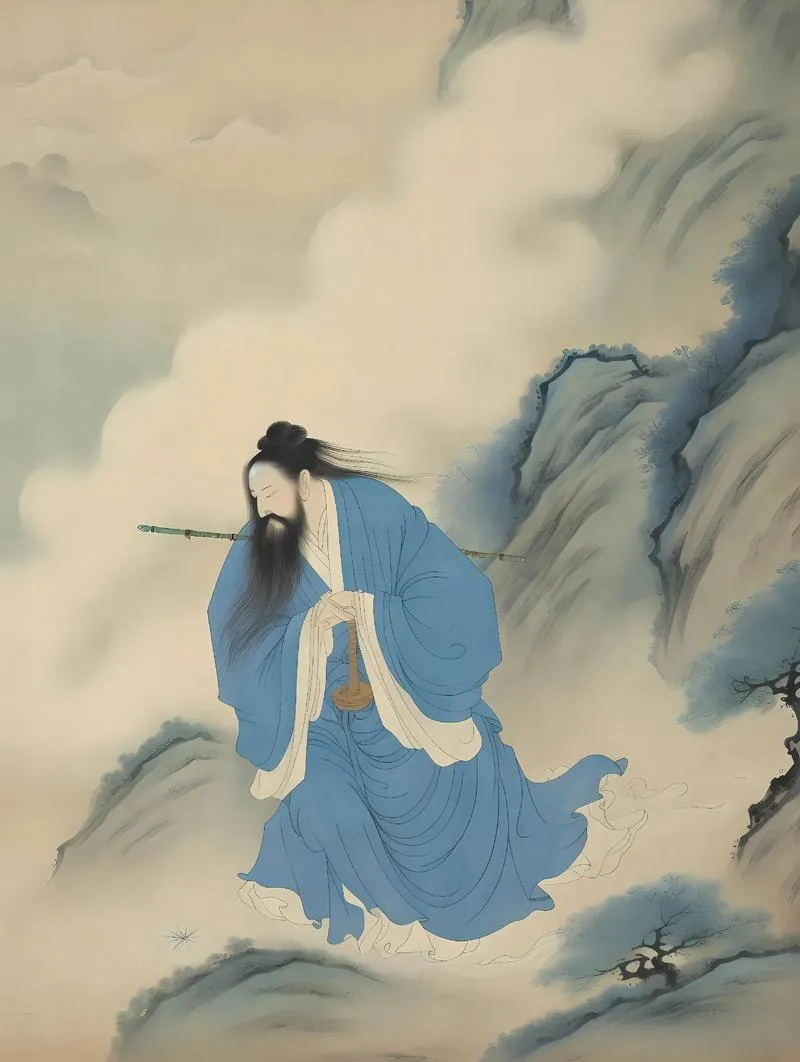
Han Xiangzi 韩湘子 · Hán Xiāngzǐ
Han Xiangzi is the musician of the Eight Immortals. Tradition connects him with the Tang scholar Han Yu, usually as a nephew or grandnephew, although the immortal’s surviving legends cannot be treated as a straightforward historical biography.
Some accounts portray Han Xiangzi as a student of Lü Dongbin who abandons conventional scholarship for spiritual cultivation. Other stories emphasize miraculous music, flowers blooming out of season and prophecies expressed through poetry.
His flute represents music, inspiration, harmony and the ability of art to communicate truths that ordinary language cannot fully express.
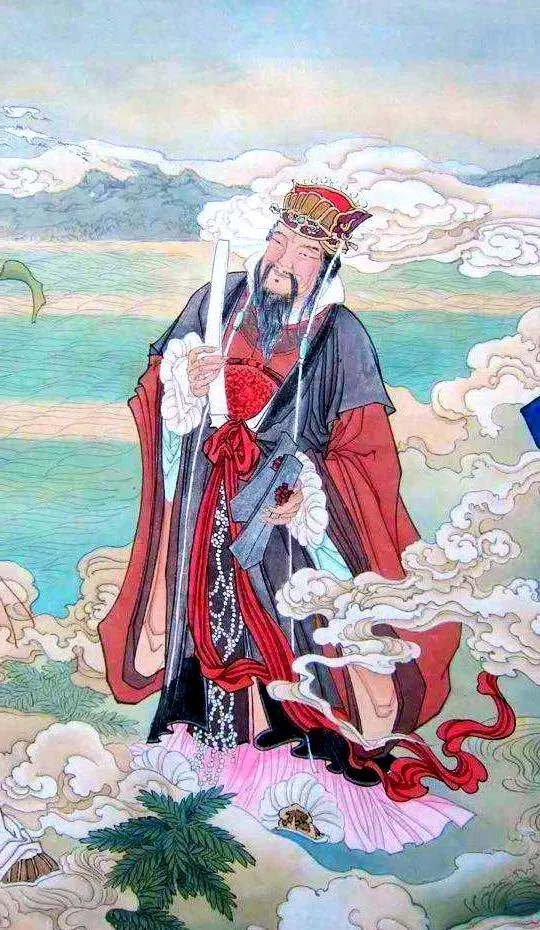
Cao Guojiu 曹国舅 · Cáo Guójiù
Cao Guojiu is the courtly member of the group. He is usually represented in official robes and a ceremonial headdress, holding the tablet carried by officials during formal court audiences. Some artworks identify him with clappers instead.
His legend commonly connects him with the Song imperial family. Different stories say that he withdrew because of a relative’s corruption, his own wrongdoing or a broader rejection of privilege and court life.
The recurring lesson is that rank cannot replace moral cultivation. Cao Guojiu represents the possibility of renouncing privilege and transforming outward status into inward discipline. Explore the complete Cao Guojiu story, identity and attributes .
Eight Immortals Crossing the Sea
“Eight Immortals Crossing the Sea” is the group’s most famous collective adventure. In the familiar story pattern, the immortals reach the sea and decide not to cross by using an ordinary boat or one shared celestial method. Instead, each relies on a personal attribute, magical object or supernatural ability.
The story does not survive as one universally authoritative original version. Operas, novels, storytelling traditions and regional legends differ over the reason for the journey, the order in which the immortals act and the objects they use.
Some retellings end after the successful crossing. Others develop into a dispute with a Dragon King or members of his family. These dramatic additions are important parts of later storytelling, but one version should not be presented as the sole ancient account.
“The Eight Immortals cross the sea, each displaying their own extraordinary ability.”
Bā xiān guò hǎi, gè xiǎn shéntōng — 八仙过海,各显神通
What Does “Each Immortal Displays Their Own Power” Mean?
The expression emphasizes that the eight face the same obstacle but do not solve it in the same way. Each succeeds by applying a different strength, object or method.
In modern Chinese, the saying describes people using their own skills, resources or specialties to complete a task. Depending on the context, it can refer to cooperative problem-solving, individual initiative or several people competing to show what they can do.
The central idea
People do not always need to follow one identical procedure. Different abilities can produce different solutions to the same problem. The story therefore celebrates individuality, resourcefulness and the practical value of diverse strengths.
Eight Immortals in Daoism and Chinese Popular Religion
The Eight Immortals occupy overlapping worlds. They are associated with Daoism, but they also belong to popular religion, folklore, local temple traditions, literature, opera and secular decorative art. The boundary between these contexts is not always sharp.
Some members have stronger connections with organized Daoist traditions than others. Lü Dongbin, for example, developed an important religious identity beyond the collective group. Other members are especially familiar through theater, legends, paintings and auspicious household objects.
Collectively, the immortals make transcendence appear accessible through many paths. Their stories involve cultivation, divine instruction, withdrawal from public life, repentance, moral testing, artistic inspiration, healing and transformation.
They should not, however, be treated as a complete summary of Daoist belief. Daoism includes extensive philosophical, ritual, institutional, meditative and alchemical traditions that extend far beyond these popular figures.
Eight Immortals in Painting, Porcelain, Opera and Decorative Art
The Eight Immortals became exceptionally durable cultural figures because each member has a recognizable visual identity. Artists could show the whole group, select one or two members, depict a narrative episode or replace the figures with the objects of the Hidden Eight Immortals.
They appear in temple murals, hanging scrolls, woodblock prints, porcelain, jade, lacquer, bamboo carving, embroidery, furniture, architectural decoration and festival imagery. Their legends also became popular subjects in opera and other dramatic traditions.
Context changes the meaning of an image. A temple representation may have a devotional function. A porcelain dish, embroidered robe or birthday screen may use the same figures primarily as signs of longevity, blessing and good fortune.
By later imperial periods, the Eight Immortals and their attributes were familiar enough to be recognized across many types of objects. This artistic visibility helped standardize their names, appearances and conventional symbols without eliminating local variations.
What Do the Eight Immortals Symbolize?
As a group, the Eight Immortals symbolize diversity within the search for transcendence. They differ in age, appearance, social rank, temperament and background. The group includes an official, scholar, musician, wanderer, elderly eccentric, disabled beggar, female immortal and socially unconventional performer.
Longevity and transcendence
Their immortal status makes the group suitable for birthday art, longevity imagery and objects expressing hopes for a long, flourishing life.
Individual ability
The sea-crossing legend presents each figure as possessing a distinct method, attribute or strength rather than one shared solution.
Moral transformation
Several legends involve rejecting ambition, correcting past behavior, surviving hardship or discovering that status alone cannot produce spiritual attainment.
Social diversity
The group suggests that sacred transformation is not restricted to one profession, class, age, gender expression or outward appearance.
Other common associations include healing, protection, good fortune, prosperity, artistic inspiration, freedom from rigid expectations and the possibility of leaving worldly attachment behind.
These are broad cultural associations rather than a fixed theological creed. A temple, opera, regional legend or decorative workshop may emphasize different meanings.
Frequently Asked Questions
Who are the Eight Immortals?
The standard members are Li Tieguai, Zhongli Quan, Lü Dongbin, Zhang Guolao, Lan Caihe, He Xiangu, Han Xiangzi and Cao Guojiu.
Are the Eight Immortals gods?
They may be worshipped or treated as divine figures in some contexts, but “immortals” or “transcendents” is generally more precise. They are not eight equivalent creator gods with identical cosmic roles.
What powers do the Eight Immortals have?
Their legends include healing, transformation, spirit travel, miraculous music, swordsmanship, revival and the use of magical objects. The exact powers vary between stories and are not organized into one universal system.
Who is the female member of the Eight Immortals?
He Xiangu is the only consistently and unambiguously female member of the standard group. Lan Caihe’s gender presentation varies across artistic and literary traditions.
What are the main symbols of the Eight Immortals?
Their most familiar attributes are the iron crutch and gourd, feather fan, sword, fish drum, flower basket, lotus, flute and court tablet or clappers.
What are the Hidden Eight Immortals?
The Hidden Eight Immortals are an artistic motif that uses the immortals’ attributes in place of the human figures. The objects allow viewers to recognize the entire group without seeing the eight characters themselves.
What does the Eight Immortals crossing the sea story mean?
It shows each immortal solving the same problem by using a different ability or method. The related idiom describes people applying their own strengths and resources to achieve an objective.
Were the Eight Immortals historical people?
Some members may preserve memories of historical recluses, scholars or officials. Their surviving identities, however, combine uncertain historical associations with religious legend, folklore, drama and later literature.
When did the Eight Immortals become a standard group?
Their individual legends developed at different times. The familiar collective formed gradually in later imperial China through religious traditions, literature, theater and visual art rather than appearing fully formed in the earliest Chinese myths.
1 thought on “Eight Immortals”
Comments are closed.