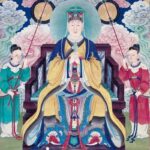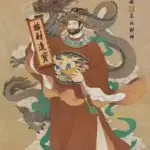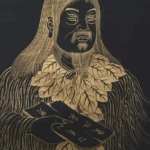
Yan Luo Wang is one of the most recognizable underworld figures in Chinese mythology. Often called Yan Wang, King Yan, or the Chinese King of Hell, he is the stern judge who receives the dead, examines their deeds, and decides what kind of punishment, reward, or rebirth awaits them.
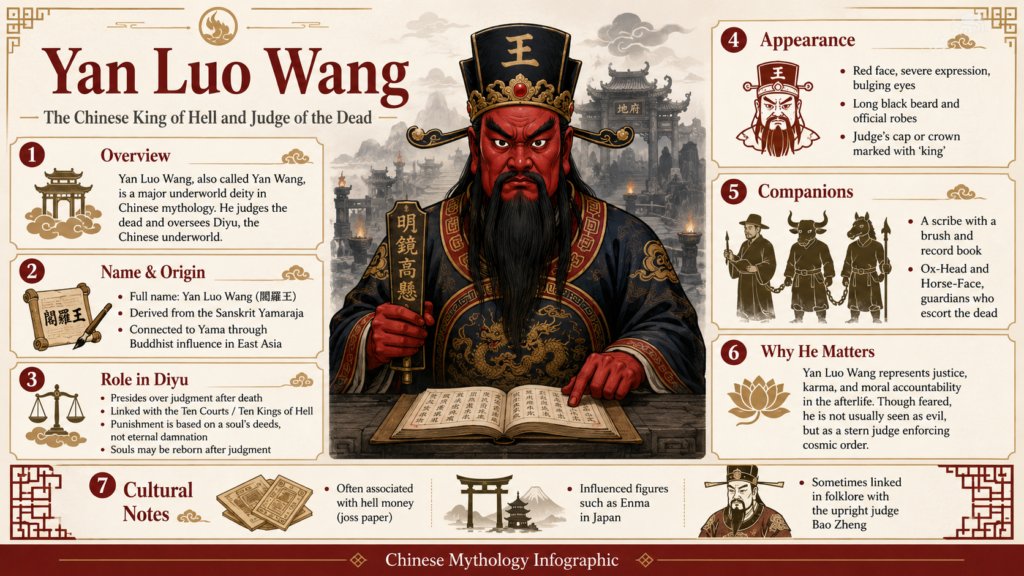
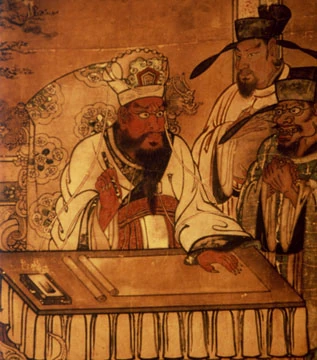
At first glance, Yan Luo Wang can seem like a frightening figure: red-faced, severe, bearded, and seated like an imperial judge of the afterlife. But his role is more complicated than simply “evil god of hell.” In Chinese Buddhist, Taoist, and folk traditions, he is not usually portrayed as a devil. He is closer to a divine magistrate — terrifying, yes, but also part of a moral order where every action has consequences.
Who Is Yan Luo Wang?
Yan Luo Wang is the ruler and judge of Diyu, the Chinese underworld often translated as “hell.” In many traditions, Diyu is not a place of eternal damnation, but a vast system of courts, prisons, and punishments where souls are judged before moving on to rebirth.
His name is written as 阎罗王 or 閻羅王 in Chinese. The shorter form, Yan Wang, simply means “King Yan.” The fuller name, Yan Luo Wang, comes from Yamaraja, the Sanskrit name of Yama, the ancient Indian god of death.
This is why Yan Luo Wang is often connected with Yama in Buddhist traditions. As Buddhism spread from India into China and across East Asia, the figure of Yama changed. In China, he gradually took on the appearance and authority of a Chinese imperial judge, becoming Yan Luo Wang — a ruler of the dead shaped by Buddhist ideas, Taoist cosmology, and Chinese folk religion.
The Origin of Yan Luo Wang
Yan Luo Wang’s deeper origin can be traced to Yama, a death deity known in ancient Indian religious texts. When Buddhist stories traveled into China, Yama entered the Chinese religious imagination and merged with local ideas about the underworld.
This blending of traditions is a classic example of religious syncretism. Rather than simply copying the Indian version of Yama, Chinese culture reshaped him. Yan Luo Wang became less like a distant foreign deity and more like a Chinese court official: formal, bureaucratic, moral, and deeply tied to ideas of justice.
Over time, similar underworld rulers appeared across East Asia. In Japan, he is known as Enma or King Enma. In some English translations and pop culture works, he appears as King Yemma. In different regions, his name, appearance, and stories may vary, but his essential role remains the same: he judges the dead.
What Does Yan Luo Wang Look Like?
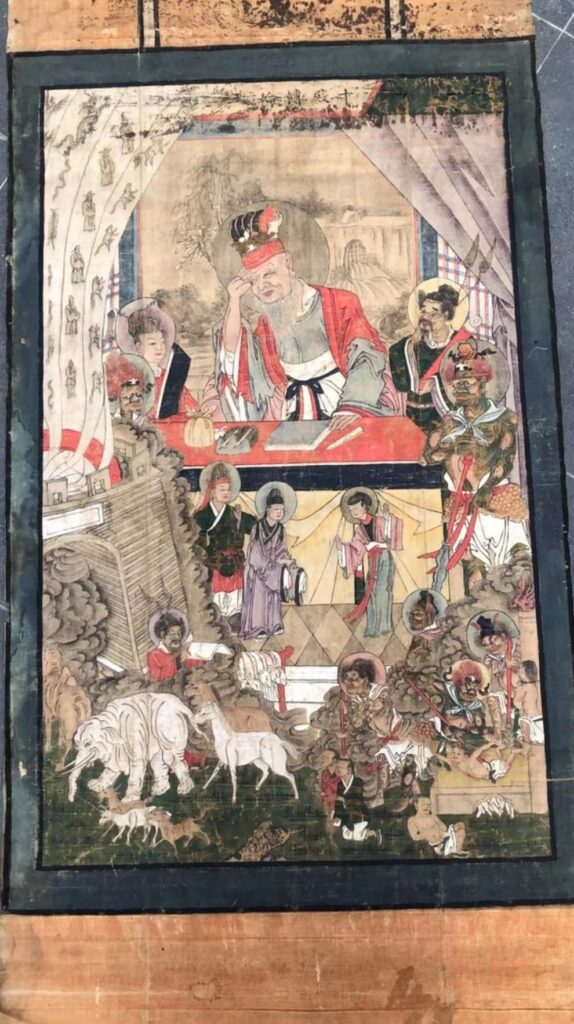
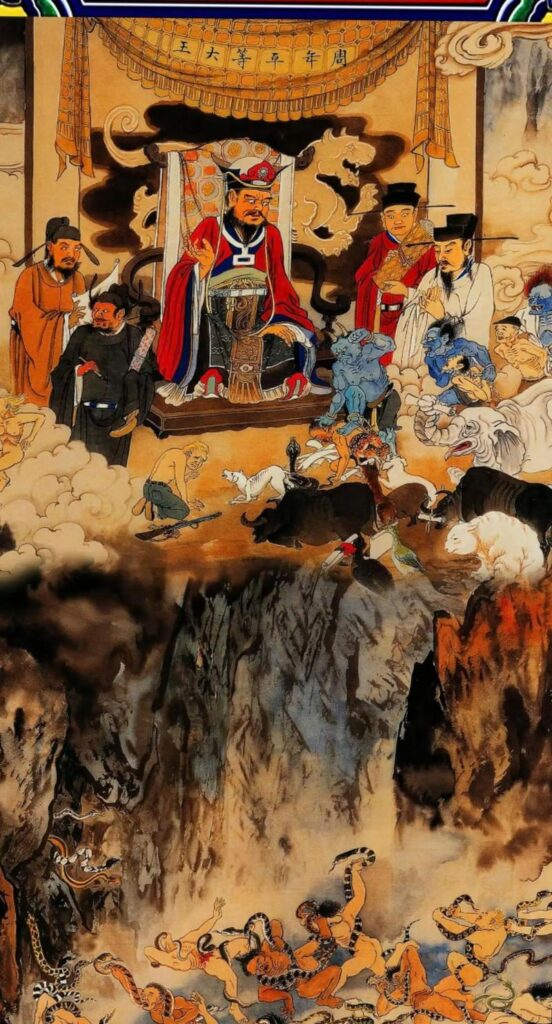
Yan Luo Wang is usually shown as a large, imposing man with a stern expression. Many depictions give him bulging eyes, a long black beard, and a red or dark face. He often wears traditional robes and a judge’s hat or crown marked with the Chinese character 王, meaning “king.”
His image is designed to feel official and intimidating. He does not look like a monster hiding in the shadows. He looks like a powerful magistrate who has the authority to question, sentence, and command.
In some Chinese traditions, especially those linking Yan Luo Wang with upright historical officials such as Bao Zheng, his appearance may be more dignified than monstrous. This version emphasizes justice rather than horror. He is still feared, but he is feared because he cannot be bribed, fooled, or avoided.
Yan Luo Wang and Diyu, the Chinese Underworld
To understand Yan Luo Wang, it helps to understand Diyu. In Chinese Buddhist belief, Diyu is a layered underworld where souls face judgment after death. Some descriptions speak of ten courts or ten halls, each overseen by a different king. Other versions describe many hells and sub-hells, each designed for a particular kind of wrongdoing.
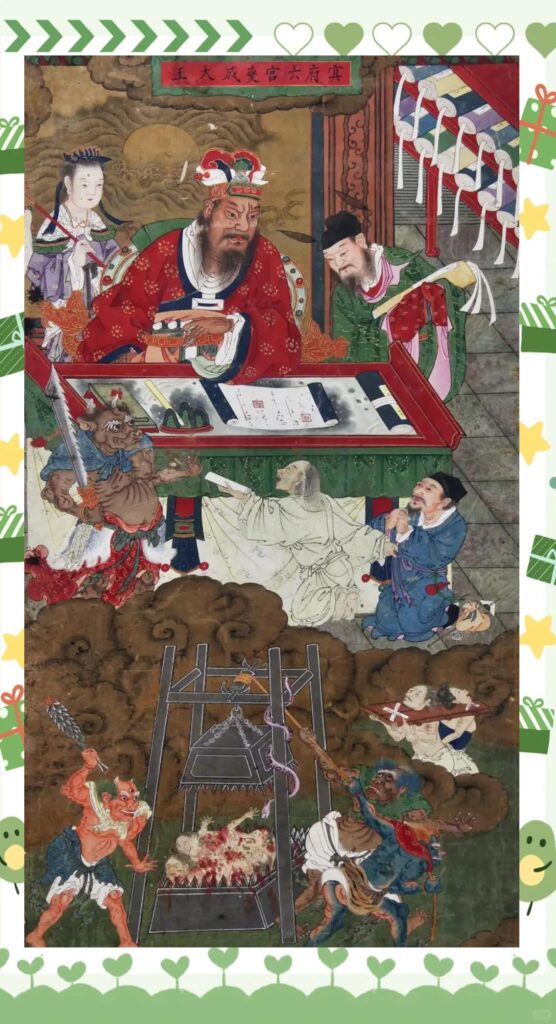
Yan Luo Wang is often presented as one of the most important rulers in this system. In some stories, he rules all of Diyu. In others, he is the Fifth King of Hell, responsible for a specific court and its punishments.
Unlike the Christian idea of hell as a final and eternal destination, Diyu is usually connected with karma and reincarnation. Souls suffer according to the severity of their sins, but punishment is not always permanent. After judgment and purification, a soul may be reborn as a human, animal, spirit, or another being, depending on its moral record.
How Yan Luo Wang Judges the Dead
In traditional stories, newly dead souls are brought before Yan Luo Wang for examination. He is often accompanied by a scribe who carries a brush and a great book containing the names, deeds, and death dates of human beings.
Two famous underworld guards, Ox-Head and Horse-Face, help bring souls to his court. These fearsome figures are among the most recognizable attendants in Chinese underworld mythology. Their job is not to debate or persuade; they escort the dead to judgment.
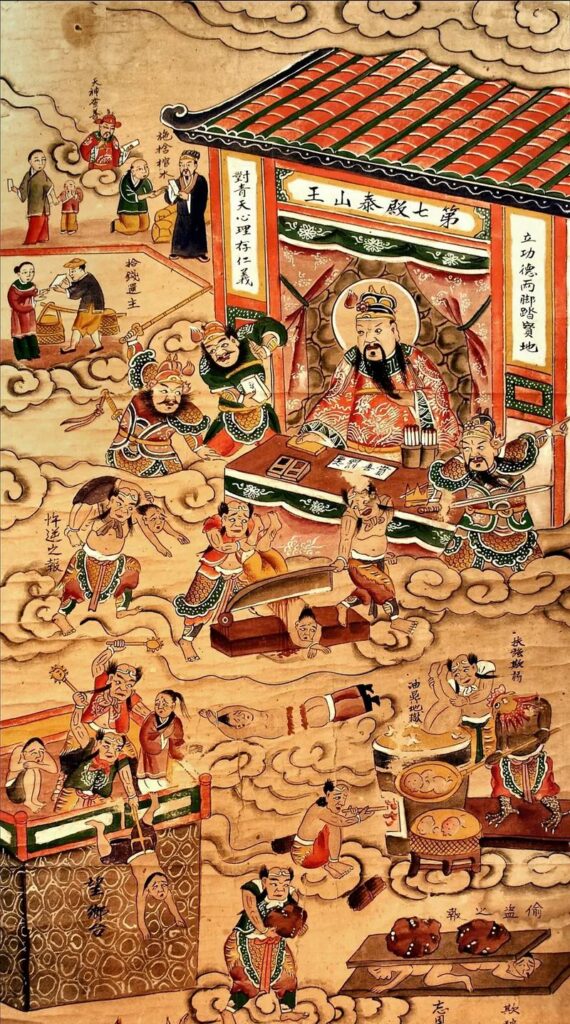
Yan Luo Wang then weighs the soul’s actions. Those who lived with virtue may receive a better rebirth, temporary heavenly reward, or in some legends even a chance to return to life. Those who committed serious wrongs may be sent to specific punishments in Diyu.
The punishments described in old stories can be extremely graphic: mountains of knives, boiling cauldrons, burning pillars, and other symbolic tortures. These images were meant to teach moral lessons. They warned people that hidden crimes, cruelty, hypocrisy, and violence would eventually be exposed.
Is Yan Luo Wang Evil?
Yan Luo Wang is frightening, but he is not usually evil. This is one of the most important points to understand.
He does not punish souls for personal pleasure. He represents law, judgment, and karmic consequence. In many stories, he is more like a supernatural judge than a demon. His court may be terrifying, but it exists to enforce a moral order.
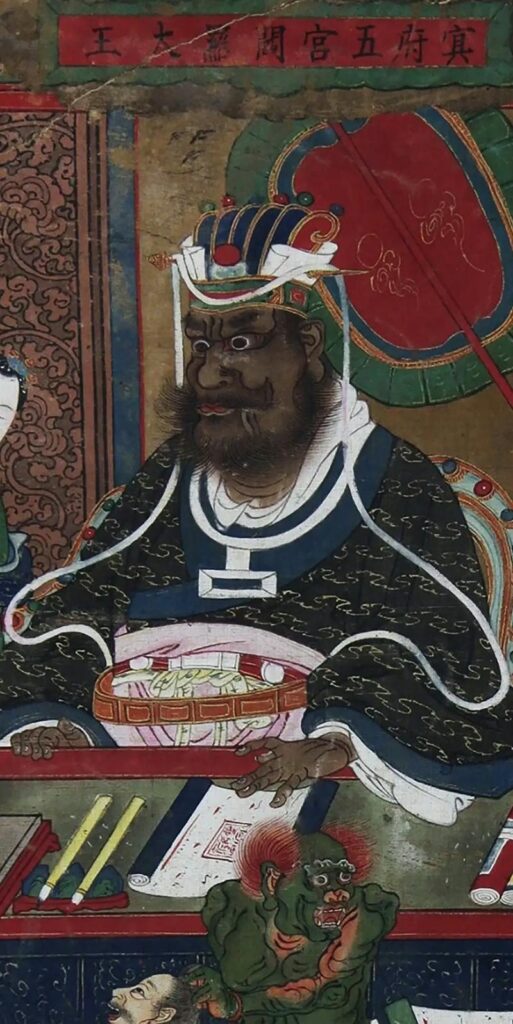
Some legends even describe Yan Luo Wang as too merciful. In certain versions, he is demoted from a higher position because he feels pity for wrongly dead souls or allows some people to return to life. This makes him a more complex figure: strict, but not heartless.
This is also why Chinese folklore sometimes connects the position of Yan Luo Wang with famous honest officials. Bao Zheng, a Song dynasty official known for justice and incorruptibility, became especially associated with underworld judgment in later stories. The idea is clear: a truly just official in life could become a judge of the dead after death.
The Ten Kings of Hell and Yan Luo Wang
In many Chinese religious traditions, the underworld is governed by the Ten Kings of Hell. These kings preside over different courts and stages of posthumous judgment.
Yan Luo Wang is sometimes described as the Fifth King of Hell. This position varies depending on the text or local belief. In popular imagination, however, his name is often used more broadly. Many people may simply say “Yan Wang” or “Yan Luo Wang” to refer to the ruler of the underworld in general, even when the formal system contains multiple kings.
This flexibility is common in Chinese mythology. A deity may be a single figure, a title, an office, or a role that different beings can hold. Yan Luo Wang is not always treated as one fixed individual with one consistent biography. In some stories, worthy humans may become Yan Luo Wang after death.
Yan Luo Wang, Bao Zheng, and Human Judges
One of the most interesting developments in Chinese folklore is the connection between Yan Luo Wang and famous human officials.
Bao Zheng, often called Bao Gong, was remembered as an honest and fearless judge. In popular legend, he became so associated with justice that people imagined him continuing his work in the underworld. The phrase “Bao Yanluo” reflects this idea: Bao Zheng as a stern, incorruptible judge like Yan Luo Wang.
Other historical figures were also linked with the role of underworld ruler in various tales, including Han Qinhu, Kou Zhun, and Fan Zhongyan. These stories do not always agree with one another, but they reveal something important about Chinese religious imagination: the underworld was often imagined as a court system, and the best judge was someone morally upright enough to handle life and death.
Yan Luo Wang and Hell Money
Yan Luo Wang also appears in everyday ritual culture, especially through hell money, also known as joss paper. In many Chinese communities, people burn paper money and paper goods for deceased relatives, believing these offerings can help them in the afterlife.
Yan Luo Wang’s image is often printed on hell money, much like political leaders appear on ordinary banknotes. This visual detail shows how the afterlife is imagined almost like another government, with courts, officials, records, currency, and procedures.
For many families, burning joss paper is not meant to be dark or strange. It is a normal part of remembrance, mourning, and care for the dead. The living continue to show respect by providing symbolic resources for loved ones on their journey through the underworld.
Yan Luo Wang in Popular Culture
Because Yan Luo Wang is such a powerful and recognizable death figure, he appears frequently in modern media. Different names and versions of him can be found in anime, games, novels, films, and television.
In Dragon Ball Z, the underworld judge King Yemma is clearly inspired by Yama and Yan Luo Wang traditions. In Yokai Watch, King Enma reflects the Japanese version of the same broader figure. These pop culture adaptations are often lighter or more comedic than the traditional stories, but they keep the basic idea: a powerful ruler who judges souls after death.
Yan Luo Wang remains memorable because he combines several strong images at once: judge, king, death god, moral examiner, and underworld official.
Why Yan Luo Wang Still Matters
Yan Luo Wang has lasted for centuries because he answers a very human question: what happens after death, and will justice finally be done?
In life, people may escape punishment. They may hide cruelty, dishonesty, or violence. But in the court of Yan Luo Wang, nothing is lost. Every deed is recorded. Every soul must answer.
That is why he is feared — and also why he is respected. Yan Luo Wang represents the belief that the universe has a moral memory. His court may be terrifying, but behind the terror is a simple lesson: actions matter.
FAQ
Who is Yan Luo Wang?
Yan Luo Wang is the Chinese King of Hell and a judge of the dead. He rules or presides over Diyu, the Chinese underworld, and decides the fate of souls after death.
Is Yan Luo Wang the same as Yama?
Yan Luo Wang is closely connected to Yama, the Indian and Buddhist god of death. As Buddhism spread into China, Yama was adapted into Chinese culture and became Yan Luo Wang.
What does Yan Luo Wang mean?
Yan Luo Wang means “King Yan Luo.” The name Yan Luo comes from Yamaraja, a Sanskrit name meaning “King Yama” or “king of death.”
Is Yan Luo Wang evil?
No, Yan Luo Wang is not usually considered evil. He is frightening because he judges and punishes the dead, but his role is to uphold justice and karmic order.
What is Diyu?
Diyu is the Chinese underworld, often translated as “hell.” It is a place where souls are judged and punished before rebirth, rather than a place of eternal damnation in most traditional beliefs.
Who are Ox-Head and Horse-Face?
Ox-Head and Horse-Face are two famous underworld guardians in Chinese mythology. They escort newly dead souls to Yan Luo Wang for judgment.
Why is Yan Luo Wang shown with a red face?
Yan Luo Wang is often shown with a red or dark face to emphasize his fearsome, supernatural authority. Some legends also connect his red skin with punishments he himself suffers in hell.
Is Bao Zheng related to Yan Luo Wang?
In later Chinese folklore, the honest official Bao Zheng is sometimes imagined as becoming an underworld judge or even identified with Yan Luo Wang. This reflects Bao Zheng’s reputation for strict justice.
Why is Yan Luo Wang printed on hell money?
Yan Luo Wang appears on hell money because he is associated with the underworld’s authority. Burning hell money is a traditional ritual meant to provide symbolic support for deceased relatives in the afterlife.
Is Yan Luo Wang still worshiped today?
Yan Luo Wang still appears in Chinese folk religion, temple culture, funeral customs, and popular media. Beliefs vary by region and family tradition, but his image remains widely recognized.