

When people talk about the Chinese god of war Guan Yu story, they are usually talking about more than one man. There is the historical Guan Yu, a real general who lived during the final years of the Han dynasty. Then there is the legendary Guan Yu, the red-faced warrior of popular memory, opera, temples, novels, and household shrines.
That mix of history and legend is exactly what makes him so fascinating.
Guan Yu was not simply remembered as a brave fighter. Over time, he became a symbol of loyalty, righteousness, courage, and protection. In Chinese culture, he is widely known as Guan Gong or Guandi, and many people honor him not only as a military hero, but also as a guardian figure associated with justice, prosperity, and moral strength.
So how did a third-century general become one of the most revered figures in Chinese tradition? That is where the story gets especially interesting.
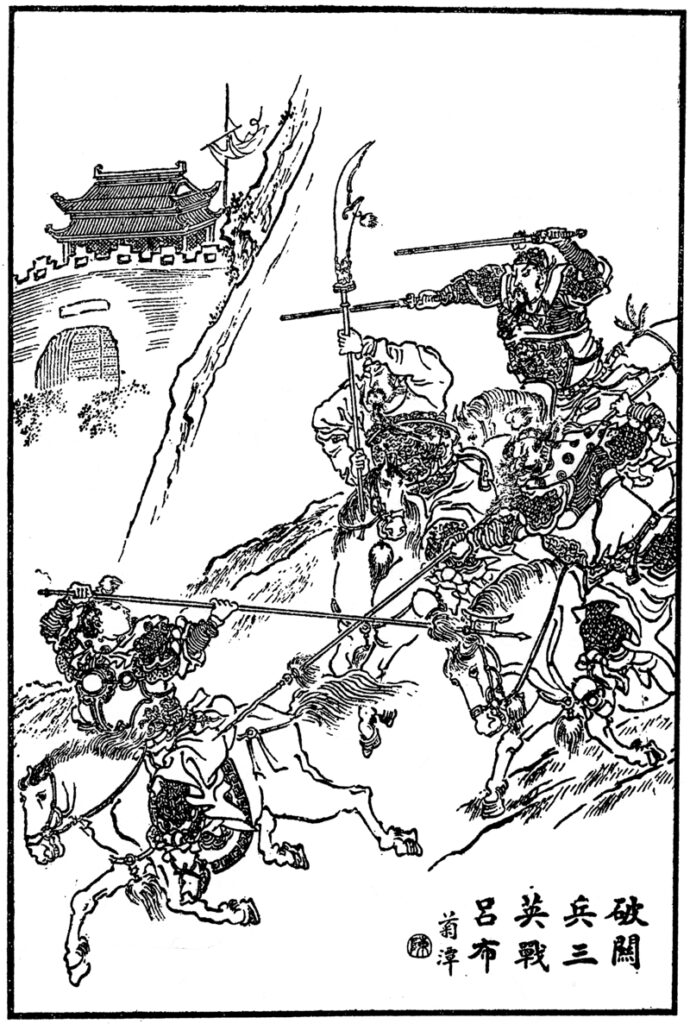
The historical beginning of the Chinese god of war Guan Yu story
Guan Yu lived in the late Eastern Han period, a time of unrest, rebellion, and political collapse. Much of his early life remains unclear, which is often the case with figures who later become larger than life. What is generally remembered is that he fled his home region, eventually met Liu Bei and Zhang Fei, and joined their cause during the turmoil of the age.
From that point on, Guan Yu became closely tied to Liu Bei. Their bond would later be celebrated as one of the defining relationships in Chinese storytelling. Even in versions of the tale that blend fact and fiction, Guan Yu consistently appears as the man who never forgot where his loyalty belonged.
That is one of the main reasons he endured in cultural memory. Military skill mattered, of course. But in Guan Yu’s case, moral character became just as important as battlefield achievement.
The Peach Garden Oath and the power of brotherhood
No retelling of the Chinese god of war Guan Yu story feels complete without mentioning the Peach Garden Oath.
According to the famous novel Romance of the Three Kingdoms, Liu Bei, Guan Yu, and Zhang Fei swore brotherhood in a peach garden and pledged to stand together through hardship and danger. Historians generally treat this episode as literary rather than strictly historical, but its cultural power is enormous.
Why does this moment matter so much?
Because it gave Guan Yu a moral frame that readers and later worshippers could immediately understand. He was not just strong. He was faithful. He was not just feared. He was dependable. In a chaotic world, that kind of loyalty becomes sacred very quickly.
Even now, when people think of Guan Yu, many are thinking as much about this ideal of brotherhood and honor as they are about any single battle.
Guan Yu, Cao Cao, and the loyalty that defined him
One of the most compelling parts of Guan Yu’s story is his time under Cao Cao.
After being captured, Guan Yu was treated with unusual respect. Cao Cao recognized his talent and gave him status, rewards, and opportunities. In many historical stories, that would have been the turning point where a warrior changed sides for good.
But Guan Yu did not stay.
Even after serving Cao Cao and winning distinction in battle, he eventually returned to Liu Bei. This episode matters because it shows the quality that later generations admired most: not convenience, not ambition, but loyalty under pressure.
That moral consistency is a major reason Guan Yu later became more than a military figure. He could be admired by officials, merchants, soldiers, monks, and ordinary families alike. Each group saw something slightly different in him, but all of them recognized the same core trait.
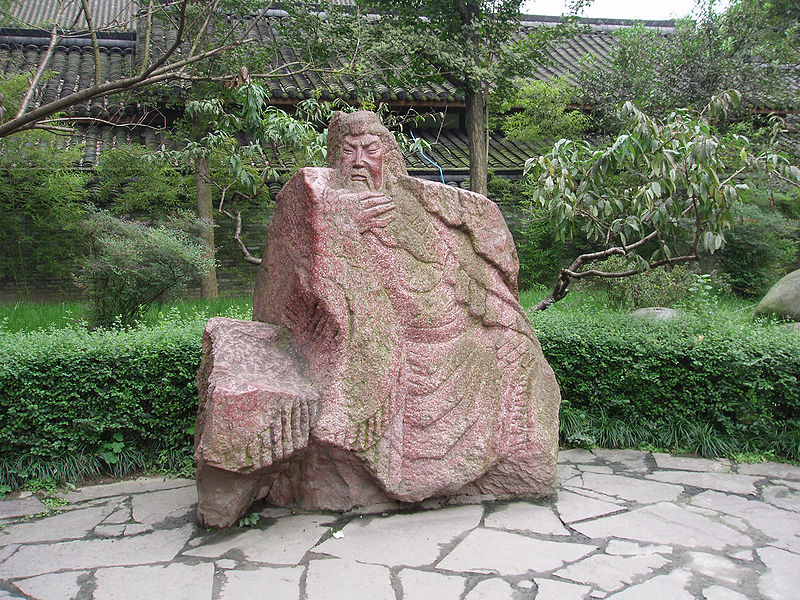
The rise and fall at Fancheng
If you want to understand Guan Yu as a commander rather than only a legend, the Battle of Fancheng is essential.
This campaign showed both his strength and his limits. Guan Yu launched an attack from Jingzhou and achieved an impressive early victory. Flooding weakened Cao Cao’s forces, and Guan Yu seized the moment effectively. The surrender of Yu Jin and the death of Pang De made this one of the brightest moments of his military career.
But triumph did not last.
As the campaign continued, the political situation turned against him. Sun Quan and his general Lü Meng moved against Jingzhou, placing Guan Yu in a dangerous position. Suddenly he was trapped between rival powers, losing strategic ground while still trying to hold military momentum.
This part of the story is important because it keeps Guan Yu human. He was formidable, but not invincible. He was brave, but not beyond miscalculation. His downfall gave later generations a tragic hero rather than a simple conqueror, and tragic heroes are often remembered longer than winners.
The death of Guan Yu and the beginning of legend
After losing Jingzhou and retreating toward Maicheng, Guan Yu was captured and killed.
For many historical figures, that would have been the end of the story. For Guan Yu, it was the beginning of a second life.
His death carried emotional and symbolic weight. He had remained loyal to Liu Bei. He had faced defeat without surrendering his identity. He had risen high, fallen hard, and died in a way that invited remembrance. That combination often creates legend, especially in cultures that value moral example as much as military success.
Over time, stories around Guan Yu expanded. His image became more dramatic. His deeds were retold in increasingly vivid ways. The line between history and devotion began to blur, not because people were careless with the past, but because they were trying to express what he had come to mean.
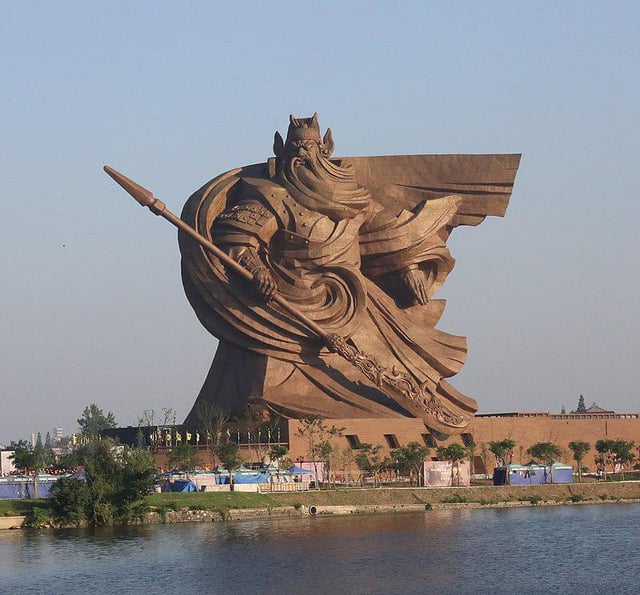
How the Chinese god of war Guan Yu story became a religious tradition
This is where the story becomes especially rich.
Guan Yu was not worshipped all at once in a single, simple transformation. His rise into religious life happened gradually. Local traditions, folk devotion, imperial recognition, Buddhist interpretation, Taoist adoption, and literary fame all played a role.
In some traditions, he appears first as a powerful spirit. Later, Buddhist communities incorporated him into sacred narratives. Taoist traditions also elevated him, associating him with protection, demon-slaying, and divine authority. Confucian admiration for loyalty and righteousness further strengthened his status.
By the Song, Yuan, and Ming periods, his cult had become deeply rooted. Temples were built. Titles were granted. His image spread across regions and social classes. By then, Guan Yu was no longer only a man from the Three Kingdoms era. He had become Guan Gong, a figure people could pray to, honor, and seek protection from.
This layered evolution explains why he can seem to belong everywhere at once: in history, in fiction, in religion, and in everyday life.
Why Guan Yu became known as the Chinese god of war
Calling Guan Yu the Chinese god of war is common today, but that title carries a broader meaning than the phrase might suggest in Western mythology.
He is not revered only because he fought battles. He became associated with martial virtue because he represented something deeper than violence: disciplined strength guided by moral purpose.
That is the key.
Guan Yu stood for courage, but also restraint. He stood for force, but also righteousness. He was fierce, yet remembered as principled. In many traditions, that made him the ideal martial guardian.
His popularity was also helped by the fact that he could be understood in several ways at once. Soldiers could admire his bravery. Officials could praise his loyalty. Merchants could seek his protection and blessings. Households could welcome him as a guardian presence. That flexibility gave his worship unusual staying power.
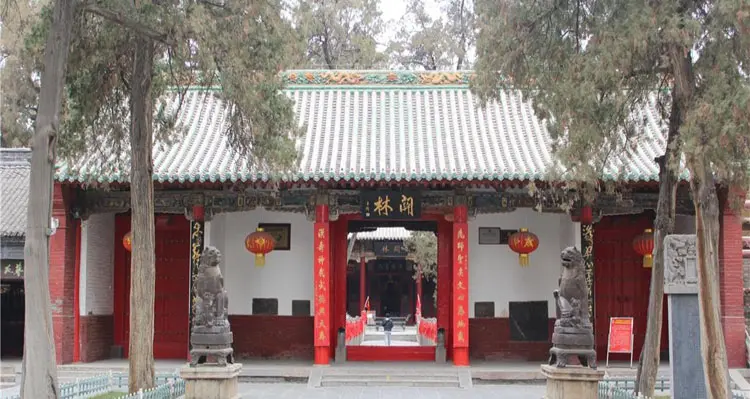
Guan Gong in temples, shops, and everyday life
One reason the Chinese god of war Guan Yu story still feels alive is that it never stayed confined to books.
Images of Guan Gong appear in temples, businesses, restaurants, and private homes. In many places, he is honored as a protector of justice and a bringer of good fortune. His statues often show him with a red face and the Green Dragon Crescent Blade, standing in a powerful, watchful posture.
Different statue forms can carry different meanings. A seated Guan Gong reading may symbolize wisdom, study, and advancement. A standing Guan Gong may be associated with protection. In business settings, he is often linked not just with strength, but with trust and integrity.
That dual identity is striking. He is both warrior and moral witness.
Romance of the Three Kingdoms and the making of a cultural icon
It is impossible to overstate the influence of Romance of the Three Kingdoms on Guan Yu’s legacy.
The novel did not invent him, but it transformed how generations imagined him. It magnified his loyalty, sharpened his heroism, and turned him into one of the most memorable characters in Chinese literature. Scenes like the Peach Garden Oath and other dramatic episodes gave emotional force to traits that were already admired.
This matters for SEO readers too, because many people searching for the Chinese god of war Guan Yu story are not just looking for dry chronology. They want to understand why Guan Yu feels so alive in collective memory. The answer is that literature, religion, and history all reinforced one another.
He survived because people kept finding new meanings in him.
Why Guan Yu still matters today
Guan Yu continues to resonate because the values attached to him remain recognizable.
Loyalty still matters. Integrity still matters. The question of how to act honorably in unstable times still matters. Even readers who know little about the Three Kingdoms period can understand why a figure like Guan Yu endures.
He is not remembered simply because he won battles. In fact, his story is more powerful because it includes hardship, retreat, betrayal, and death. He became timeless because people saw in him a model of constancy when the world around him was falling apart.
That is why the Chinese god of war Guan Yu story continues to attract readers, worshippers, historians, and curious newcomers alike. It is the story of a man, a myth, and a moral ideal all at once.
FAQ
Who was Guan Yu?
Guan Yu was a military general who lived during the late Eastern Han dynasty and the early Three Kingdoms period. He is most closely associated with Liu Bei and became famous for his loyalty, courage, and later religious significance.
Why is Guan Yu called the Chinese god of war?
He became associated with martial virtue over time because he was seen as a powerful warrior who also embodied righteousness, loyalty, and protection. His status grew through folk worship, imperial recognition, religious traditions, and literary fame.
Was the Peach Garden Oath real?
The Peach Garden Oath is best known from Romance of the Three Kingdoms and is generally treated as a literary or symbolic episode rather than a firmly confirmed historical event.
Did Guan Yu really serve Cao Cao?
Yes, Guan Yu was captured by Cao Cao and served him for a period. What made this episode famous is that Guan Yu later returned to Liu Bei, reinforcing his image as a man of unwavering loyalty.
How did Guan Yu die?
After the campaign around Fancheng and the loss of Jingzhou, Guan Yu was captured during the conflict involving Sun Quan’s forces and was executed.
Why is Guan Yu worshipped in so many places?
People honor Guan Yu for different reasons. Some see him as a guardian of justice, some as a protector, some as a god associated with wealth and success, and many as a symbol of integrity and faithfulness.
What is the difference between Guan Yu, Guan Gong, and Guandi?
These names refer to the same figure in different contexts. “Guan Yu” is the historical name, “Guan Gong” means “Lord Guan,” and “Guandi” can be understood as “Emperor Guan,” reflecting his elevated divine status.
Why is Guan Yu often shown with a red face?
In popular artistic and theatrical tradition, the red face symbolizes loyalty, righteousness, and powerful moral character.
newobzor.space — це український збірка, який об’єднує найкращі джерела інформації країни. Тут ти знайдеш надійні інформаційні ресурси, де публікуються актуальні новини, експертні матеріали та ключові події з України та світу.
На сайті представлені:
– Офіційні новинні портали з актуальною інформацією.
– Аналітика та аналітичні статті з ключових тем.
– Новини від місцевих видань.
Якщо тобі важливо отримувати інформацію з надійних джерел, каталог newobzor.space стане надією на якісну інформацію!