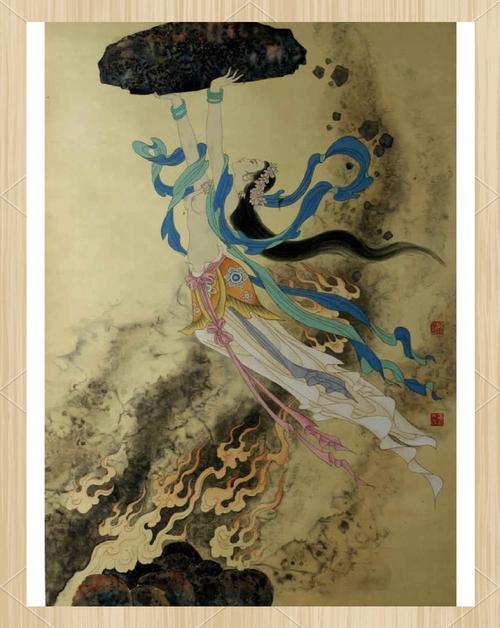
Nüwa in mythology is one of the most powerful and tender figures in ancient Chinese storytelling. She is remembered as a creator, a mother of humanity, a restorer of heaven, and a goddess connected with marriage, fertility, and the survival of human life. In many traditions, Nüwa is not simply a distant divine figure watching the world from above. She is the one who kneels beside the earth, shapes life from clay, and later risks everything to repair a broken sky.
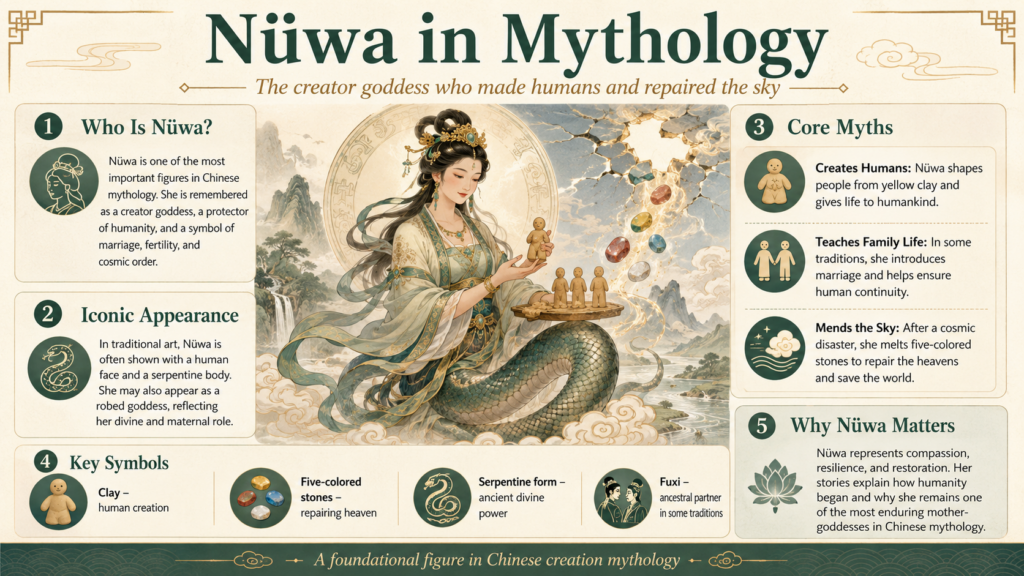
Among the many gods and culture heroes in Chinese mythology, Nüwa feels especially human. Her stories often begin with loneliness, compassion, or crisis. She creates people because the world feels incomplete. She repairs the heavens because her children are suffering. That is why Nüwa is usually remembered not only as a supernatural goddess, but also as a deeply maternal presence in Chinese myth. Britannica describes Nu Gua, another romanized form of Nüwa, as a figure associated with Fu Xi, marriage customs, and the repair of heaven’s pillars.
What Is Nüwa in Mythology?
Nüwa, written 女媧 in Chinese, is an ancient goddess best known for creating human beings and restoring order after a cosmic disaster. She appears in different layers of Chinese mythology: sometimes as a creator goddess, sometimes as the sister-wife of Fuxi, and sometimes as a savior who repairs the sky after the world falls into chaos. The “Key Concepts in Chinese Thought and Culture” project describes Nüwa as an ancient goddess famous for creating mankind and repairing the pillar of heaven.
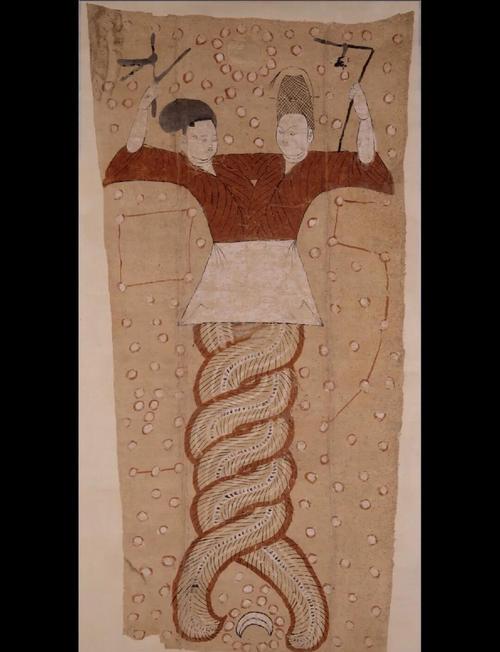
Her image is striking. In many traditional depictions, Nüwa has a human head or upper body and the body of a snake, dragon, or serpent-like being. This half-human, half-serpentine form links her to the earliest, most mysterious layers of Chinese myth, when the boundary between gods, animals, humans, and cosmic forces was still fluid. Britannica also notes that she is described with a human head and the body of a snake or fish.
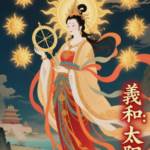
In simpler artistic versions, Nüwa may appear as a woman dressed in traditional robes, but the older serpent-bodied image remains the most symbolic. It suggests fertility, transformation, earth energy, and a connection to the ancient world before human civilization fully took shape.
The Meaning of Nüwa’s Name
The first character in Nüwa’s name, 女, means “woman” or “female.” The second character, 媧, is strongly associated with her name and is not commonly used in ordinary modern Chinese. This makes her name feel ancient and unique, almost as if the written character itself preserves a memory of an older mythic world. Your source material also notes that her name may appear in older romanization styles as Nü Gua or Nü Kua, and that she may be respectfully called Wā Huáng, often translated as “Empress Wa.”
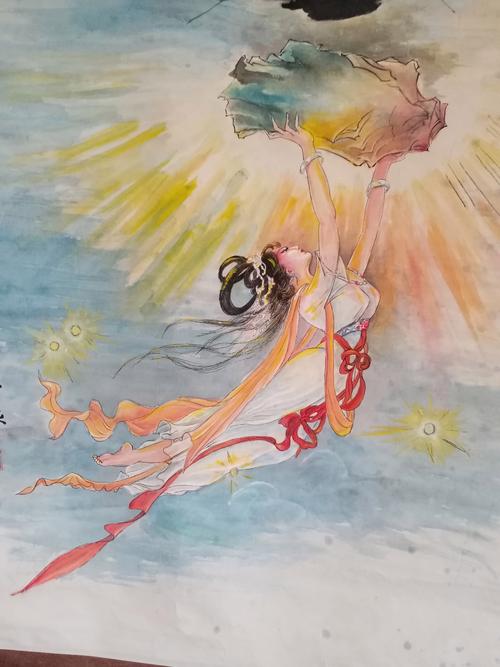
This matters because Nüwa is not just another goddess in a large pantheon. Her name is closely tied to creation, motherhood, marriage, and cosmic repair. Even when different stories disagree on details, they usually preserve the same essential image: Nüwa is the divine woman who brings life and order into a fragile world.
Nüwa Creates Humans from Clay
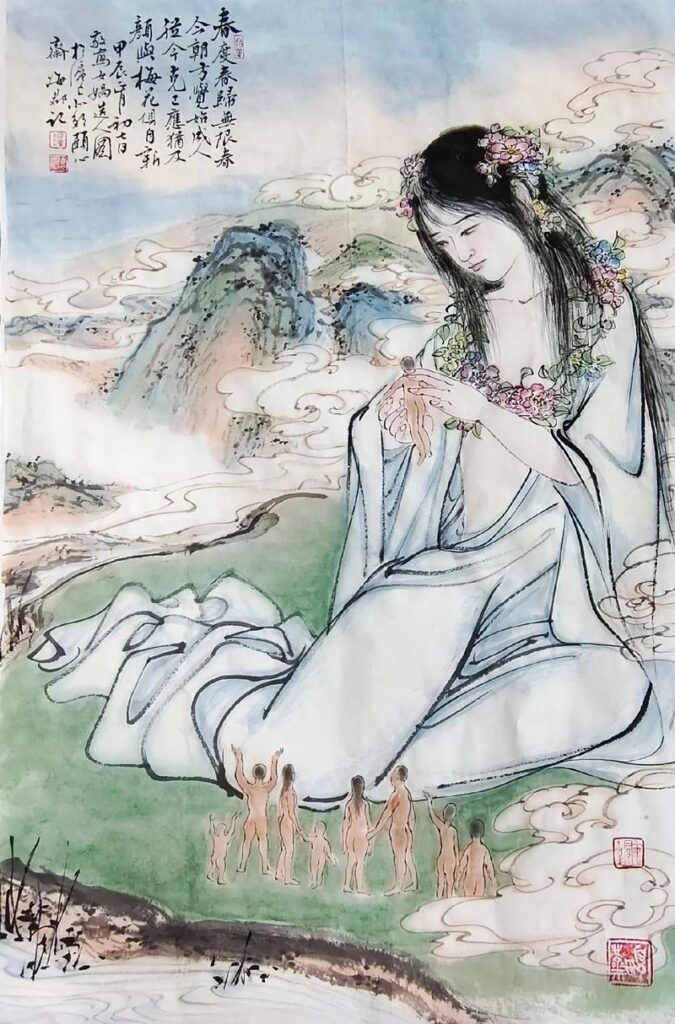
The most famous story of Nüwa in mythology is the creation of human beings. After the world had formed, the mountains, rivers, trees, animals, and skies were all beautiful, but something was missing. Nüwa wandered through this new world and felt a strange loneliness. The world existed, but it did not yet have people who could speak, laugh, gather, remember, and share life with one another.
One day, she came to the edge of a river or lake and saw her reflection in the water. Inspired by her own image, she picked up yellow earth or clay and shaped it into a small figure. She gave it a face, arms, hands, and legs. When the figure came alive, it moved, spoke, and called to her like a child. Nüwa was delighted. She had made the first human.
At first, she shaped each person carefully by hand. These handmade humans are sometimes said to have become noble, wise, or high-born people. But the world was vast, and shaping every single person one by one was exhausting. So Nüwa dipped a vine, rope, or cord into the mud and swung it through the air. Drops of clay fell to the ground and became more people. A traditional account preserved through later textual references says that Nüwa molded yellow earth to make people, but when the work became too demanding, she used a cord through mud to create many more.
This part of the myth can sound unequal to modern readers, because it explains social differences through two methods of creation: some people made carefully by hand, others formed from scattered mud. But mythologically, the deeper point is that all human beings come from the same mothering act. Whether shaped one by one or created from flying drops of clay, humans exist because Nüwa wanted the world to be alive.
Why Nüwa Taught Marriage and Family
Nüwa’s role does not end with creating the first humans. In some versions, she realizes that human beings are mortal. If they simply live and die without continuing their line, the world will become empty again. So she teaches people about marriage, reproduction, and family life.
This is why Nüwa is often connected with matchmakers and marital order. Britannica describes Nu Gua as the patroness of matchmakers and says that, as the wife or sister of Fu Xi, she helped establish marriage norms and regulate conduct between the sexes.
In this sense, Nüwa is not only a maker of bodies. She is also a founder of human society. She gives people a way to continue after her, so humanity does not depend forever on divine hands shaping clay by the riverbank. Creation becomes self-sustaining. Life is passed from generation to generation.
Nüwa and Fuxi: The Myth of Survival After a Flood
Another important story connects Nüwa with Fuxi, her brother and sometimes her husband. In this version, a great catastrophe destroys most of humanity. Nüwa and Fuxi survive, but they face a painful question: should they marry in order to continue the human race?
Because they are siblings, they hesitate. They ask heaven for guidance. In one version, each climbs a different mountain and lights a fire. If the smoke rises separately, they should remain apart. If the smoke joins together, heaven has approved their union. When the smoke intertwines, Nüwa and Fuxi become husband and wife and repopulate the earth.
This is not a story meant to be read like ordinary family history. It is a myth of extreme beginnings, a tale about what happens when humanity stands at the edge of extinction. Chinese Thought’s summary also records a tradition in which Nüwa and Fuxi are the only two left after severe catastrophes and marry to maintain human reproduction.
In ancient myth, this kind of story often explains how civilization restarts after disaster. Nüwa and Fuxi become ancestral figures, not because their story follows ordinary social rules, but because it takes place at the beginning of a broken world.
Nüwa Mends the Sky
The second great story of Nüwa in mythology is even more dramatic: the mending of the sky.
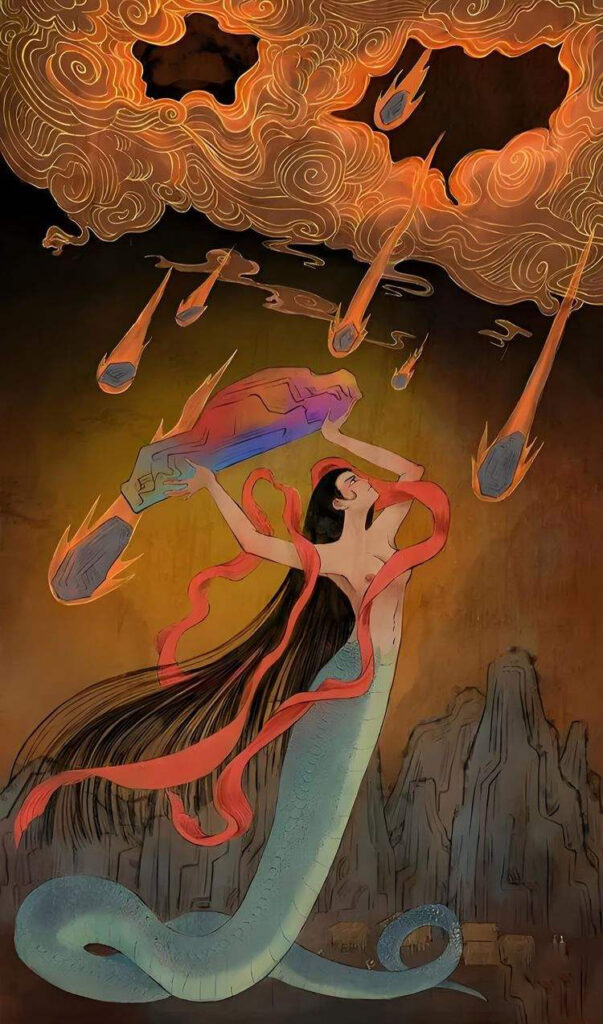
In ancient times, heaven and earth were not as stable as they are now. The sky was held up by cosmic supports or pillars. Then a terrible conflict broke out among divine beings. In many versions, the water god Gonggong strikes Mount Buzhou in anger after losing a battle, damaging one of the pillars that holds up heaven. The sky cracks. The earth tilts. Fires burn uncontrollably. Floodwaters surge across the land. Wild beasts and birds threaten human beings.
The world Nüwa had created is suddenly in danger of falling apart.
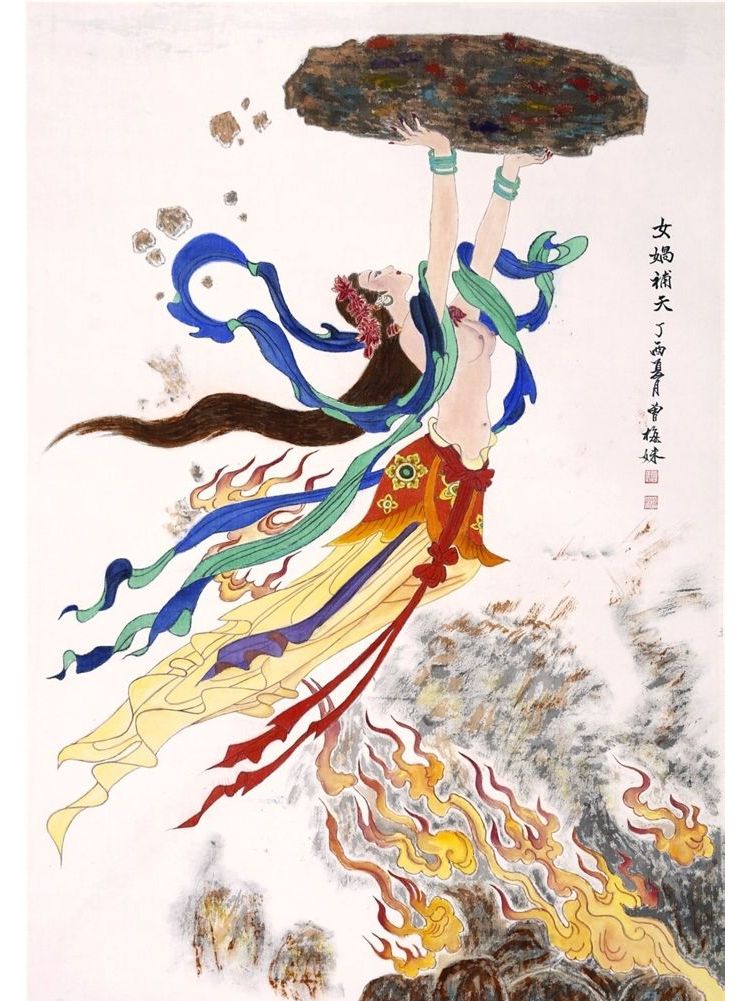
The Huainanzi gives one of the most famous early accounts of this myth. It describes a time when the four corners of the world collapsed, the nine provinces split apart, heaven could not fully cover all things, fires burned without end, and floods surged endlessly. At that moment, Nüwa smelted stones of five colors to mend the blue sky and cut off the legs of giant turtles to reestablish the four corners of the world.
This is one of the most beautiful images in Chinese mythology: Nüwa standing against cosmic ruin, melting five-colored stones and patching the wounded sky. She is no longer only the mother who creates life. She is the savior who protects life after creation.
The Five-Colored Stones and the Turtle’s Legs
The five-colored stones are an important detail. They are often understood as symbolizing the five phases or elements: wood, fire, earth, metal, and water. Chinese Thought explains that the five-colored stone in the Nüwa myth symbolizes the five basic elements composing life.
The turtle or giant tortoise is also meaningful. In Chinese cosmology, turtles are often associated with endurance, the world’s structure, and long life. By using the turtle’s legs as pillars, Nüwa restores the architecture of the universe itself. The image feels both strange and grand: heaven is repaired with colored stones, and the world is held steady by the limbs of a cosmic creature.
Some versions add that Nüwa also uses reed ashes to stop the floodwaters. The Huainanzi account says she killed a black dragon, stopped overflowing waters with reed ash, restored the four corners, dried the floods, and allowed innocent people to live in peace.
The myth is not just about repairing a hole. It is about returning balance to everything: sky, earth, water, fire, seasons, animals, and human life.
Why the Sky Tilts in Nüwa’s Myth
One fascinating detail in later traditions is that Nüwa did not restore the sky and earth perfectly. The repair worked, but the universe remained slightly tilted. This explains why, in mythic geography, the sun, moon, and stars move toward the northwest, while rivers and floodwaters tend to flow toward the southeast.
The Liezi preserves a version of this idea: after Nüwa mended the sky with five-colored stones and set up the four extremes with the legs of Ao, Gonggong’s impact on Mount Buzhou caused heaven to tilt northwest and earth to be incomplete in the southeast, sending waters in that direction.
This is a classic example of an explanatory myth. Ancient people looked at the natural world and asked: Why do rivers flow this way? Why do heavenly bodies move across the sky? The story of Nüwa offers a poetic answer. The world is livable because she repaired it, but it still carries the scar of an ancient cosmic wound.
What Nüwa Symbolizes
Nüwa symbolizes more than creation. She represents the fragile relationship between life and order.
As a creator, she gives form to human beings. As a teacher of marriage, she gives humanity continuity. As a sky-mender, she protects the world from collapse. These roles make her one of the most complete divine figures in Chinese mythology. She is connected with birth, society, survival, and cosmic balance.
Her serpent body may also suggest something older than written history. Serpents in many ancient cultures are linked with earth, fertility, renewal, danger, and transformation. Nüwa’s form combines human intelligence with primal life force. She belongs to civilization, but also to the wild, ancient world before civilization.
That is why her stories still feel alive. Nüwa is not a goddess of cold perfection. She is a goddess of repair. She creates, notices suffering, and acts.
Nüwa in Art and Popular Culture
In traditional art, Nüwa is often paired with Fuxi. They may appear with human upper bodies and intertwined serpent tails, representing ancestry, cosmic harmony, and the union of complementary forces. A Tang dynasty depiction of Fuxi and Nuwa, for example, shows the two as a divine pair and identifies Nuwa as Fuxi’s sister-wife.
In modern culture, Nüwa continues to appear in books, games, television, animation, and online mythology content. Sometimes she is portrayed as a majestic creator goddess; sometimes as a mysterious serpent-bodied deity; sometimes as a symbol of ancient Chinese civilization. Your source material also notes that Nüwa remains a recognizable figure in popular culture and has appeared in several video games.
Her appeal is easy to understand. She has the visual power of a mythic serpent goddess, the emotional warmth of a mother creator, and the dramatic heroism of a savior who repairs the broken sky.
Why Nüwa Still Matters
Nüwa in mythology remains important because her story speaks to questions every culture has asked: Where did humans come from? Why is the world imperfect? Who protects life when order collapses? How does humanity continue after disaster?
Her myths do not answer these questions in scientific language. They answer them through clay, water, smoke, colored stones, broken pillars, and a goddess who refuses to abandon the world she made.
That is what makes Nüwa unforgettable. She is not only the mother of humanity in Chinese mythology. She is the figure who reminds us that creation is not a single moment. It is an ongoing act of care, repair, and protection.
FAQ About Nüwa in Mythology
Who is Nüwa in mythology?
Nüwa is a Chinese creator goddess best known for making human beings from clay and repairing the sky after a cosmic disaster. She is also associated with marriage, fertility, and the continuation of human life.
What is Nüwa the goddess of?
Nüwa is commonly associated with creation, motherhood, marriage, fertility, and cosmic repair. In many myths, she creates humans and later saves them by mending the broken heavens.
How did Nüwa create humans?
In the most famous story, Nüwa shapes the first humans from yellow clay. When creating each person by hand becomes too slow, she dips a vine or rope into mud and swings it, causing drops of clay to become many more people.
Why did Nüwa mend the sky?
Nüwa mended the sky after a divine conflict damaged the pillars of heaven and threw the world into chaos. Fires, floods, wild beasts, and a broken sky threatened humanity, so she melted five-colored stones to repair heaven.
What is the relationship between Nüwa and Fuxi?
Nüwa and Fuxi are often described as siblings, spouses, or a divine ancestral pair. In some myths, they survive a great catastrophe and marry after receiving a sign from heaven, allowing humanity to continue.
Why is Nüwa shown with a snake body?
Nüwa is often depicted with a human upper body and a snake or serpent-like lower body. This ancient form may symbolize fertility, transformation, earth power, and her connection to the earliest layers of Chinese myth.