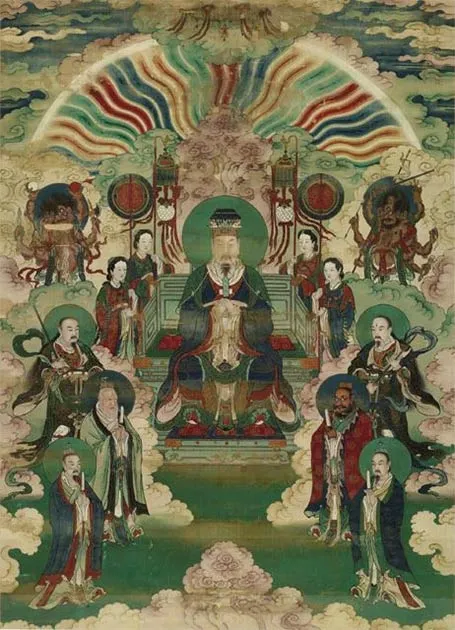
The Jade Emperor, also known as Yu Huang or Yu Di, is one of the most important figures in Chinese mythology, Taoism, and Chinese folk religion. If you imagine the heavens as a vast imperial court, filled with divine officials, celestial records, moral judgments, rituals, and cosmic order, the Jade Emperor sits at the very center of it all.
He is often described as the supreme ruler of Heaven, the great administrator of the divine world, and the heavenly counterpart to the emperors who once ruled China on earth. In temples, folktales, New Year rituals, and classic literature, Yu Huang appears not simply as a distant god, but as a symbol of justice, order, mercy, and cosmic authority.
Yet the Jade Emperor is also more complex than a simple “king of the gods.” His stories blend Taoist theology, folk belief, imperial politics, Buddhist influence, and popular storytelling. Depending on the tradition, he may be a perfected sage, a former mortal, a divine ruler chosen through spiritual cultivation, or the head of a heavenly bureaucracy that watches over human lives.
Who Is the Jade Emperor | Yu Huang?
The Jade Emperor is commonly known in Chinese as Yuhuang or Yudi. His more formal titles include Yuhuang Shangdi, often translated as the “Jade Emperor on High” or “Pure August Jade Emperor.” In popular speech, he may also be called Tiangong, meaning “Heavenly Grandfather.”
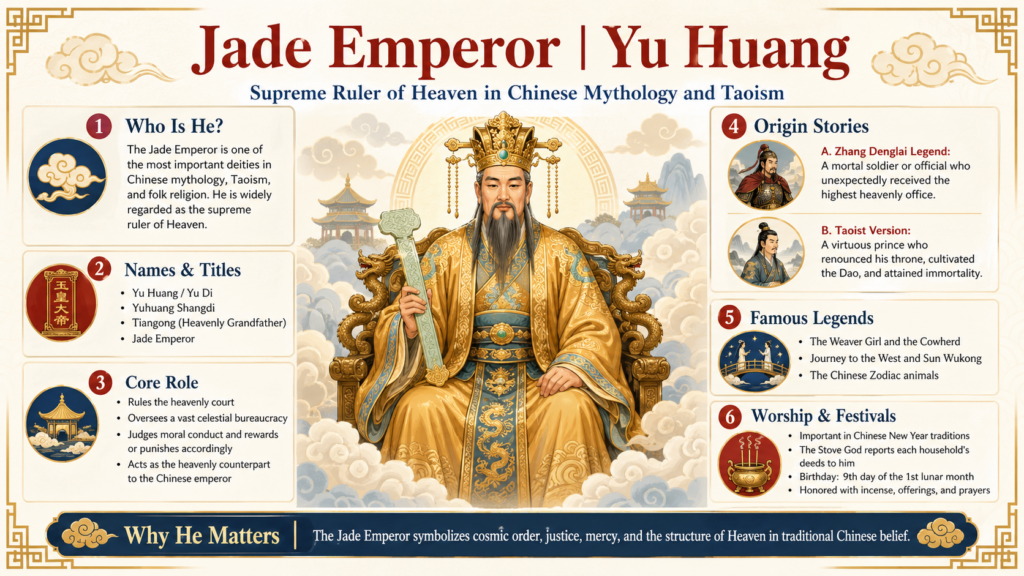
In Chinese belief, Yu Huang rules over Heaven and presides over a vast court of gods, spirits, immortals, and celestial officials. His court mirrors the structure of ancient Chinese government, where every official had a role, every department had a function, and every action could be recorded and judged.
This is one reason the Jade Emperor feels so deeply Chinese as a mythological figure. He is not just powerful; he governs. His authority is administrative, moral, and ritual. The universe under his rule is not chaotic. It is ordered, ranked, and supervised.
What Does the Name “Jade Emperor” Mean?
The name “Jade Emperor” carries symbolic weight.
In Chinese culture, jade has long been associated with purity, nobility, moral virtue, and spiritual refinement. It is not merely a precious stone; it represents something cultivated, polished, and worthy of reverence.
The word emperor reflects supreme political authority. In traditional China, the emperor was called the Son of Heaven, ruling the earthly realm under a cosmic mandate. The Jade Emperor, by contrast, rules the heavenly realm itself.
So the name Jade Emperor suggests both moral purity and supreme rulership. He is not only a divine monarch, but an idealized image of heavenly authority.
How Is the Jade Emperor Usually Depicted?
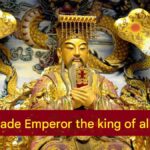
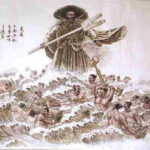
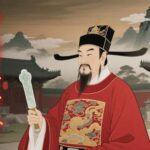
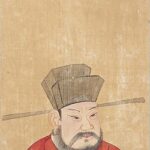
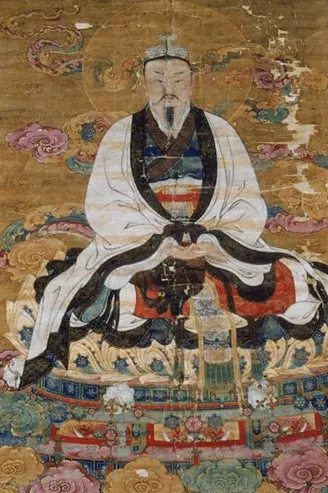
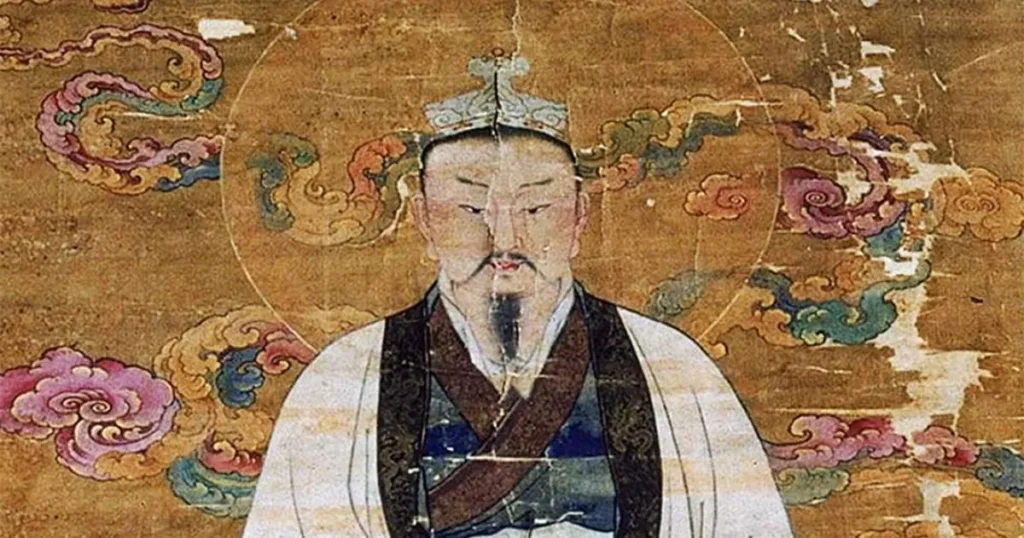
In Chinese art, temples, drama, and modern film, the Jade Emperor is usually shown as a dignified, middle-aged or elderly ruler. He often has a thin mustache, a long beard, and a calm but commanding expression.
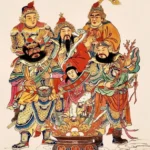
He is commonly dressed in flowing imperial robes and seated on a throne, surrounded by attendants or divine officials. In some depictions, he wears armor and carries a sword, emphasizing his power to defend cosmic order.
His image is not usually wild or monstrous. Unlike many mythological beings who represent raw force, Yu Huang represents disciplined authority. He looks like a ruler because his role is to govern.
The Jade Emperor and the Bureaucracy of Heaven
One of the most fascinating things about the Jade Emperor is the way his heavenly world resembles an imperial bureaucracy.
In many Chinese religious traditions, Heaven is imagined almost like a celestial government. There are departments, offices, ranks, reports, punishments, rewards, and officials responsible for specific areas of life.
At the top is the Jade Emperor. Beneath him are countless gods and spirits, each with a defined responsibility. City Gods may watch over local communities. Stove Gods may observe household behavior. Underworld magistrates may judge the dead. Other deities may manage weather, fertility, health, wealth, travel, or moral records.
This structure reflects the way people in imperial China understood power. Just as human society was governed by emperors, officials, documents, rituals, and legal procedures, the divine world was also imagined as an ordered administration.
For ordinary worshippers, this made the gods feel both powerful and approachable. You could present petitions, burn written prayers, make offerings, and ask for help in a way that resembled submitting a request to an official.
The Jade Emperor in Taoism
Today, the Jade Emperor is often regarded as one of the most important deities in Taoism. However, his rise to prominence was gradual.
In early Taoist texts, he was not always the central figure he later became. His importance grew over time, especially from the Tang Dynasty onward. By the Song Dynasty, his status had become even more elevated, and he was formally honored with grand religious titles.
In Taoist belief, the Jade Emperor is sometimes described as ruling over the Three Realms: Heaven, Earth, and the Underworld. He oversees gods, humans, spirits, and all living beings. Some traditions say he governs the forces of yin and yang, blessings and misfortunes, life and death, and the moral order of the cosmos.
This makes him more than a mythological monarch. In Taoism, he can appear as a cosmic ruler whose authority extends across existence itself.
Origin Story: Zhang Denglai and the Accidental Jade Emperor
One popular folk tale gives the Jade Emperor a surprisingly human origin.
According to this story, he was once a mortal man named Zhang Denglai, sometimes described as a soldier or minor official during a time of war near the transition between the Shang and Zhou dynasties.
After dying in battle, Zhang Denglai arrived in the afterlife, where heavenly positions were being assigned. One by one, the spirits of the dead received official posts in the celestial court. Eventually, only the highest position remained: the office of the Jade Emperor.
The person distributing the posts had secretly hoped to keep that position for himself. Before accepting it, he paused and said something like “deng lai,” meaning “wait a moment.”
Zhang Denglai heard those words as his own name. Taking the chance, he stepped forward, bowed, and accepted the appointment.
It is a humorous and very human story. Unlike the more solemn Taoist origin tale, this version suggests that even the highest heavenly office could be shaped by timing, wit, and a fortunate misunderstanding.
Origin Story: The Virtuous Prince Who Became a God
A more religious Taoist version gives the Jade Emperor a nobler and more spiritual origin.
In this tradition, he was born as a prince in a radiant kingdom sometimes translated as the Kingdom of Pure Felicity or the Kingdom of Miraculous Joy. His mother was a virtuous queen who prayed for a child because the king was elderly and had no heir.
One night, she had a vision involving Laozi, the great sage of Taoism, and miraculously became pregnant. When the child was born, he was extraordinary from the beginning. He could walk and speak unusually early and showed great kindness, patience, and compassion.
After becoming king, he ruled wisely and ensured that his people were happy and prosperous. But instead of clinging to power, he eventually abdicated the throne and withdrew from worldly life.
He devoted himself to Taoist cultivation, meditation, and spiritual practice. After immense periods of discipline and enlightenment, he attained immortality and became the Jade Emperor.
This version presents Yu Huang as the opposite of a power-hungry ruler. He becomes worthy of heavenly authority precisely because he gives up earthly power.
The Jade Emperor’s Family
In many traditions, the Jade Emperor is associated with the Queen Mother of the West, also known as Xiwangmu. She is herself a major goddess connected with immortality, divine banquets, and the western paradise.
The Jade Emperor is also said to have daughters who appear in important myths. The most famous is often connected with the story of the Weaver Girl and the Cowherd, one of China’s most beloved romantic legends.
Other daughters are associated with fertility, protection, or healing. These family connections help place the Jade Emperor inside a broader mythological world, where gods have relationships, emotions, duties, and conflicts.
The Weaver Girl and the Cowherd
One of the most famous stories linked to the Jade Emperor is the tale of the Weaver Girl and the Cowherd.
In this legend, a heavenly weaver girl falls in love with a mortal cowherd. Their love crosses the boundary between Heaven and Earth, which angers the celestial order. In many versions, the lovers are separated across the Milky Way, allowed to reunite only once a year.
That yearly reunion is celebrated during the Qixi Festival, often called Chinese Valentine’s Day. It falls on the seventh day of the seventh lunar month.
The Jade Emperor’s role in this story is often that of a stern heavenly ruler. He protects cosmic order, but the emotional power of the tale comes from the sorrow of separation and the mercy of allowing reunion.
This is one reason Chinese mythology feels so rich. Even a supreme god is not just a symbol of authority; he appears inside stories filled with love, grief, punishment, and compassion.
The Jade Emperor and Journey to the West
The Jade Emperor also appears in Journey to the West, one of the great classics of Chinese literature.
In this story, the Monkey King, Sun Wukong, causes chaos in Heaven after rebelling against celestial authority. He challenges the heavenly order, disrupts divine institutions, and refuses to accept his assigned place.
The Jade Emperor represents the official structure of Heaven, while Sun Wukong represents rebellious energy, pride, cleverness, and impatience. Their conflict is not just a battle between two characters. It is a clash between order and wild freedom.
Eventually, Sun Wukong is subdued and later becomes a disciple of the monk Tang Sanzang on the journey to retrieve Buddhist scriptures. Through discipline and spiritual growth, he transforms from a rebellious trickster into a more enlightened being.
The Jade Emperor’s presence in the story reinforces his role as the ruler of the heavenly system, even when that system is challenged by one of the most powerful characters in Chinese fiction.
The Jade Emperor and the Chinese Zodiac
Another popular legend connects the Jade Emperor with the origins of the Chinese zodiac.
According to the story, the Jade Emperor invited animals to his palace. Those who arrived would receive places in the zodiac cycle. Different versions of the tale explain the order of the animals and the famous rivalry between the Cat and the Rat.
In one version, the Cat asks the Rat to wake him up so they can attend together. The Rat, wanting a place for himself, lets the Cat sleep. When the Cat wakes and realizes he has missed the opportunity, he becomes furious. This betrayal explains why cats chase rats to this day.
This story gives the Jade Emperor a role as cosmic organizer. He is the one who calls the animals, recognizes their arrival, and establishes the symbolic order of time.
The Jade Emperor During Chinese New Year
The Jade Emperor remains especially important in Chinese New Year traditions.
In folk belief, the Stove God, or Zao Jun, watches over each household throughout the year. Before the New Year, he reports the family’s behavior to the Jade Emperor. Based on these reports, the Jade Emperor may reward or punish the household in the coming year.
This is why some families offer sweets to the Stove God. The idea is either to sweeten his words or make his mouth sticky so he cannot report too harshly.
The Jade Emperor’s birthday is traditionally celebrated on the ninth day of the first lunar month. This day is sometimes called the Jade Emperor’s birthday or the Jade Emperor Festival. Worshippers may burn incense, prepare offerings, pray for blessings, and ask for protection.
In some regions, elaborate offering tables are set up to honor him. Because he is believed to have authority over so many aspects of life, people may pray to him for health, safety, peace, prosperity, and relief from hardship.
Why the Jade Emperor Still Matters
The Jade Emperor remains important because he brings together several layers of Chinese culture.
He is a mythological ruler, a Taoist deity, a folk religious figure, a symbol of imperial order, and a character in beloved legends. He appears in temples, novels, festivals, family rituals, and popular imagination.
For readers today, Yu Huang also offers a window into how traditional Chinese society imagined the universe. Heaven was not only a mysterious spiritual realm. It was a moral and administrative order, where human actions mattered and divine officials kept watch.
That may sound formal, but it also made the cosmos feel responsive. If people behaved well, made offerings, honored the gods, and lived with sincerity, Heaven could notice.
Final Thoughts on the Jade Emperor | Yu Huang
The Jade Emperor | Yu Huang is one of the clearest examples of how Chinese mythology blends religion, politics, morality, and storytelling.
He is not simply “the Chinese Zeus,” though that comparison is sometimes made for convenience. His role is more bureaucratic, moral, and ceremonial. He rules less like a thunderous warrior god and more like an ideal celestial emperor, presiding over a universe filled with records, rituals, responsibilities, and divine offices.
Through his myths, we see a heaven that looks surprisingly human: structured like a court, shaped by duty, and concerned with justice. Yet we also see something deeply spiritual: the belief that power should be tied to virtue, compassion, discipline, and cosmic balance.
That is why the Jade Emperor continues to hold such a lasting place in Chinese mythology and folk religion. He is the ruler of Heaven, but his stories remain closely connected to ordinary human hopes — for fairness, protection, forgiveness, order, and a better year ahead.
FAQ
Who is the Jade Emperor in Chinese mythology?
The Jade Emperor, also known as Yu Huang or Yu Di, is the supreme ruler of Heaven in Chinese mythology, Taoism, and Chinese folk religion. He presides over a heavenly court of gods and celestial officials.
Is the Jade Emperor the most powerful Chinese god?
In many folk religious and Taoist traditions, the Jade Emperor is treated as the highest ruler of Heaven. However, Chinese religion is complex, and some Taoist traditions place more abstract or primordial deities, such as the Three Pure Ones, above him in a theological sense.
What does Yu Huang mean?
Yu Huang means “Jade Emperor.” The word “jade” suggests purity, nobility, and spiritual refinement, while “emperor” reflects supreme rulership.
What is the Jade Emperor’s role in Taoism?
In Taoism, the Jade Emperor is often seen as a supreme heavenly ruler who governs gods, spirits, humans, and the moral order of the cosmos. His status became especially important from the Tang and Song dynasties onward.
What is the Jade Emperor’s birthday?
The Jade Emperor’s birthday is traditionally celebrated on the ninth day of the first lunar month. It is an important day of worship in many Chinese communities.
What is the connection between the Jade Emperor and Chinese New Year?
During Chinese New Year traditions, the Stove God is believed to report each household’s behavior to the Jade Emperor. The Jade Emperor then judges whether the family should receive blessings or punishment in the coming year.
Is the Jade Emperor in Journey to the West?
Yes. The Jade Emperor appears in Journey to the West, especially in episodes involving Sun Wukong, the Monkey King, who rebels against Heaven and challenges the celestial order.
Did the Jade Emperor create the Chinese zodiac?
In one popular legend, the Jade Emperor invited animals to his palace and selected the animals that became part of the Chinese zodiac. This story also explains why the Rat appears in the zodiac and why cats chase rats.