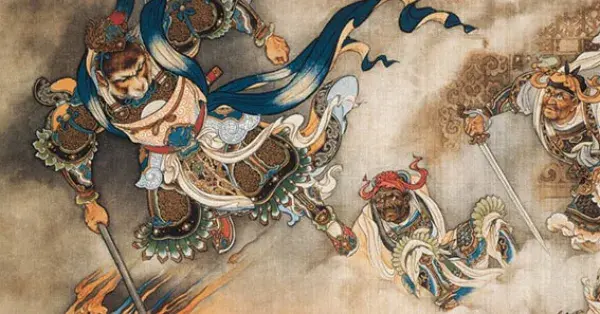
Sun Wukong is one of the most unforgettable figures in Chinese mythology and world literature. Known in English as the Monkey King, he is rebellious, brilliant, funny, violent, loyal, and surprisingly moving. He begins as a wild stone-born monkey who wants power, immortality, and recognition. By the end of his long journey, he becomes a protector, disciple, and enlightened figure.
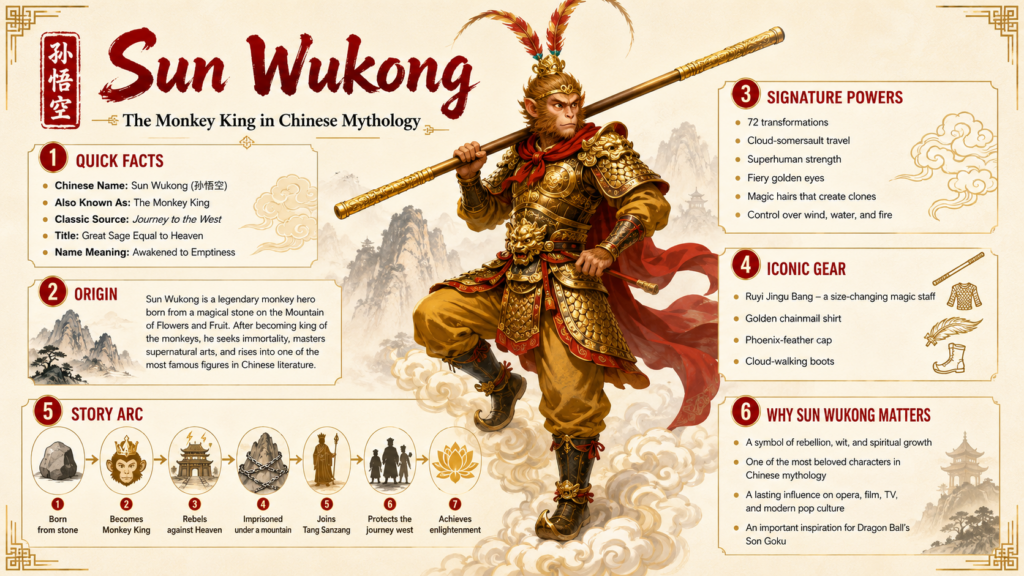
That transformation is what makes Sun Wukong so fascinating.
He is not simply a “monkey hero” from an old Chinese story. He is a symbol of freedom, pride, spiritual discipline, and the difficult path from chaos to wisdom. His legend comes most famously from the Ming dynasty novel Journey to the West, one of the great classics of Chinese literature. Over the centuries, his image has appeared in opera, temple worship, movies, animation, video games, manga, and global pop culture.
To understand Sun Wukong, we need to start where his story begins: with a magical stone on the Mountain of Flowers and Fruit.
Who Is Sun Wukong?
Sun Wukong, also called the Monkey King, is a central character in Journey to the West. In the novel, he becomes one of the disciples of the Buddhist monk Tang Sanzang, who travels from China to India to retrieve sacred scriptures.
But before Sun Wukong becomes a loyal protector, he is a troublemaker on a cosmic scale.
He challenges dragons, terrifies the underworld, insults Heaven, steals immortal peaches, eats divine elixirs, defeats celestial armies, and dares to call himself the “Great Sage Equal to Heaven.” His confidence is almost ridiculous, but that is part of his charm. He is arrogant because he is genuinely powerful.
At the same time, Sun Wukong is not portrayed as purely evil. He is impulsive, proud, and impatient, but he also has courage, intelligence, loyalty, and a strong sense of justice. This mix of flaws and virtues is one reason he remains so beloved.
The Meaning of the Name Sun Wukong
The name Sun Wukong is rich with meaning.
“Sun” is often connected with monkeys in this context, while “Wukong” can be understood as “awakened to emptiness.” The name points toward Buddhist ideas of spiritual insight and the realization that worldly attachments are ultimately empty.
This is important because Sun Wukong’s story is not only an adventure. It is also a spiritual journey.
At first, he wants immortality, fame, and status. He wants to defeat death and force Heaven to respect him. Later, through suffering, discipline, and service, he slowly becomes something greater than a powerful rebel. He becomes a being capable of enlightenment.
In Japan, Sun Wukong is known as Son Goku, a name that later became famous worldwide through Dragon Ball.
The Magical Birth of Sun Wukong
Sun Wukong is not born in an ordinary way. According to the legend, a magical stone rests on the Mountain of Flowers and Fruit. After absorbing the energies of Heaven, Earth, the sun, and the moon for countless ages, the stone finally produces a stone egg. From that egg comes a living monkey.
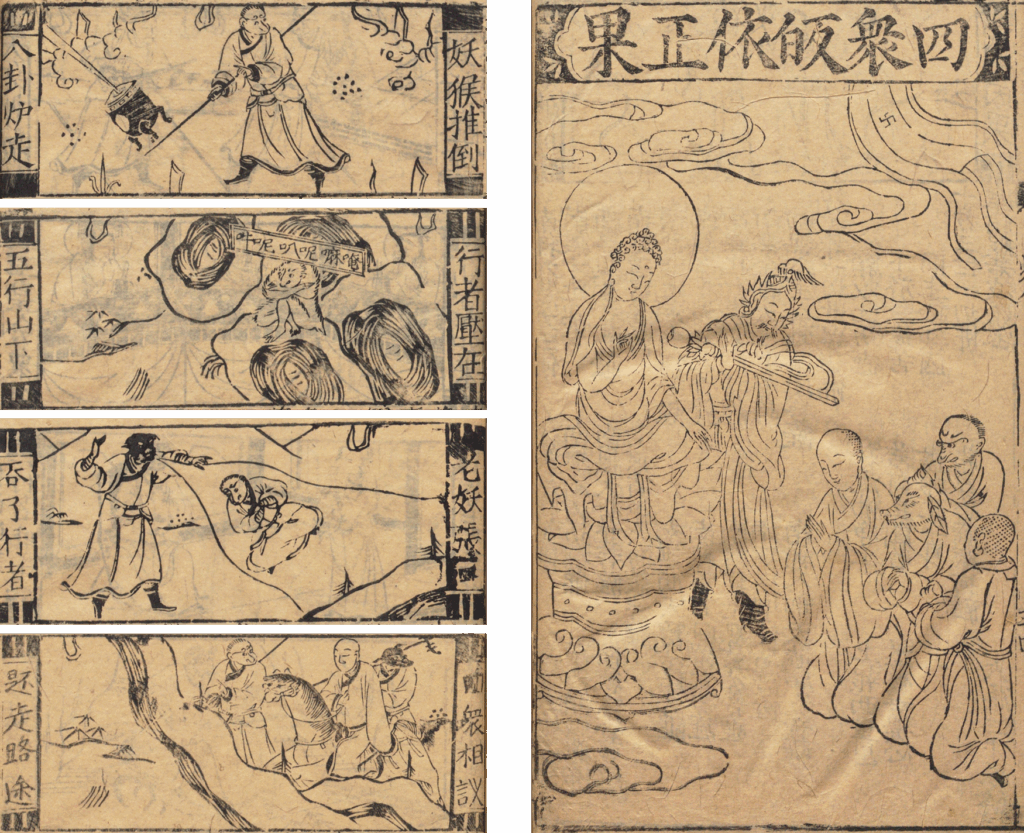
The moment he opens his eyes, golden light shoots into the sky. The light is so bright that it alarms the Jade Emperor in Heaven. Yet when the Jade Emperor sees only a small monkey, he dismisses the event.
That mistake matters. Heaven underestimates Sun Wukong from the very beginning.
The young monkey soon joins a group of other monkeys. One day, they discover a waterfall and agree that whoever can jump through it and find what lies behind it will become their king. Sun Wukong accepts the challenge, leaps through the waterfall, and discovers a hidden cave paradise.
Because of this bravery, he becomes the Monkey King.
Why Sun Wukong Wanted Immortality
For a time, Sun Wukong enjoys life as ruler of the monkeys on the Mountain of Flowers and Fruit. But eventually, he becomes troubled by one thought: death.
Even as a king, he realizes he cannot escape mortality. This fear drives him to leave his home and search for a teacher who can show him the secret of eternal life.
After years of wandering, he becomes the student of a powerful sage, often known as Patriarch Subodhi. Under this master, Sun Wukong learns extraordinary skills. He gains supernatural transformations, cloud-somersaulting, magical spells, martial arts, and methods of spiritual cultivation.
Most importantly, he learns ways to escape death.
But Sun Wukong’s problem is not lack of talent. It is lack of humility. After showing off his abilities, he is dismissed by his teacher. This pattern appears again and again in his early life: he gains power quickly, but wisdom comes much more slowly.
Sun Wukong’s Powers and Abilities
Sun Wukong is one of the most powerful characters in Chinese mythology. His abilities are vast, colorful, and sometimes almost comically exaggerated.
Some of his most famous powers include:
- 72 transformations into animals, objects, and other forms
- Cloud-somersaulting, allowing him to travel enormous distances in a single leap
- Superhuman strength and speed
- Immortality gained through spiritual training and stolen heavenly substances
- The ability to create clones from his hairs
- Magical control over wind, water, and fire
- Martial arts mastery
- The power to grow into a giant or shrink himself
- Fiery golden eyes that can recognize demons in disguise
His “fiery golden eyes” are especially famous. In the story, after Sun Wukong is captured, he is placed inside Laozi’s alchemical furnace. Instead of being destroyed, he survives. The furnace smoke and heat refine his eyes, giving him the ability to see through illusions and identify monsters.
This power becomes extremely useful later when he protects Tang Sanzang on the road to India.
Sun Wukong’s Weapons and Armor
Sun Wukong’s most iconic weapon is the Ruyi Jingu Bang, often translated as the “As-You-Will Gold-Banded Staff.”
This magical staff originally belongs to the Dragon King of the Eastern Sea. It is no ordinary weapon. It can change size according to Sun Wukong’s will. When not in use, it can shrink to the size of a needle and be tucked behind his ear. In battle, it can become massive enough to shake Heaven and Earth.
The staff is traditionally described as incredibly heavy, yet Sun Wukong handles it with ease.
He also receives magical armor from the Dragon Kings, including:
- A golden chainmail shirt
- A phoenix-feather cap
- Cloud-walking boots
Together, these items create the classic image of Sun Wukong: a monkey warrior with a golden staff, bright armor, a proud expression, and restless energy.
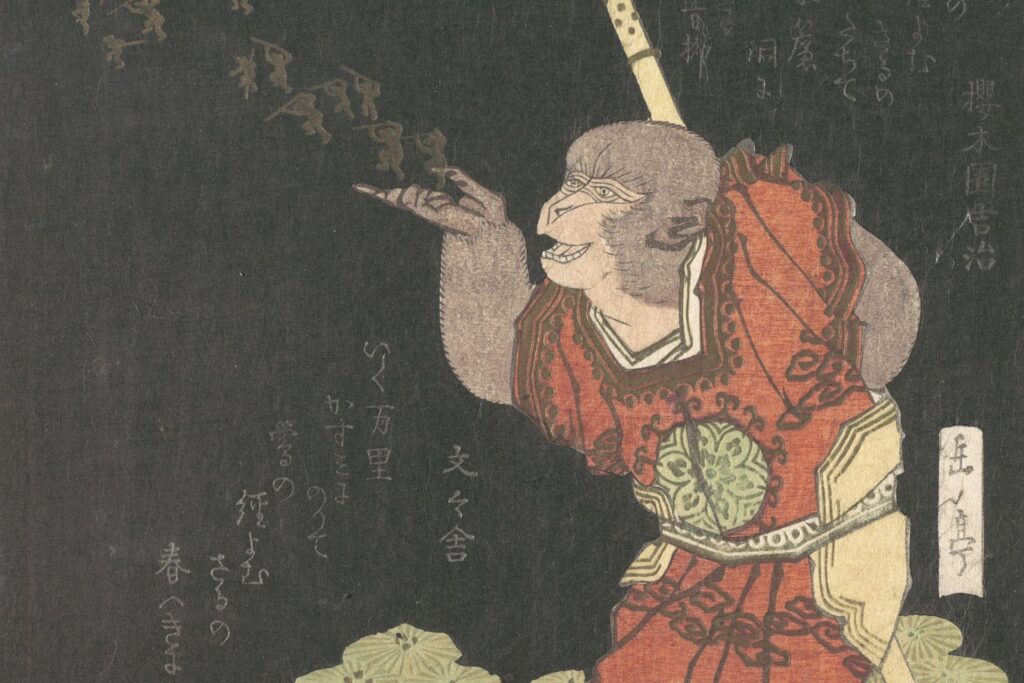
Sun Wukong and the Dragon King
After returning from his studies, Sun Wukong realizes that his power deserves a proper weapon. He visits the undersea palace of Ao Guang, the Dragon King of the Eastern Sea, and tries different weapons. None of them feel right because they are too light for him.
Then he finds the enormous iron pillar that becomes the Ruyi Jingu Bang.
The staff responds to him as if it was always meant to be his. This moment is important because it marks Sun Wukong’s rise from local monkey king to a mythic force. With his staff and armor, he becomes ready to challenge not only demons, but the cosmic order itself.
Sun Wukong and the Underworld
Sun Wukong’s rebellion does not stop with the sea. When officials from the underworld come to take his soul, he refuses to accept death.
He travels to the realm of the dead and discovers that his lifespan has been recorded in the Book of Life and Death. Furious, he crosses out his own name. Then he crosses out the names of many other monkeys as well.
This act is both funny and terrifying. It shows Sun Wukong’s boldness, but also his disregard for cosmic balance. He is not asking permission from Heaven, Hell, or anyone else. He simply changes the rules.
Naturally, this causes alarm among divine authorities.
Sun Wukong and the Jade Emperor
When the Jade Emperor hears about Sun Wukong’s behavior, Heaven tries to control him by offering him a position in the celestial bureaucracy. Sun Wukong accepts, thinking he has been honored.
But he soon discovers that his job is to look after heavenly horses. To Heaven, this is a small and low-ranking post. To Sun Wukong, it is a humiliation.
Feeling insulted, he returns to his mountain and declares himself “Great Sage Equal to Heaven.”
This title is one of the most famous parts of his legend. It perfectly captures his personality: proud, defiant, theatrical, and unwilling to accept a lower place in the universe.
Heaven sends forces to arrest him, but Sun Wukong defeats them. Eventually, the Jade Emperor tries again to appease him by giving him a new position guarding the Peaches of Immortality.
This also goes badly.
The Great Sage Equal to Heaven
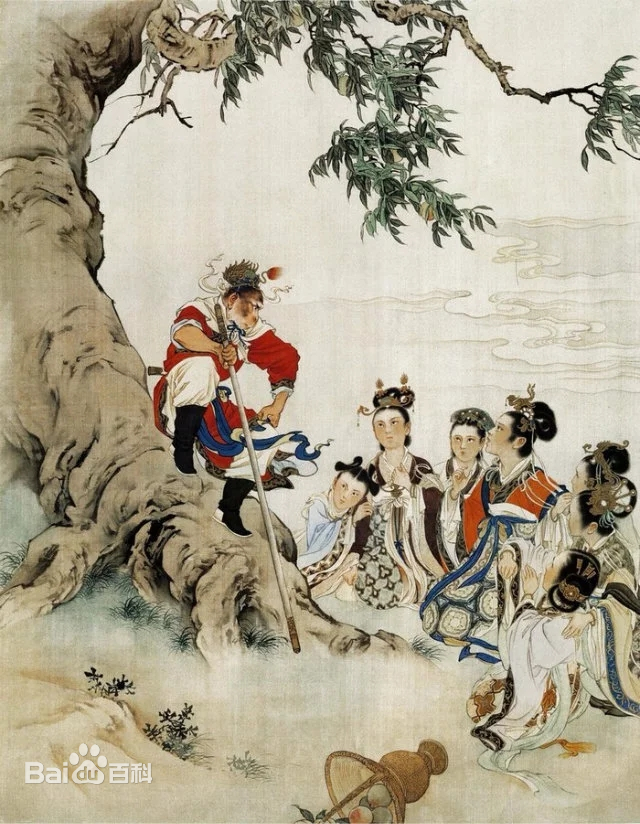
The Peaches of Immortality belong to the Queen Mother of the West and are reserved for a grand heavenly banquet. Sun Wukong, however, discovers that he has not been invited.
Insulted again, he eats the peaches. Then he crashes the banquet, drinks immortal wine, and consumes Laozi’s divine elixir pills. Each act makes him even harder to kill.
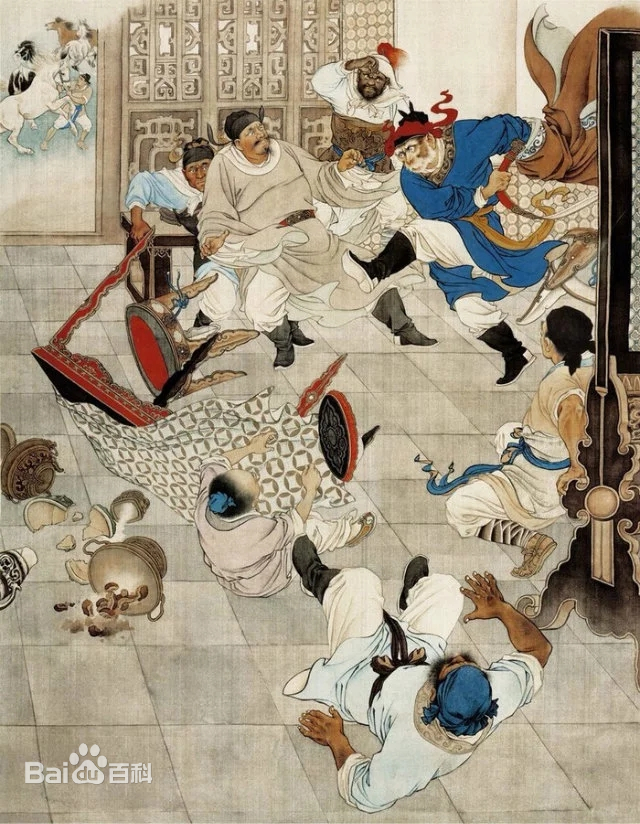
By this point, Sun Wukong has become a cosmic problem. He is already trained in immortality, has erased his name from the records of death, eaten immortal peaches, drunk heavenly wine, and swallowed alchemical pills.
Heaven sends huge armies against him, but he fights them with astonishing strength. He battles gods, soldiers, and celestial generals. Even when captured, ordinary execution methods do not work on him.
Sun Wukong has become nearly indestructible.
Sun Wukong and Buddha’s Palm
In the end, the Jade Emperor asks Buddha to intervene.
Buddha makes Sun Wukong a challenge: if the Monkey King can leap out of Buddha’s palm, he may claim the throne of Heaven. Sun Wukong accepts immediately. With one mighty somersault, he travels to what he believes is the edge of the universe. He sees five great pillars and marks one of them to prove he has been there.
But when he returns, Buddha reveals the truth. The five pillars were actually Buddha’s fingers. Sun Wukong never left his palm.
This is one of the most powerful moments in the story. Sun Wukong’s strength, speed, and arrogance all fail before a deeper spiritual power.
Buddha turns his hand into the Five Elements Mountain and traps Sun Wukong beneath it. There he remains imprisoned for hundreds of years.
Sun Wukong and Tang Sanzang
Sun Wukong’s redemption begins when the monk Tang Sanzang finds him under the mountain.
Tang Sanzang is traveling west to India to retrieve Buddhist scriptures. Sun Wukong agrees to become his disciple in exchange for freedom. But because the Monkey King is still wild and difficult to control, Guanyin gives Tang Sanzang a magical headband. When Tang recites a spell, the band tightens painfully around Sun Wukong’s head.
This creates one of the central tensions of Journey to the West. Sun Wukong is far stronger than Tang Sanzang, but Tang becomes his spiritual master. The monkey must learn restraint, patience, loyalty, and compassion.
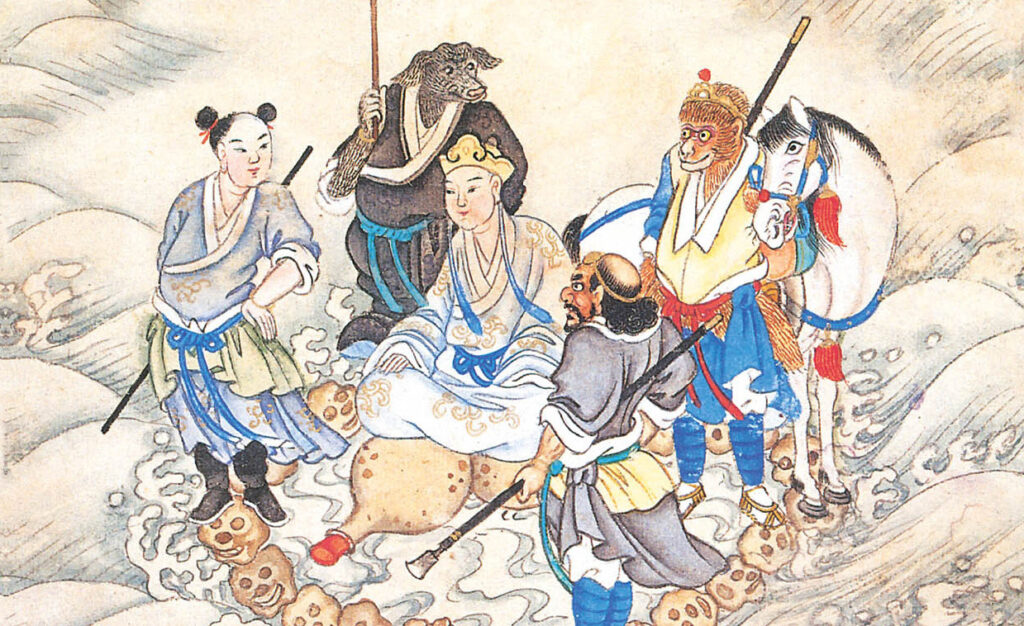
During the journey, Sun Wukong protects Tang Sanzang from countless demons and dangers. He is joined by other disciples, including Zhu Bajie, Sha Wujing, and the White Dragon Horse. Together, they face monsters, spirits, false gods, temptations, and trials.
Sun Wukong often sees danger more clearly than his master. He can recognize demons in disguise, but Tang Sanzang sometimes misunderstands him. This leads to conflict, frustration, and even moments when Sun Wukong is sent away.
Yet he returns. Again and again, he protects the monk.
Sun Wukong’s Enlightenment
The emotional power of Sun Wukong’s story lies in his transformation.
At the beginning, he wants freedom without responsibility. He wants immortality without humility. He wants status without discipline. He has immense power, but he does not know what to do with it.
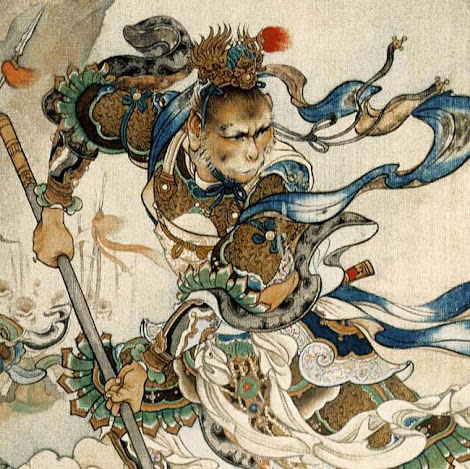
Through the journey west, he gradually changes. Protecting Tang Sanzang forces him to use his strength for something beyond himself. He still has a temper. He still loves a fight. But his loyalty becomes real, and his actions become increasingly guided by purpose.
At the end of the journey, Sun Wukong achieves Buddhahood and receives the title “Victorious Fighting Buddha.”
This ending matters because Sun Wukong does not lose his fighting spirit. Instead, that energy is transformed. His wildness becomes courage. His pride becomes discipline. His violence becomes protection. His rebellion becomes spiritual victory.
The Evolution of Sun Wukong Before Journey to the West
Although Journey to the West gives us the most famous version of Sun Wukong, the character did not appear from nowhere.
Earlier stories about the journey to India included monkey-like protectors and supernatural companions. Over time, these figures evolved through oral storytelling, religious imagination, folk drama, and written literature.
One important early form was the “Monkey Pilgrim” figure in stories about the monk’s scripture-seeking journey. Later dramas and popular tales added more recognizable elements: rebellion against Heaven, magical transformations, a powerful staff, and the ability to travel vast distances in a single leap.
By the time the Ming dynasty novel took shape, these older elements had been gathered into the unforgettable character now known as Sun Wukong.
This long evolution helps explain why the Monkey King feels so alive. He is not only the creation of one book. He carries layers of folk performance, religious symbolism, theater, humor, and popular imagination.
Sun Wukong in Chinese Culture
In Chinese culture, Sun Wukong is much more than a literary character.
He represents cleverness, resistance, energy, and the refusal to be humiliated. Many readers love him because he challenges authority, exposes hypocrisy, and fights with total confidence. At the same time, his story warns against arrogance and uncontrolled desire.
This balance makes him unusually rich as a cultural figure. He is both rebel and disciple, demon and protector, comic trickster and spiritual seeker.
On the stage, especially in Chinese opera, performers developed vivid “monkey play” techniques to bring Sun Wukong to life. His movements, expressions, and fighting style became part of the visual tradition that shaped later film and television versions.
For many audiences, the classic image of Sun Wukong still carries traces of opera performance: sharp gestures, bright costume, expressive face, and agile body language.
Sun Wukong in Pop Culture
Sun Wukong’s influence reaches far beyond China.
His story has inspired films, television dramas, cartoons, games, comics, and novels across East Asia and the wider world. One of the most famous examples is Son Goku from Dragon Ball. The early version of Goku clearly echoes Sun Wukong: a monkey-tailed boy with great strength, a magical staff, martial arts skill, and a cloud used for travel.
Other works also borrow from the Monkey King tradition, sometimes directly and sometimes loosely. His image appears in fantasy games, anime, web novels, stage performances, and modern retellings of Journey to the West.
Part of his appeal is visual. A monkey warrior with a magical staff is instantly memorable. But the deeper reason is emotional: Sun Wukong is a character who refuses to stay small. He wants to break limits, even when he must eventually learn why limits exist.
Why Sun Wukong Still Matters
Sun Wukong remains popular because he speaks to several human desires at once.
He is the fantasy of total freedom: the ability to leap across the sky, defeat armies, laugh at kings, and refuse humiliation. He is also the warning that freedom without wisdom becomes chaos.
His story tells us that power alone is not enough. Intelligence is not enough. Even immortality is not enough. Without discipline and compassion, greatness turns destructive.
That is why Sun Wukong’s journey is so satisfying. He does not simply become stronger. He becomes wiser.
The Monkey King begins as a stone-born rebel who wants to conquer Heaven. He ends as an enlightened protector whose strength serves a higher purpose. Few mythological characters travel such a dramatic path, and even fewer do it with so much humor, energy, and style.
Sun Wukong is not just the Monkey King of Journey to the West. He is one of the great trickster heroes of world literature.
FAQ About Sun Wukong
Who is Sun Wukong?
Sun Wukong is the Monkey King from the Chinese classic Journey to the West. He is a powerful trickster figure, warrior, and later a disciple of the monk Tang Sanzang.
What is Sun Wukong known for?
Sun Wukong is known for his 72 transformations, cloud-somersaulting, magical staff, rebellion against Heaven, imprisonment under a mountain, and later journey to India with Tang Sanzang.
What does Sun Wukong’s name mean?
Sun Wukong can be understood as “monkey awakened to emptiness.” The name reflects his spiritual journey from ignorance and pride toward enlightenment.
What is Sun Wukong’s weapon?
His famous weapon is the Ruyi Jingu Bang, or As-You-Will Gold-Banded Staff. It can change size according to his command and is often kept as a tiny needle behind his ear.
Why was Sun Wukong trapped under a mountain?
Sun Wukong was trapped under the Five Elements Mountain by Buddha after rebelling against Heaven and failing to escape Buddha’s palm.
Is Sun Wukong a god?
Sun Wukong is a complex mythological figure. He is sometimes described as a demon, immortal, trickster, protector, and enlightened Buddha. In some communities, he has also been worshiped as a deity.
Is Sun Wukong related to Dragon Ball?
Yes. Son Goku from Dragon Ball was strongly inspired by Sun Wukong. The name, monkey tail, staff, martial arts, and cloud-riding all echo the Monkey King tradition.
Why is Sun Wukong so popular?
Sun Wukong is popular because he is powerful, funny, rebellious, loyal, and deeply human in his flaws. His story combines adventure, comedy, spiritual growth, and mythic imagination.