Legendary Ruler · Culture Hero · Ancestral Tradition
Huángdì Yellow Emperor: Story, Meaning, Symbols and Legacy
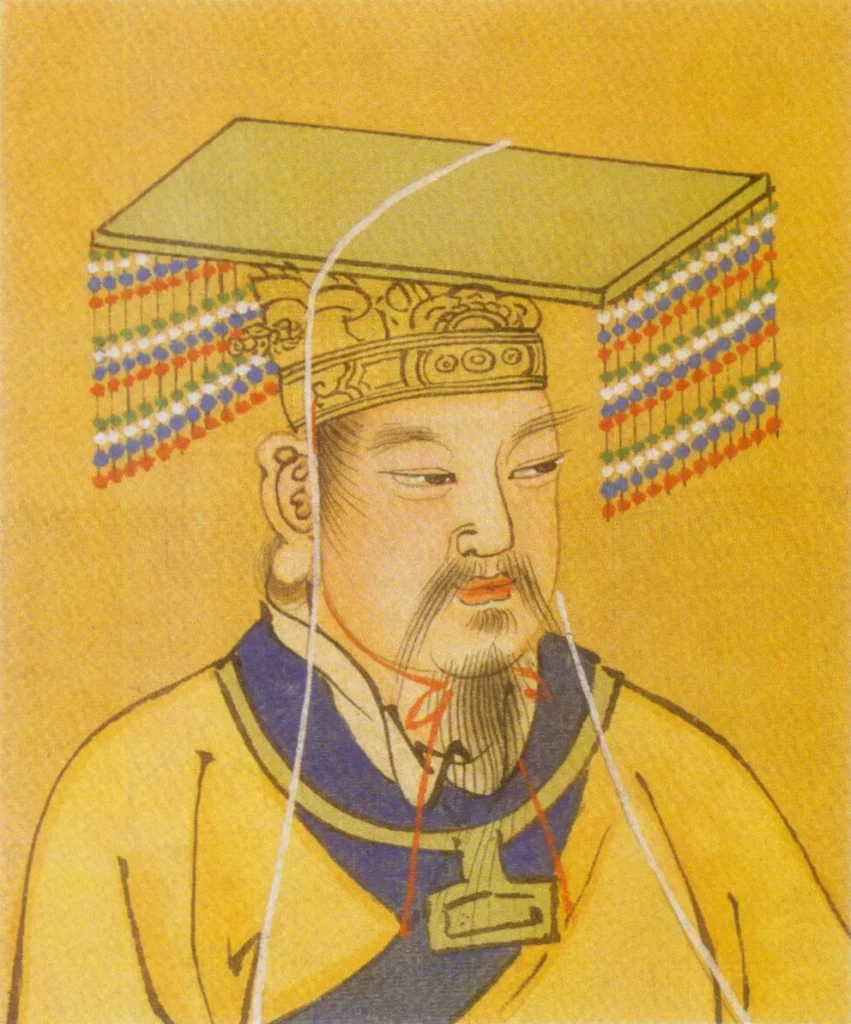
The Huángdì Yellow Emperor (黄帝 / 黃帝, Huángdì) is one of the most influential legendary rulers and culture heroes in Chinese tradition. Early and Han-period texts place him in remote antiquity as a victorious sovereign, organizer of political order and ancestral figure. Later traditions connected him with medicine, Daoist cultivation, immortality and the origins of civilization. He is therefore not simply a “Chinese god,” nor can his legendary biography be treated as verified history. Huangdi developed across several layers of mythology, philosophy, religion and cultural memory.
| Quick Fact | Huangdi |
|---|---|
| English name | Yellow Emperor, sometimes Yellow Thearch |
| Chinese | 黄帝 (simplified), 黃帝 (traditional) |
| Pinyin | Huángdì |
| Traditional personal name | Xuanyuan (轩辕 / 軒轅) in the account preserved by Sima Qian |
| Main identity | Legendary sovereign, culture hero and ancestral figure |
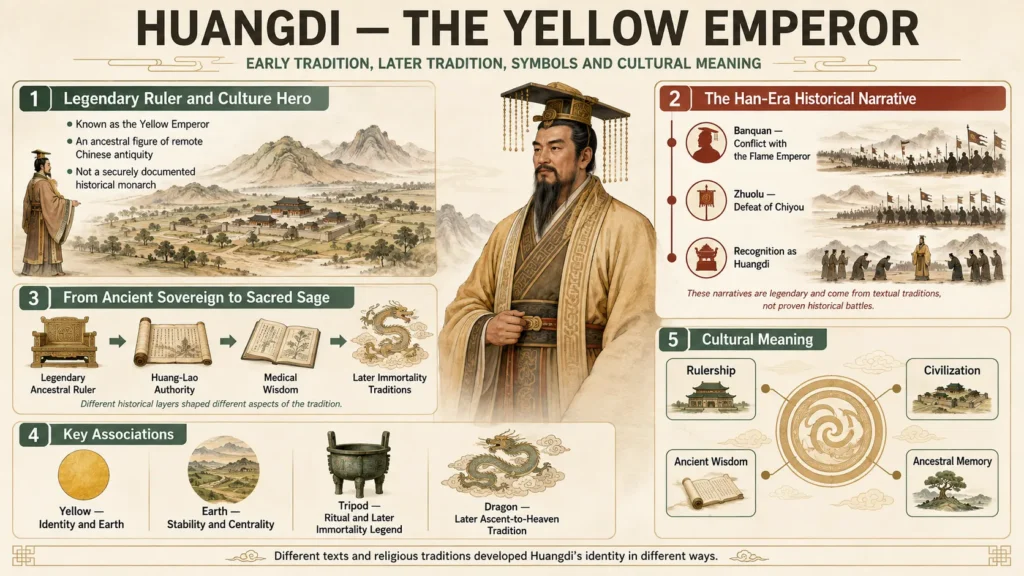
| Famous narrative episodes | Battles at Banquan and Zhuolu, including the defeat of Chiyou |
| Later associations | Huang-Lao thought, medicine, longevity, Daoist traditions and immortality legends |
| Historical status | Legendary; his traditional reign should not be presented as securely documented history |
Who Is the Yellow Emperor in Chinese Mythology?
Huangdi occupies an unusual position between myth, legendary history, political thought and religion. Traditional historical narratives present him as an ancient sovereign who overcame rival powers and established a new political order. Other texts use him as an ideal ruler seeking wisdom from sages, while later religious traditions portray him as a seeker—or possessor—of techniques leading toward transcendence and immortality.
For readers exploring Chinese gods and legendary figures, the important distinction is that not every famous supernatural or ancestral figure belongs to the same religious category. Huangdi can be honored religiously, but “legendary ruler,” “culture hero” and “ancestral figure” often describe his oldest and most influential roles more accurately than simply calling him a god.
His importance also changed over time. A Warring States audience, a Han historian, an early Huang-Lao thinker, a medieval Daoist writer and a modern participant in an ancestral ceremony could all understand Huangdi differently. There is no single ancient biography containing every story now associated with him.
What Does the Name Huangdi Mean?
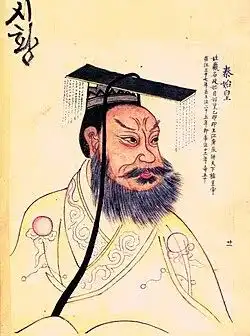
The name is written 黄帝 in simplified Chinese and 黃帝 in traditional Chinese, pronounced Huángdì. The conventional English translation is “Yellow Emperor,” although “Yellow Thearch” is sometimes used by scholars to avoid reading the ancient title di entirely through the later institution of imperial emperorship.
This distinction matters because 黃帝 is not the same written word as 皇帝, the later standard title for an emperor. Both are pronounced huángdì in modern Mandarin, but the first character is different: 黃 means “yellow,” while 皇 in 皇帝 carries the sense of august or imperial authority.
Traditional explanations connected Huangdi with the virtue or phase of earth, whose correlative color is yellow. This helped give “yellow” a broader cosmological significance in accounts of Huangdi. It should not be reduced to the modern assumption that his name simply refers to the Yellow River or to the color of his clothing.
The Yellow Emperor Story in the Shiji
One of the most influential surviving narratives appears at the beginning of Sima Qian’s Shiji, or Records of the Grand Historian, compiled during the Han dynasty. The work opens its “Annals of the Five Emperors” with Huangdi, giving later generations an enormously influential framework for imagining China’s legendary age of sage rulers.
In this account, Huangdi is a son of Shaodian, with the surname Gongsun and the name Xuanyuan. The descendants of Shennong are described as having lost the power to control conflicts among regional lords. Xuanyuan develops military strength and confronts opponents who refuse to submit.
Huangdi and the Flame Emperor at Banquan
The Shiji recounts a conflict between Xuanyuan and the Flame Emperor, or Yandi, culminating in battles at Banquan. After three engagements, Xuanyuan prevails. The episode became part of the wider tradition in which Huangdi and Yandi were imagined as primordial rulers and ancestral figures.
Modern retellings sometimes turn this story into a simple account of historically documented tribes founding a single Chinese nation. That goes beyond what the evidence can securely establish. The narrative is better read as part of the developing legendary and genealogical memory of early China.
Huangdi and Chiyou at Zhuolu
The better-known confrontation is with Chiyou. In Sima Qian’s narrative, Chiyou refuses to obey the established order. Huangdi gathers forces from the regional lords, fights Chiyou at Zhuolu and defeats him. The lords then recognize Xuanyuan in place of the Shennong lineage, and he becomes known as Huangdi.
Later literature and folklore dramatically expanded the Zhuolu story. Some versions add supernatural weather, divine helpers, magical creatures or ingenious inventions. Those details should not automatically be projected backward into the relatively compact account in the Shiji.
The distinction is typical of Chinese legends and ancient stories: a brief early narrative may acquire increasingly elaborate details as it passes through later texts, religious traditions and popular storytelling.
Was Huangdi Really the Founder of Chinese Civilization?
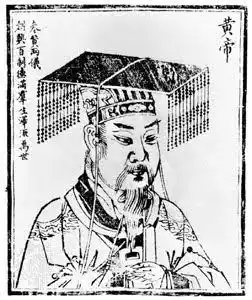
Traditional literature attributes an extraordinary range of cultural achievements to Huangdi and the people surrounding his court. Depending on the source and period, he may be connected with political institutions, calendars, measurement, transport, clothing, music, warfare, medicine and other civilizing arts.
These should be understood as culture-hero attributions, not as a verified inventory of inventions created by one historical individual. Ancient and later Chinese traditions often explained major institutions by associating them with exemplary rulers and sages of remote antiquity.
Huangdi therefore resembles other foundational figures such as Fuxi, the legendary culture hero. Both came to represent the transformation of an unordered human world into one structured by knowledge, institutions and shared practices, although their stories and textual histories are distinct.
The deeper meaning of these invention traditions is often more important than the literal claim. Huangdi represents the ideal of a ruler whose authority brings disparate domains—politics, ritual, warfare, knowledge and the natural order—into coordination.
The Yellow Emperor and Chinese Medicine
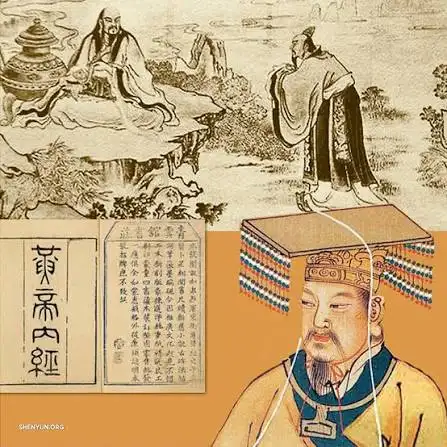
Huangdi’s name is inseparable from one of the foundational bodies of classical Chinese medical literature, the Huangdi Neijing (黃帝內經), conventionally translated as the Yellow Emperor’s Inner Canon.
The text frequently presents medical knowledge through conversations in which Huangdi asks questions and learned advisers explain physiology, diagnosis, environmental influences and principles of treatment. This literary framework gives the ancient sovereign the role of an ideal questioner and patron of authoritative knowledge.
It does not mean that a historically verified Huangdi personally wrote the Neijing. Modern scholarship treats the received medical corpus as a product of textual development rather than the work of a third-millennium-BCE monarch.
The association nevertheless became extraordinarily important. It helped transform Huangdi from an ancestral ruler remembered primarily for government and conquest into a source of authority for technical, cosmological and medical knowledge.
Huangdi and Huang-Lao Thought
Another major historical development was the tradition commonly called Huang-Lao, a name combining Huangdi with Laozi. Huang-Lao ideas became influential during the late Warring States and early imperial periods and were associated with approaches to government, natural order, self-cultivation and the Dao.
This does not mean that the legendary Huangdi founded one timeless organization called “Taoism.” The religious and intellectual formations later grouped under the English label Daoism developed historically through multiple traditions.
Instead, Huangdi became a powerful voice of ancient authority. Texts could place teachings in his mouth or present him as a ruler who seeks instruction from wiser masters. Such narratives made him useful to thinkers concerned not merely with conquest but with the question of how a ruler should align political government with a larger natural order.
Did the Yellow Emperor Become a Daoist Immortal?
Later traditions increasingly moved Huangdi beyond legendary kingship. Stories portray him studying methods of longevity, consulting transcendent teachers and eventually attaining an immortal state.
A famous later narrative associates his departure from the human world with a sacred tripod and a dragon descending from Heaven. Huangdi mounts the dragon and ascends, while those unable to follow remain behind. Related versions of this story appear in early imperial discussions of immortality and later collections of transcendent biographies.
This is an important example of historical layering. Huangdi’s dragon ascent should not be inserted into every retelling as though it belonged to the earliest surviving version of his life. It represents the growth of Huangdi’s identity in traditions increasingly concerned with transcendence and immortality.
Calling the Yellow Emperor a “Daoist god” is therefore only partly useful. He became important in Daoist-associated traditions, but his cultural identity is older and broader than any single later religious classification.
Yellow Emperor Symbols and Their Meanings
Huangdi does not have one fixed set of “powers” comparable to a modern fantasy character. His attributes are better understood as layers of political, cosmological and religious symbolism.
| Symbol or Attribute | Meaning | Historical Caution |
|---|---|---|
| Yellow | His defining color and a traditional association with earth | Do not assume the name merely describes his clothing |
| Earth | Cosmological stability, centrality and the traditional “virtue of earth” | The association belongs to correlative cosmological interpretation |
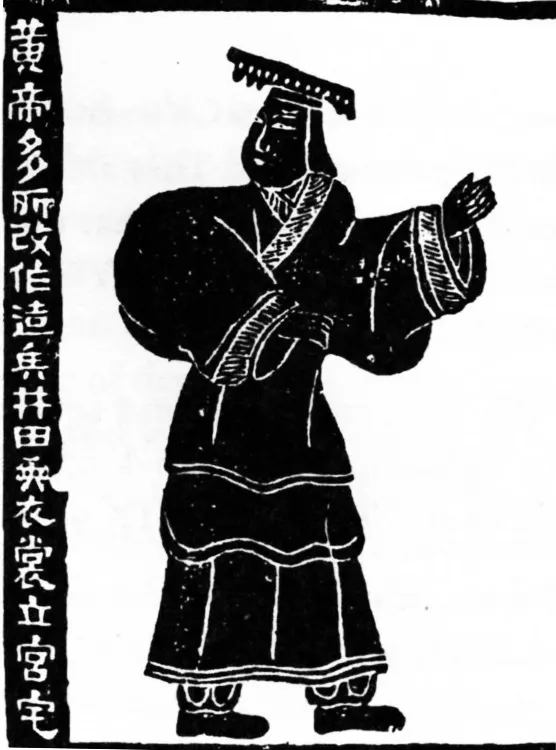
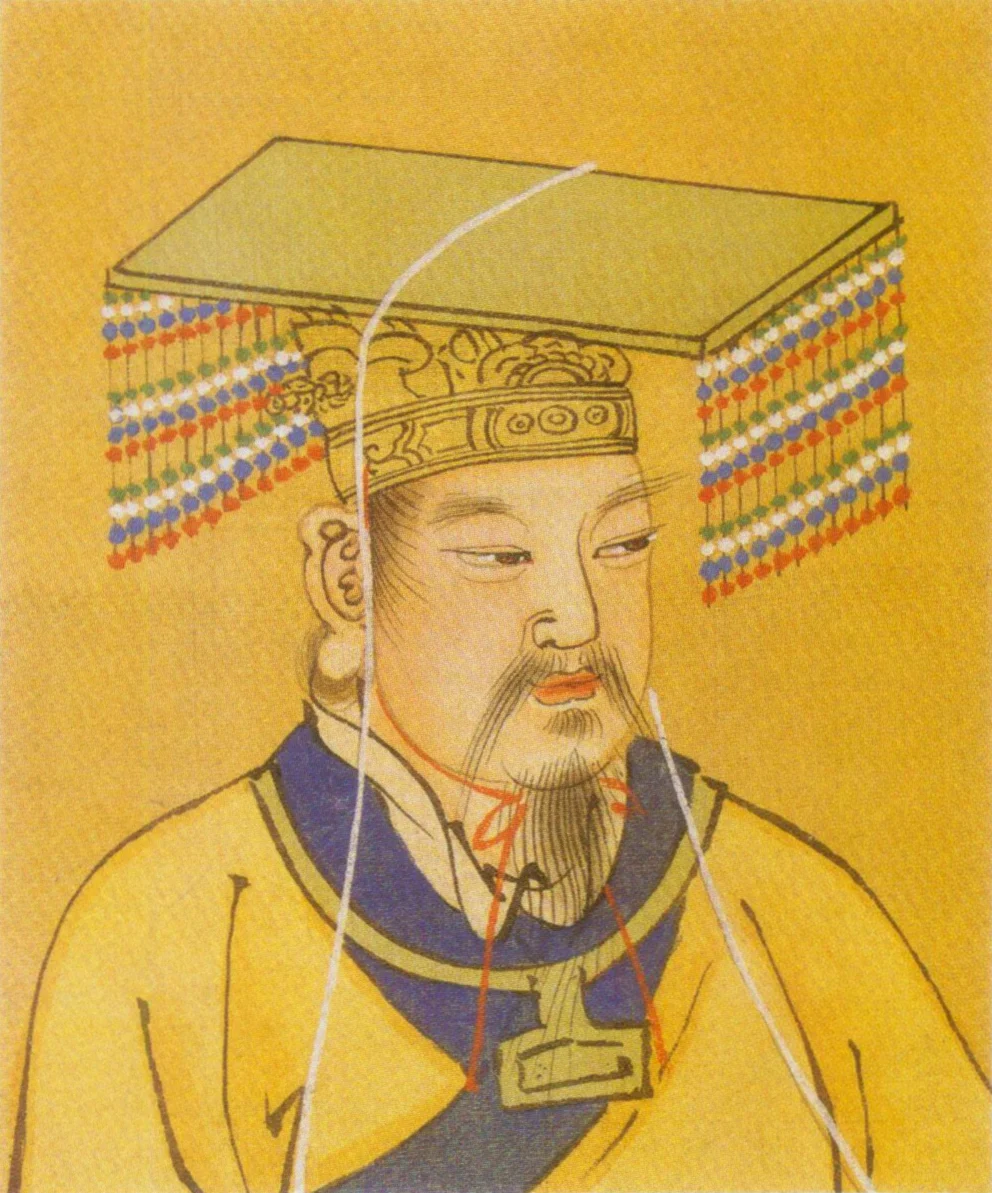
| Ancient sovereign imagery | Rulership, political order and sage government | His exact costume varies widely in later art |
| Dragon | Especially associated with the later story of his ascent to Heaven | It should not be treated as a universal personal mount in every early source |
| Sacred tripod | Appears in traditions linking Huangdi with ritual authority and immortality | Especially important in later layers of the tradition |
| Medical knowledge | Authority of ancient wisdom in the Huangdi Neijing tradition | Does not mean Huangdi historically authored the received text |
What Does the Yellow Emperor Represent?
The Yellow Emperor represents several different ideas depending on period and context.
- Political order: the ruler who defeats disorder and establishes authority.
- Civilization: a culture hero to whom later generations attributed foundational knowledge and institutions.
- Ancient wisdom: an authoritative questioner or teacher in philosophical, technical and medical texts.
- Ancestry: a legendary ancestral figure incorporated into increasingly expansive genealogical traditions.
- Cosmic alignment: especially through associations with yellow, earth and orderly rulership.
- Transcendence: in later traditions that transform the ancient sovereign into a seeker or achiever of immortality.
His ancestral role became especially powerful because genealogy could connect political communities to an imagined shared beginning. Over centuries, Huangdi was increasingly invoked as an ancestor of broad populations and eventually as an important symbol of Chinese cultural identity.
Such claims should be understood culturally rather than biologically. A legendary common ancestor expresses collective memory and identity; it is not genetic evidence that every Chinese person descends from one historically verified individual.
Yellow Emperor vs Jade Emperor
English readers sometimes confuse the Yellow Emperor with the Jade Emperor, but they are very different figures.
Huangdi belongs principally to traditions of legendary antiquity, ancestral rulership, culture heroes and later religious transformation. The Jade Emperor, by contrast, is the heavenly sovereign who presides over the celestial administration in much Chinese popular religion and is also important in Daoist tradition.
The similar English titles do not indicate that one succeeded the other as ruler of Heaven. They developed in different religious and mythological contexts.
Early Tradition and Later Tradition
| Layer | Typical Image of Huangdi |
|---|---|
| Warring States and early traditions | Ancestral and legendary ruler increasingly associated with political and cultural origins |
| Han historical synthesis | First figure in Sima Qian’s sequence of the Five Emperors, victor over Yandi and Chiyou |
| Huang-Lao intellectual tradition | Ancient authority associated with rulership, the Dao and cultivation |
| Medical tradition | Questioner and authoritative figure in the Huangdi Neijing textual tradition |
| Later Daoist and immortality traditions | Seeker of transcendent teachings and an immortalized ancient sovereign |
| Later cultural memory | Ancestral symbol of Chinese civilization and collective identity |
This layered development explains why seemingly contradictory descriptions of Huangdi can all appear in books about China. He can be a ruler in one source, a philosophical student in another, a medical authority in another and an immortal in another. The mistake is not recognizing these different versions; the mistake is assuming they all originated at the same time.
Frequently Asked Questions
Who is the Yellow Emperor in Chinese mythology?
The Yellow Emperor, Huangdi, is a legendary ancient sovereign, culture hero and ancestral figure. Han historical tradition places him at the beginning of the Five Emperors, while later traditions connect him with medicine, Daoist thought and immortality.
Was the Yellow Emperor a real historical person?
There is no secure evidence proving the complete traditional biography of Huangdi as the life of a documented third-millennium-BCE monarch. Modern scholarship therefore treats him primarily as a legendary and culturally constructed figure whose identity developed across early Chinese traditions.
What does Huangdi mean?
Huangdi is written 黄帝 or 黃帝 and literally combines “yellow” with the ancient title di. “Yellow Emperor” is the conventional translation, while some scholars use “Yellow Thearch” to avoid confusing the ancient title with the later imperial office.
Is the Yellow Emperor a Daoist god?
That description is too narrow. Huangdi became important in Huang-Lao thought and later Daoist and immortality traditions, but his identity as a legendary sovereign and ancestral culture hero developed across a much broader range of Chinese traditions.
Did Huangdi write the Yellow Emperor’s Inner Canon?
No historical evidence establishes Huangdi as the literal author of the received Huangdi Neijing. The work uses the Yellow Emperor as an authoritative dialogue figure, while scholarship treats the medical corpus as the result of historical textual development.
What are the main symbols of the Yellow Emperor?
His strongest associations include yellow, earth and ancient sovereign authority. Later traditions also connect him with sacred tripods, dragons, medical knowledge and immortality, but these symbols do not all belong to the same historical layer.
References and Further Reading
- Sima Qian, Shiji: Annals of the Five Emperors — Chinese Text Project — English-accessible text of the influential Han narrative describing Xuanyuan, the conflicts at Banquan and Zhuolu, and Huangdi’s position among the Five Emperors.
- Da Dai Liji: Virtues of the Five Emperors — Chinese Text Project — Early transmitted material showing how Huangdi was remembered as an exemplary ancient sovereign.
- Shiji: Treatise on the Feng and Shan Sacrifices — Chinese Text Project — Preserves important early imperial traditions connecting Huangdi with sacred tripods, dragons and ascent to Heaven.
- Daoism — Stanford Encyclopedia of Philosophy — Provides scholarly context for early Daoist intellectual history and the Huang-Lao association of the Yellow Emperor and Laozi.
- Michael Nylan, “Sima Qian: A True Historian?” — Early China, Cambridge University Press — Useful for understanding Sima Qian’s construction of ancient genealogies and the Yellow Emperor’s place within his historical synthesis.
- Vivienne Lo, “Medicine and Healing in Han China” — The Cambridge History of Science — Scholarly discussion of early Chinese medical traditions and the Huangdi Neijing.
- Li Liu, “Who Were the Ancestors? The Origins of Chinese Ancestral Cult and Racial Myths” — Antiquity — Examines the changing use of legendary ancestry and the development of the Yellow Emperor as a broader ancestral figure.