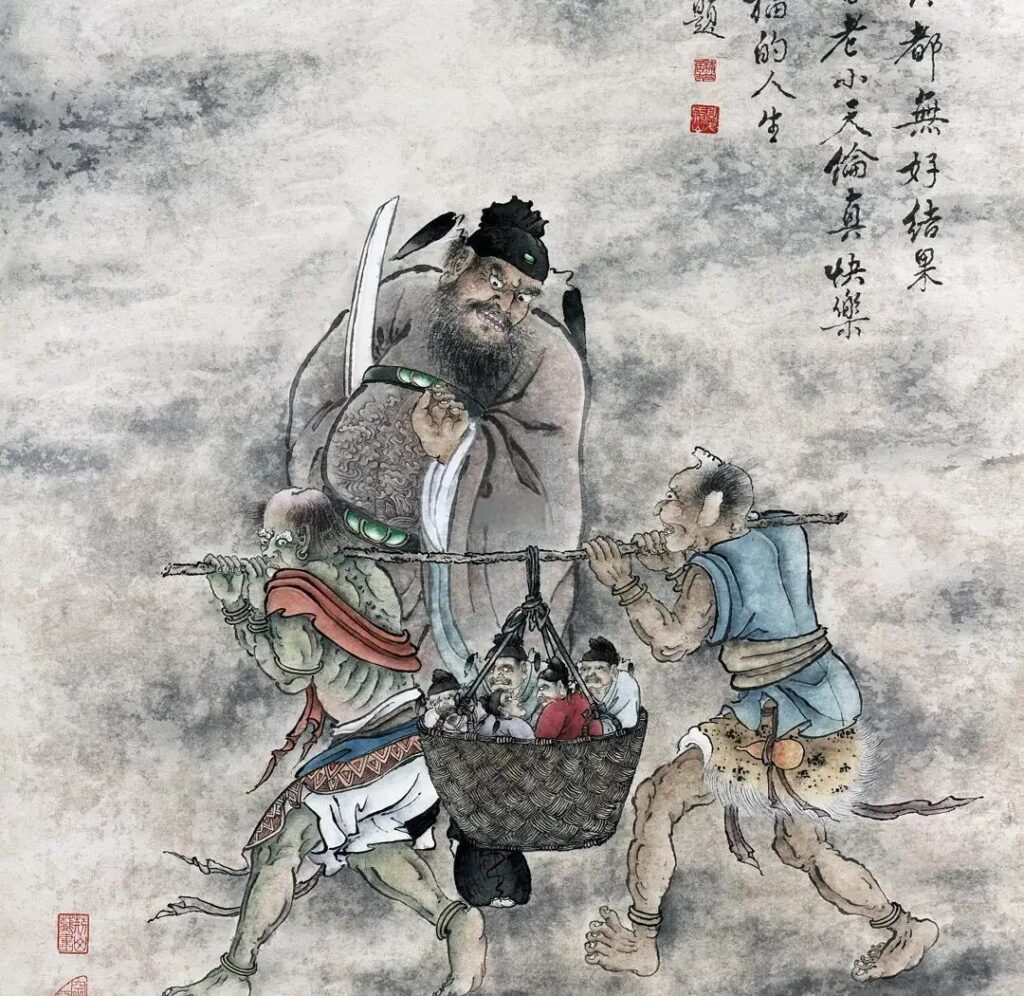
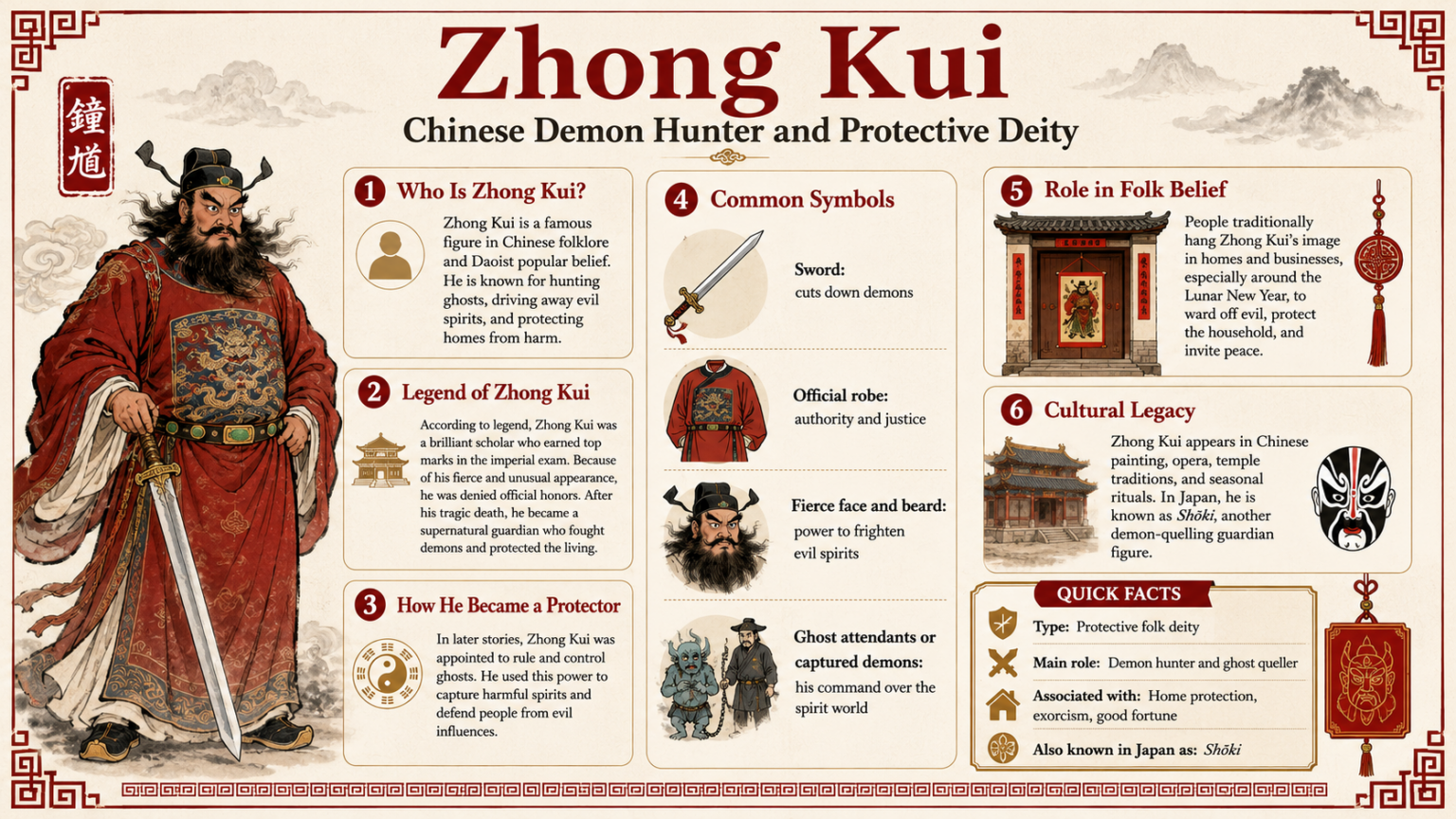
Zhong Kui: Demon Queller, Ghost Catcher and Protective Figure
His frightening face, official robes and drawn sword made him one of East Asia’s most recognizable protectors—but his identity was shaped by several different legends, rituals and artistic traditions.
| Chinese name | 鍾馗; simplified Chinese: 钟馗 |
|---|---|
| Pinyin | Zhōng Kuí |
| Main titles | Demon Queller, Ghost Catcher and Vanquisher of Demons. “King of Ghosts” appears in some later traditions but is not a universal title. |
| Primary role | Subduing harmful ghosts and spirits and protecting households and ritual spaces. |
| Common appearance | A large, fierce scholar-official with a heavy beard, glaring eyes, official hat and robes. |
| Main symbols | Sword, official hat, black beard, demon attendants, bats and sometimes a ruyi sceptre. |
| Festivals and customs | Images and performances are associated in some regions with Lunar New Year, the Double Fifth or Dragon Boat Festival, and local cleansing rites. |
| Historical status | A legendary and religious figure, not a securely documented Tang-dynasty official. His biography developed through later texts, paintings, theater and folklore. |
Who Is Zhong Kui?
Zhong Kui is a supernatural ghost catcher whose frightening power is directed against dangerous spirits rather than ordinary people. In household prints, scroll paintings, performances and popular stories, he patrols boundaries, seizes demons and restores order.
He belongs primarily to Chinese folklore and popular religion. Daoist traditions incorporated him in different ways, but no single doctrine defines every title attributed to him. His most stable function is exorcistic protection; claims that he universally controls wealth, examinations, healing and all good luck combine separate traditions too freely.
Zhong Kui Name and Pronunciation
His name is written 鍾馗 in traditional and 钟馗 in simplified Chinese. The Mandarin pronunciation is Zhōng Kuí. Older books may use Chung Kuei or Chung K’uei.
“Zhong Kui meaning” has no simple dictionary answer. The characters function as a proper name, and proposed deeper origins remain debated. It is safer to translate titles such as “Demon Queller” than to present a speculative literal meaning as certain.
Is Zhong Kui a God, Ghost or Legendary Hero?
He can be described in all three ways. In the rejected-scholar legend he begins as a human and becomes a ghost; in art he acts as a legendary hero or supernatural official; in ritual practice he may be treated as a deity.
Such layered identities are common in Chinese popular religion. Zhong Kui is best understood as a legendary exorcistic protector whose religious status developed through literature, art and practice.
Zhong Kui and the Tang Emperor’s Dream
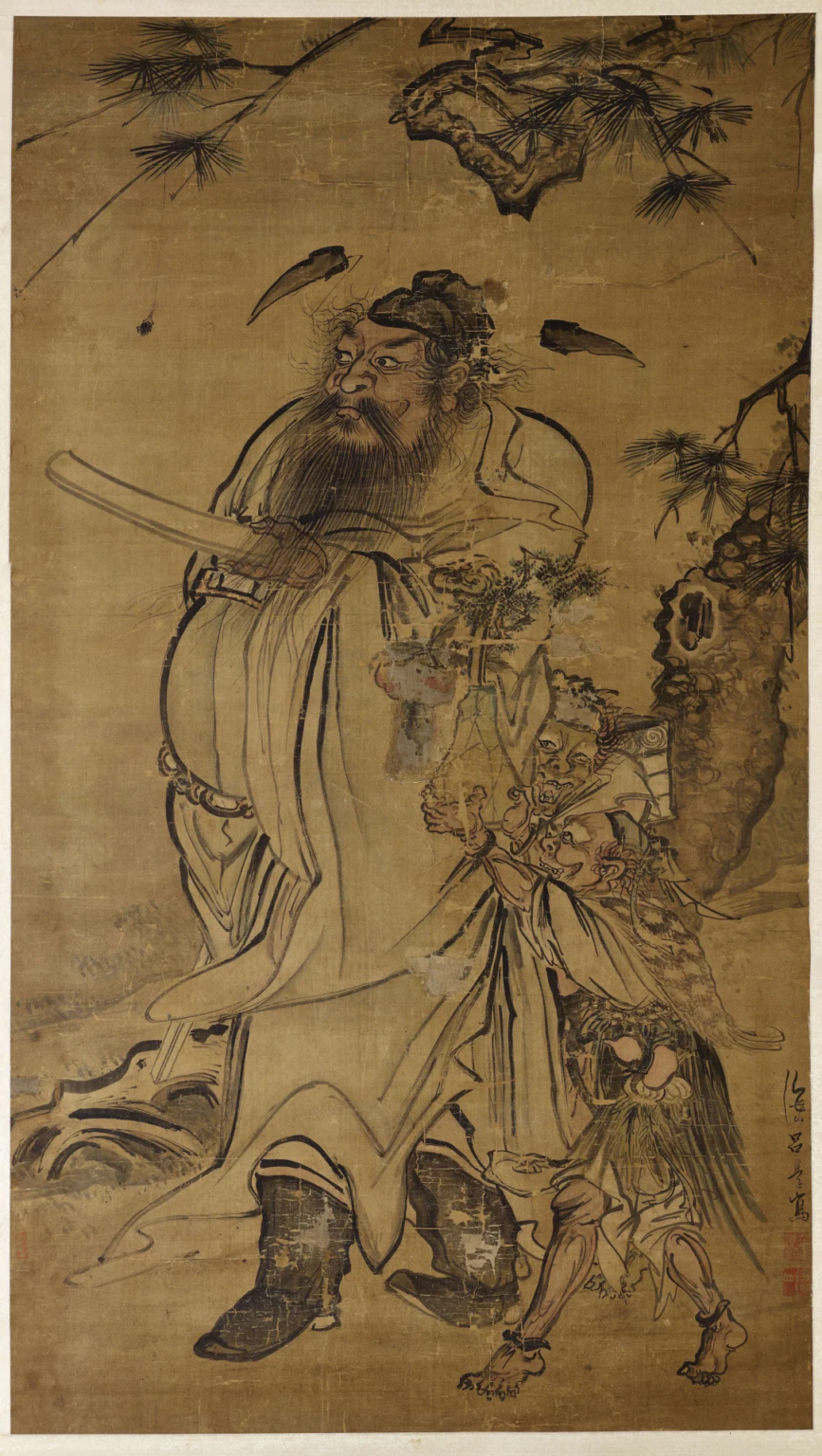
One major tradition connects Zhong Kui with Emperor Xuanzong of Tang, also called Minghuang. In the story, the emperor falls ill and dreams that a small ghost steals valuables from the palace. A much larger, ferocious figure appears, captures the thief, tears it apart or devours it, and identifies himself as Zhong Kui of Zhongnan Mountain.
After waking, the emperor recovers and orders the painter Wu Daozi to record the figure. The portrait becomes an image capable of expelling spirits, explaining why a painted Zhong Kui could protect a space outside a temple.
The Rejected Scholar Story
A second tradition presents Zhong Kui as a brilliant examination candidate. He may place first, yet the court denies him honors because his face is considered ugly. Enraged by the injustice, he dies by suicide, often at the palace steps or gate.
Later versions say the emperor orders an honorable burial or the ruler of the underworld appoints Zhong Kui to punish ghosts. Some also connect his friend Du Ping with the story of Zhong Kui arranging his sister’s marriage.
This is not a confirmed biography. It is a legendary framework in which the face that caused rejection becomes capable of terrifying demons.
Why Zhong Kui Became a Demon Queller
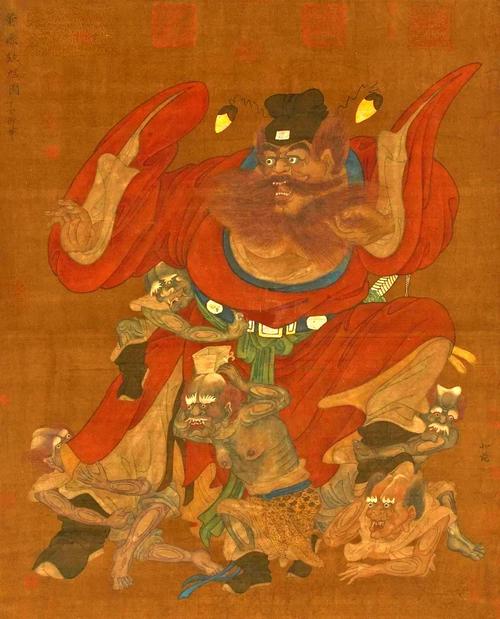
The dream tradition gives Zhong Kui authority through victory over a palace ghost and imperial recognition. The scholar tradition makes supernatural appointment a correction of human injustice.
In both, his anger and unusual appearance are redirected against threats to homes and communities. That is why he can be terrifying and auspicious at once.
What Zhong Kui Looks Like
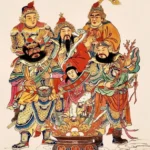
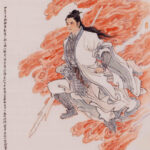
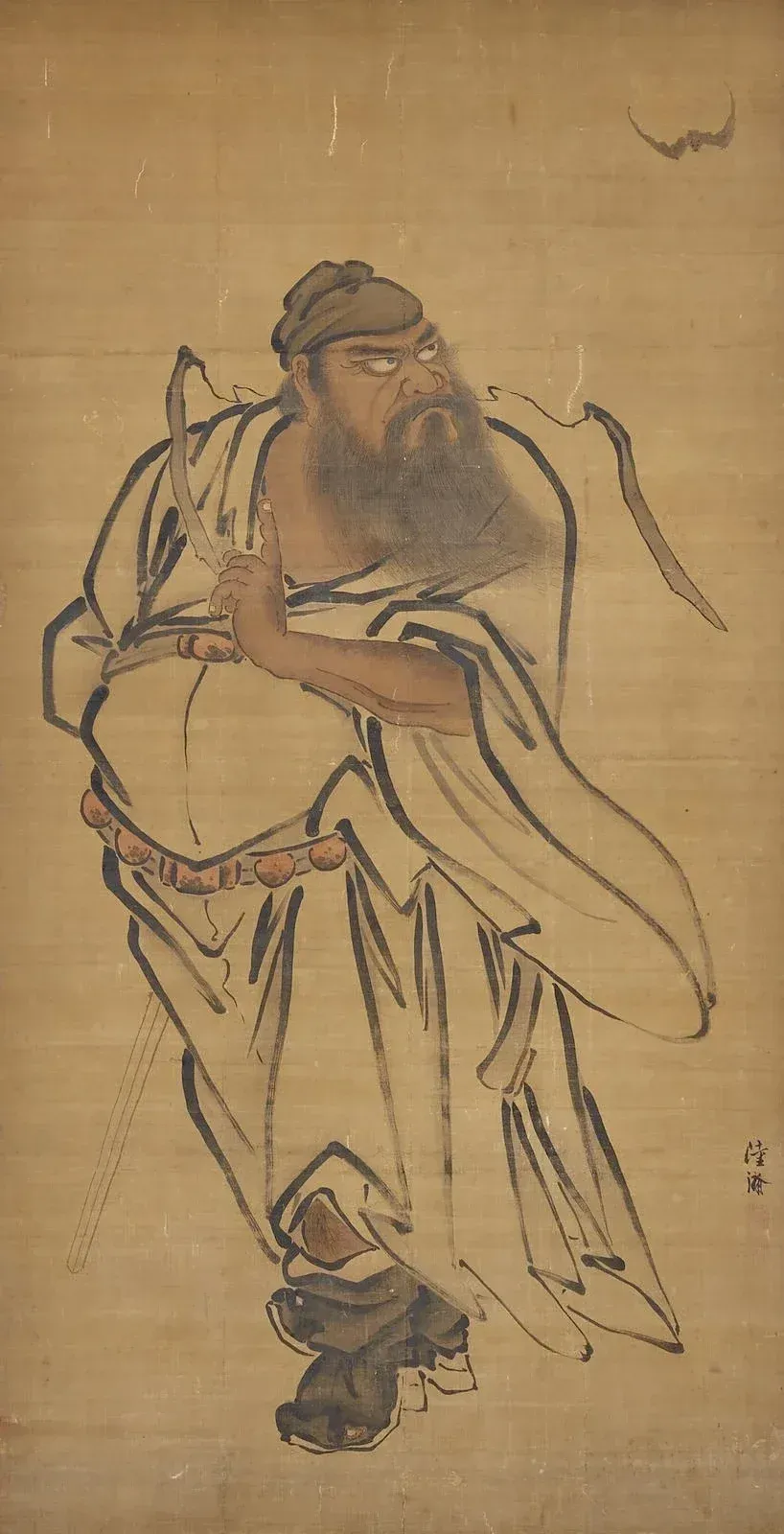
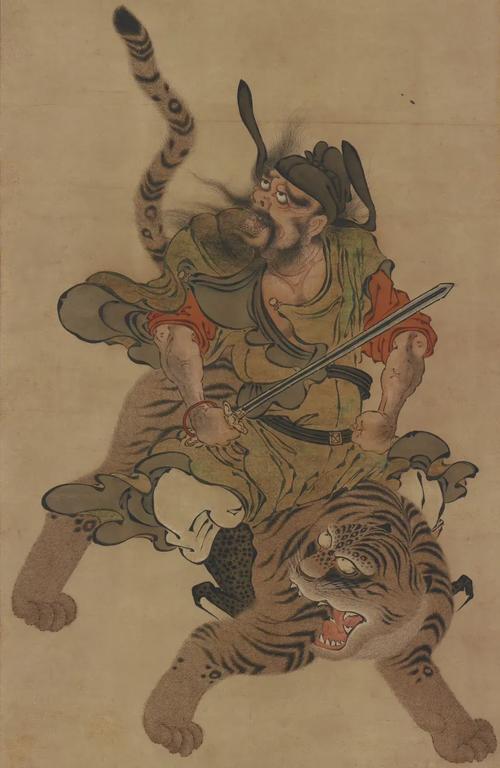
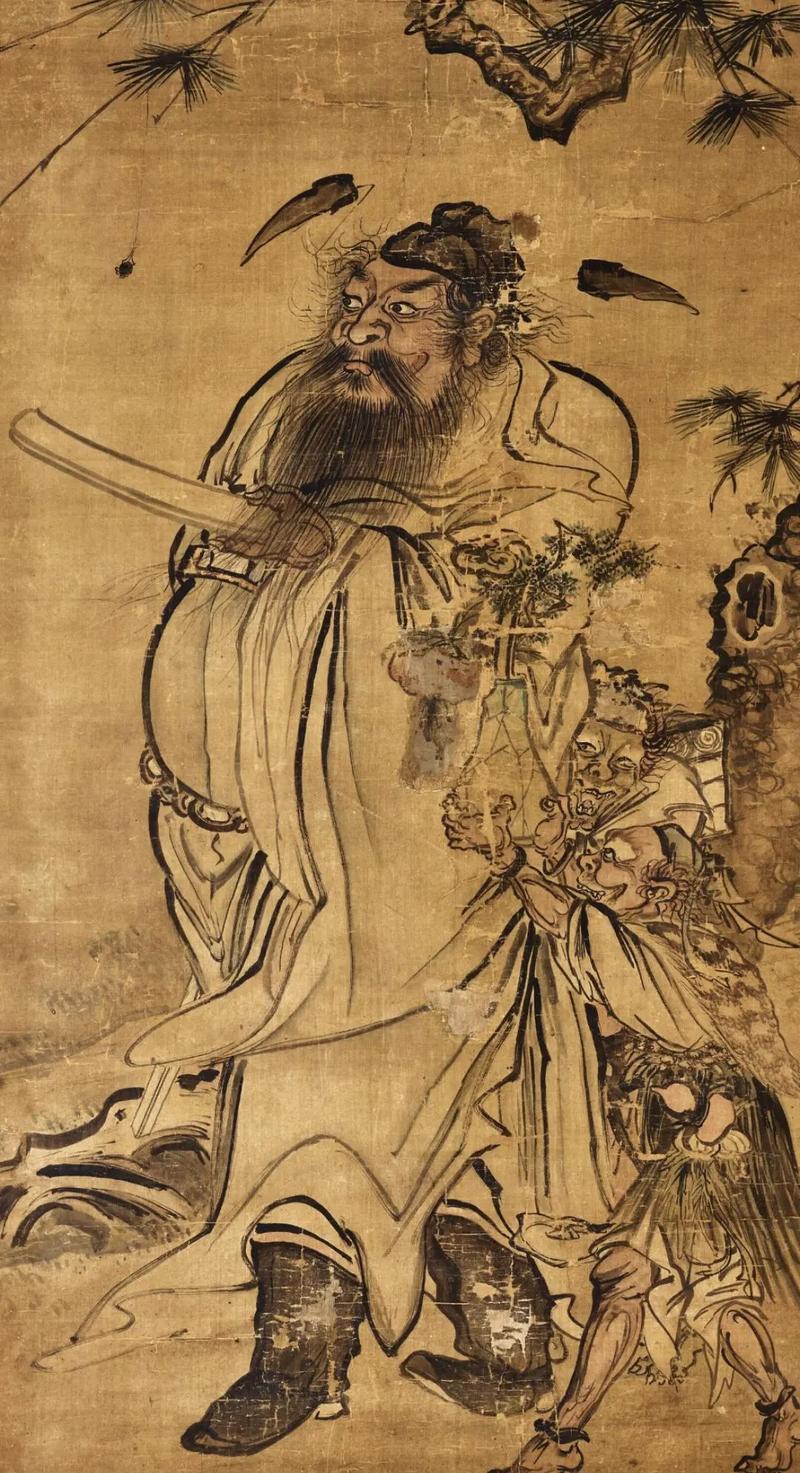
Zhong Kui is usually broad-bodied and heavily bearded, with staring or bulging eyes and an angry expression. His robes and hat identify him as a scholar-official rather than an armored general. This visual combination is essential: he possesses the authority of civil office but uses it with the physical force of an exorcist.
There is no mandatory costume. He may wear red, blue or dark robes; ride a donkey or ox; walk with his sister; drink wine; inspect demons; or stand alone. Artists could make him solemn, comic, drunk or politically symbolic while keeping him recognizable.
Sword, Official Hat, Beard and Demon Attendants
A ruyi sceptre, books, instruments, wine vessels or a donkey may emphasize refinement, auspicious wishes, humor or a specific story. They are not universal symbols.
Zhong Kui and the Five Bats
Bats appear beside Zhong Kui in several well-known artworks. The Chinese words for “bat” and “blessing” are both pronounced fú, making bats powerful auspicious images. Five bats can represent the Five Blessings, although lists of those blessings differ by source and period.
An Ashmolean Museum painting also explains the bats as assistants able to search for hidden demons in darkness. The image therefore works on more than one level: Zhong Kui seeks out evil while the bats add wishes for fortune. The precise interpretation should follow the composition, inscription and date of the individual artwork rather than assuming every bat means exactly the same thing.
Zhong Kui Paintings and Door Images
Zhong Kui became a flexible subject in Chinese figure painting. Museum scrolls show him patrolling with demons, giving his sister away, riding, drinking or confronting spirits. The Smithsonian’s Zhongshan Going on Excursion, associated with Gong Kai, shows how he could also carry political and autobiographical meaning.
Paintings were not merely illustrations of one fixed myth. Some functioned as seasonal gifts, some as learned artworks, some as popular prints and some as protective images. New Year woodblock prints could be posted on doors or walls so that Zhong Kui’s visible presence guarded the household. The Metropolitan Museum’s Yuan-dynasty marriage procession shows an especially playful version, with demon retainers and a visual pun linking the marriage of his sister with the subjugation of demons.
Zhong Kui at Lunar New Year
Records and museum collections connect Zhong Kui portraits with year-end customs. His image could drive out harmful spirits before a new cycle, while processions or performances brought Zhong Kui and his demon band into streets or courts.
This was not a uniform custom practiced by every Chinese family. New Year protection could instead center on paired Men Shen, written charms, local gods or other auspicious images. Zhong Kui’s importance varied by region, period, household and ritual community.
Zhong Kui and the Dragon Boat Festival
In some places Zhong Kui images were displayed during the Double Fifth or Dragon Boat Festival. The season was associated with heat, disease and dangerous influences, and protective practices could include herbs, talismans and fierce exorcistic images.
Philadelphia and Berlin museum records document Zhong Kui images used around the Double Fifth, but this should not be rewritten as a single national rule. Dragon Boat Festival customs differ widely, and many communities emphasize boat racing, zongzi, ancestral stories or local rites without using Zhong Kui at all.
Is Zhong Kui One of the Door Gods?
Sometimes—but he is not identical with the entire category of Chinese Door Gods. Men Shen means protective deities associated with doors, and many traditions favor pairs such as Qin Qiong and Yuchi Gong. Zhong Kui may also be posted at an entrance because he repels ghosts, but he is often shown alone and has an independent body of legends and art.
His function overlaps with door-god practice, but treating every Zhong Kui image as a Men Shen removes important local and historical distinctions.
Zhong Kui in China, Japan and East Asian Art
In Japan, Zhong Kui is known as Shōki. Edo-period painters and printmakers portrayed him as a Chinese scholar-warrior who repelled demons and disease. Japanese examples could be connected with children’s health and Boys’ Day; a famous red Shōki by Hokusai used a color associated with protection against smallpox.
British Museum and Smithsonian collections show how deeply he entered Japanese art while retaining Chinese clothing, beard and sword. Chinese and Japanese evidence should still be described separately rather than blended into one generalized tradition.
Readers comparing protective and underworld figures can also explore Taoist deities , the broader Chinese gods index, and Yan Luo Wang , the underworld ruler attached to some versions of Zhong Kui’s appointment.
Modern Cultural Adaptations
Zhong Kui continues to appear in opera, ritual performance, novels, film, television, comics and games. Creators recast him as a warrior, detective, judge or monster hunter, while his beard, official hat, sword and command over demons remain recognizable.
Modern entertainment is not evidence for historical belief. Invented weapons, romances or powers are creative reinterpretations, not proof of what Zhong Kui “originally” was.
FAQ About Zhong Kui
Who is Zhong Kui in Chinese mythology?
Zhong Kui is a legendary demon queller and household protector. He captures or commands harmful ghosts and appears in folklore, Daoist-influenced popular religion, paintings, prints and ritual performance.
Was Zhong Kui a real Tang-dynasty person?
There is no secure historical biography proving that the legendary examination candidate was a real Tang official. The stories are chiefly known through later textual, artistic and folk traditions.
What is the main Zhong Kui story?
There are two major traditions: Emperor Xuanzong dreams of Zhong Kui defeating a small ghost and orders his portrait painted; and Zhong Kui is a brilliant candidate denied honors because of his appearance, dies tragically and receives supernatural authority after death.
Is Zhong Kui evil?
No. His appearance is deliberately frightening, but his force is directed against harmful spirits. In protective images, the frightening figure stands on the household’s side.
Why does Zhong Kui carry a sword?
The sword represents exorcistic and martial power. It helps viewers recognize him as a demon queller, although many paintings show him with other objects or no visible weapon.
What do the five bats with Zhong Kui mean?
They can evoke the Five Blessings through the Chinese pun between bat and blessing. In some artworks, bats also act as night-flying helpers that locate hidden demons.
Is Zhong Kui worshipped at Chinese New Year?
His portrait and performances have been used in some New Year traditions for protection and exorcism, but customs vary by region and family. He is not a universal feature of every celebration.
What is Zhong Kui called in Japan?
He is called Shōki in Japan, where he became a guardian associated with repelling demons and disease and with protecting children in some festival traditions.
Museum and Research Sources
Key museum catalogues and scholarship:
- Smithsonian National Museum of Asian Art: Zhong Kui Patrolling the Palace
- Philadelphia Museum of Art: Zhong Kui the Demon Queller
- Staatliche Museen zu Berlin: Ghostbuster—Zhong Kui
- The Metropolitan Museum of Art: Zhong Kui Giving His Sister Away
- Ashmolean Museum: Zhong Kui with Five Bats
- Ars Orientalis: Gong Kai’s Zhong Kui Scroll