Chinese Phoenix Fenghuang Meaning: Symbolism, History, and Cultural Significance
The Chinese phoenix Fenghuang meaning centers on virtue, harmony, peace, prosperity, and dignified authority. Written 鳳凰 in traditional Chinese and 凤凰 in simplified Chinese, and pronounced Fènghuáng, this legendary bird was traditionally regarded as an auspicious sign associated with moral order and good government. In later imperial and decorative art, it also became closely connected with the empress, marital harmony, feminine grace, and high status. Although “Chinese phoenix” is a convenient English translation, the Fenghuang is not simply the Chinese form of the Western bird that dies in fire and rises from its ashes.
Contents
Fenghuang Quick Facts
| Chinese name | 鳳凰 in traditional Chinese; 凤凰 in simplified Chinese |
|---|---|
| Pinyin | Fènghuáng |
| Common English name | Chinese phoenix, although “Fenghuang” is more culturally precise |
| Type of figure | Auspicious mythological bird and cultural symbol |
| Central meanings | Virtue, harmony, peace, prosperity, noble authority, beauty, and auspicious rule |
| Later associations | The empress, courtly status, marriage, feminine grace, and conjugal harmony |
| Typical appearance | A composite, multicolored bird with a crest, long wings, and flowing tail feathers |
| Important distinction | It does not traditionally depend on a death-and-rebirth cycle involving fire and ashes |
What Does the Name Fenghuang Mean?
Fenghuang is the standard pinyin spelling of the Chinese compound 鳳凰 or 凤凰. English-language books often translate it as “phoenix,” but many modern writers retain the Chinese name because the translation can make readers expect a story based on death, fire, and resurrection.
A traditional lexical explanation identifies feng as the male bird and huang as the female. This distinction appears in historical dictionaries and later descriptions, but it should not be treated as the only way the name functioned. In much of Chinese literature and art, fenghuang became the combined name of a sacred bird or class of birds rather than a strict biological pair.
Gender depends on context. Older accounts could distinguish male and female forms, while later court imagery often treated the Fenghuang as feminine when paired with the imperial dragon. Not every image carries the same gender meaning.
Is the Fenghuang the Same as the Western Phoenix?
No. The two legendary birds have been connected through translation, but their best-known stories and cultural functions are different. The familiar Western phoenix is defined largely by a cycle of death and renewal, often involving fire or ashes. Major early Chinese descriptions of the Fenghuang instead emphasize virtue, beautiful markings, harmonious conduct, auspicious appearances, and the moral condition of the realm.
| Feature | Fenghuang | Western phoenix |
|---|---|---|
| Cultural background | Chinese mythology, classical literature, court art, and auspicious symbolism | Classical Mediterranean and later European religious and literary traditions |
| Central theme | Virtue, harmony, peace, order, prosperity, and noble authority | Death, regeneration, immortality, resurrection, and renewal |
| Fire and ashes | Not a defining feature of major early Chinese descriptions | A central element in the most familiar later versions |
| Political symbolism | Frequently linked with virtuous government, imperial courts, and later the empress | Varies by period and is commonly associated with renewal or eternal life |
| Typical visual form | A multicolored composite bird with long, ornate plumage | Often a radiant eagle-like bird surrounded by fire |
Modern novels, television dramas, games, and fantasy art frequently merge the two traditions. A fictional Chinese phoenix may control flames, die and return to life, or emerge from ashes. Such abilities can be effective in modern storytelling, but they should not automatically be projected back onto every classical Fenghuang reference.
The Fenghuang in Early Chinese Texts
The Classic of Mountains and Seas
One influential early description appears in the Classic of Mountains and Seas, or Shanhaijing (山海經). This work is a composite collection of mythic geography, extraordinary creatures, mountains, waterways, plants, and ritual knowledge. Its surviving form developed through several textual layers, so it should not be treated as the work of one author writing at one precise date.
In the section on the Southern Mountains, a bird called the Fenghuang lives on Mount Danxue. It is described as resembling a chicken and displaying five-colored patterns. Markings on different parts of its body are connected with moral qualities such as virtue, righteousness, ritual propriety, benevolence, and trustworthiness. The bird eats and drinks naturally, sings and dances, and its appearance is associated with peace under Heaven.
The passage presents the Fenghuang as a visible expression of ethical order, joining beauty, morality, music, natural harmony, and political peace in one extraordinary bird.
The Shuowen Jiezi and the composite bird
The early Chinese dictionary Shuowen Jiezi describes the feng as a divine bird with features drawn from several animals. Its anatomy includes birdlike, deerlike, snakelike, fishlike, and swallowlike elements, together with five colors.
Descriptions differ among texts and commentaries, so there was no single zoological blueprint. The composite body communicated supernatural completeness while distinguishing the Fenghuang from every ordinary species.
What Does the Fenghuang Look Like?
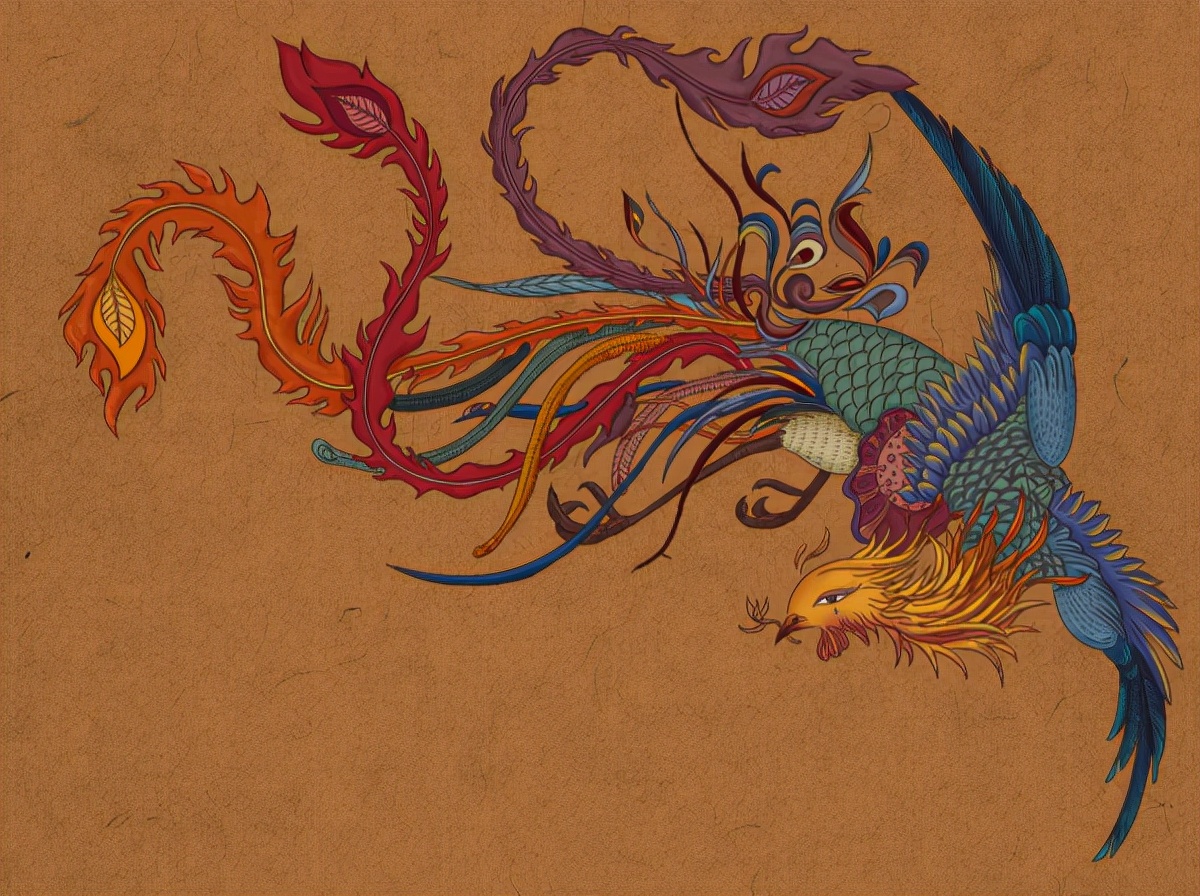
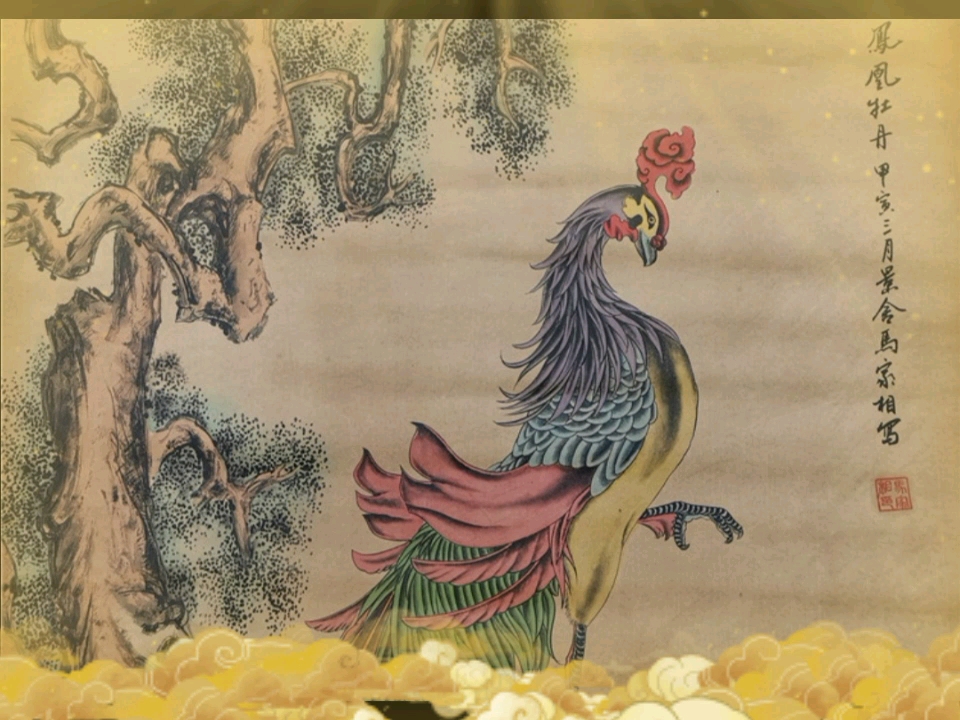
The Fenghuang is usually shown as an elegant bird with a prominent crest, graceful neck, layered wings, and long, flowing tail feathers. Its plumage may combine red, gold, green, blue, white, and black. In decorative art, the tail often curves around flowers, clouds, rocks, trees, or another sacred creature.
Some descriptions emphasize a hybrid body composed of parts associated with chickens, swallows, geese, cranes, peacocks, ducks, snakes, fish, tortoises, deer, dragons, or the auspicious qilin. The exact list changes from source to source. Claims that the Fenghuang must always contain one universally fixed set of animal parts simplify a much more varied tradition.
The five colors are especially important in many accounts. They indicate completeness and auspicious order rather than merely decorative brightness. In the Shanhaijing passage, the bird’s markings also carry moral language, making its visible body a map of virtue.
Fenghuang images may resemble pheasants, peacocks, cranes, or other long-tailed birds, but the creature is not one natural species. Its unusual anatomy connects physical beauty with moral and cosmic order.
What Does the Chinese Fenghuang Symbolize?
Virtue and moral character
Virtue is among the Fenghuang’s oldest and most persistent meanings. Early descriptions connect its bodily patterns with qualities such as benevolence, righteousness, proper conduct, trust, and moral excellence. A Fenghuang therefore represents more than supernatural beauty. It embodies disciplined and civilized power.
Its authority is expressed through balance, graceful conduct, and the order surrounding its appearance rather than through violence.
Peace, prosperity, and good government
The Fenghuang was said to appear in an age of peace or under the rule of a worthy sovereign. Its arrival could therefore be interpreted as an auspicious omen confirming that government, society, and the larger natural order were in harmony.
This was symbolic political language rather than evidence of an unknown bird species. Fenghuang reports and images could praise a ruler, express hopes for stability, or portray an ideal relationship between Heaven and society.
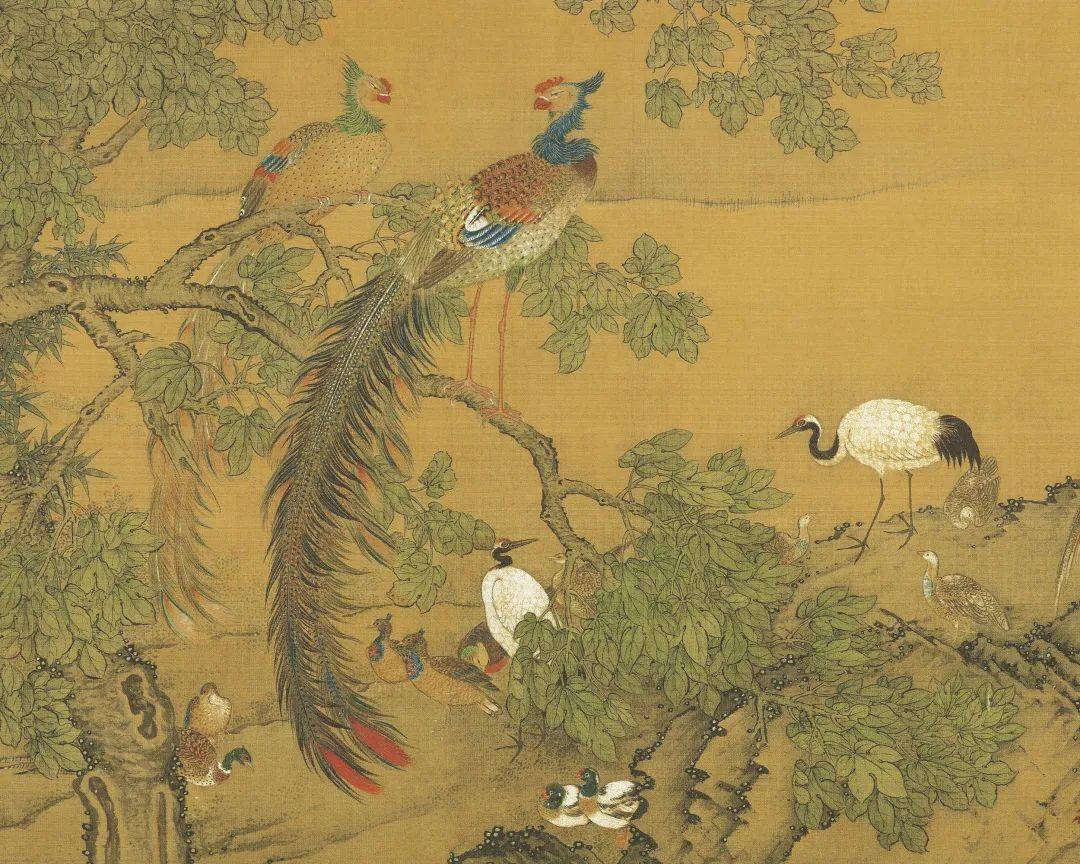
The decorative theme “A Hundred Birds Paying Homage to the Fenghuang” shows the sacred bird surrounded by many other birds. The Palace Museum explains this motif as a symbol of a wise and virtuous ruler and of hopes for a harmonious, prosperous era.
Nobility, talent, and high status
Because the Fenghuang was regarded as the ruler or noblest of birds, it could represent exceptional character, refined talent, dignity, and high rank. Imperial workshops used Fenghuang motifs on textiles, ceramics, furniture, architectural decoration, and personal ornaments.
Its interpretation depended on the period, object, owner, accompanying motifs, and setting. An imperial tapestry, bridal textile, temple carving, and modern print can therefore communicate different messages.
Beauty and feminine grace
Later art frequently connected the Fenghuang with feminine elegance, beauty, and virtue. Phoenix crowns and Fenghuang ornaments became prominent features of elite women’s ceremonial imagery. In imperial contexts, the bird was especially associated with the empress and other high-ranking women.
This later feminine symbolism should not erase the older male-and-female explanation of the name or the bird’s broader role as an omen of moral and political harmony.
What Do the Dragon and Fenghuang Mean Together?
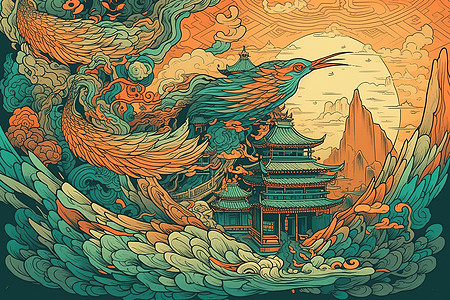
The dragon and Fenghuang form one of the best-known pairings in Chinese decorative culture. In later imperial imagery, the dragon could represent the emperor while the Fenghuang represented the empress. Together they expressed complementary authority and an ideally ordered court.
In wedding art, clothing, jewelry, furniture, and household decoration, the pair can symbolize marital harmony, balanced partnership, prosperity, and happiness. The dragon is often visually active and powerful, while the Fenghuang appears graceful and splendid. Their combination creates a complementary rather than competitive relationship.
The pair is often explained as male-and-female or yin-yang balance, especially in modern wedding culture, but earlier tomb art, court objects, and ritual designs require their own historical context.
The dragon also has a much broader independent history involving rain, water, transformation, political power, and cultural identity. These meanings are examined separately in the guide to Chinese dragon meaning and symbolism.
Fenghuang in Chinese Art and Decorative Motifs
Fenghuang designs appear across Chinese painting, embroidery, silk weaving, lacquerware, ceramics, metalwork, architecture, jewelry, and court dress. The bird is usually recognizable through its crest, long tail, layered wings, and controlled, elegant posture.
Its meaning often depends on the motifs around it:
- Fenghuang and dragon: imperial partnership, complementary authority, or marital harmony.
- Fenghuang and peony: splendor, prosperity, high status, and good fortune.
- Two Fenghuang birds: harmony, companionship, or a fortunate union, depending on context.
- Fenghuang among many birds: a wise leader, social order, peace, and collective prosperity.
- Fenghuang in a garden: cultivated beauty, refinement, peace, and an idealized natural world.
The Metropolitan Museum of Art describes the Fenghuang as the noblest of feathered species and notes that it was said to appear in times of peace and prosperity. This association helps explain why Fenghuang imagery was suitable for imperial commissions: it could praise the ruler, celebrate stability, and turn an object into a visual wish for continuing order.
Common Misunderstandings About the Fenghuang
The Fenghuang always rises from ashes
This is the most common misconception. Rebirth from fire is central to the familiar Western phoenix but not to the major early Chinese descriptions of the Fenghuang. Fire and resurrection powers found in modern fantasy are usually later creative combinations.
The Fenghuang is always female
Not in every source or period. Traditional explanations sometimes distinguish a male feng and female huang. The combined bird later acquired strong feminine associations, particularly when paired with the imperial dragon.
The Fenghuang is the same as the Vermilion Bird
The Fenghuang and the Vermilion Bird, or Zhūquè (朱雀), can look similar and have sometimes influenced one another in later visual culture, but they are conceptually distinct. The Vermilion Bird belongs to the Four Symbols associated with the southern sky, whereas the Fenghuang is principally an auspicious bird of virtue, harmony, and noble rule.
The Fenghuang is a single god
The Fenghuang is usually better classified as a mythological and symbolic creature than as one universally worshipped deity with a fixed personality, biography, temple system, and doctrine. It may appear in religious art or accompany divine figures, but that does not make every Fenghuang image a portrait of the same god.
Every Fenghuang has one fixed appearance
Descriptions and artistic forms changed over centuries. Some examples resemble pheasants, others peacocks or cranes, and many combine several animals. The cultural meaning is generally more consistent than the anatomy.
Fenghuang in Modern Culture
The Fenghuang remains visible in wedding decoration, jewelry, architecture, clothing, company names, public sculpture, fiction, animation, television dramas, and video games. Modern images often emphasize transformation, personal strength, feminine power, or survival after hardship.
These interpretations do not all come directly from early mythology. Modern Fenghuang imagery may combine classical Chinese symbolism, the Western phoenix’s rebirth narrative, contemporary empowerment themes, and fantasy entertainment. Distinguishing these layers prevents recent fictional abilities from being presented as timeless tradition.
Frequently Asked Questions
What does the Chinese Fenghuang symbolize?
The Fenghuang commonly symbolizes virtue, harmony, peace, prosperity, noble authority, and auspicious government. In later art, it can also represent the empress, feminine grace, marital happiness, and high social status.
Is the Fenghuang the same as a phoenix?
“Phoenix” is the usual English translation, but the traditions are not identical. The Fenghuang is primarily associated with virtue and harmonious order, while the Western phoenix is best known for death and renewal through fire.
Does the Chinese Fenghuang rise from ashes?
Not in the major early Chinese descriptions. The ashes-and-rebirth story belongs mainly to Western phoenix traditions and has often been added to Fenghuang characters in modern fantasy.
Is the Fenghuang male or female?
Traditional lexical sources sometimes identify feng as male and huang as female. Over time, Fenghuang became a compound name, and later imperial art frequently treated the bird as feminine when paired with a masculine dragon.
What do a dragon and Fenghuang symbolize together?
The pairing can represent the emperor and empress, complementary authority, marital harmony, prosperity, and an auspicious union. The intended meaning depends on whether the image appears in court art, a wedding object, a tomb, or modern decoration.
Is the Fenghuang a god or a mythical creature?
It is generally classified as an auspicious mythical creature and cultural symbol rather than one fixed god. It can appear in religious settings, but it also belongs to court art, literature, moral symbolism, and decorative culture.
Why the Fenghuang Still Matters
The Fenghuang remains powerful because it presents greatness without making violence its defining quality. Its beauty is tied to moral character, its authority to harmony, and its appearance to hopes for a peaceful and well-ordered world.
The bird also shows how Chinese mythical creatures can function as ethical, political, and artistic symbols rather than merely as characters in adventure stories.
Readers can continue through the broader Chinese mythical creatures directory or explore how these symbols appear within wider Chinese legends and stories.
References and Further Reading
- Chinese Text Project, Classic of Mountains and Seas: Classic of the Southern Mountains.
- Chinese Text Project, Shuowen Jiezi: Bird Radical.
- The Palace Museum, “An Extensive Search for Auspicious Motifs.”
- The Metropolitan Museum of Art, “Panel with Five Phoenixes in a Garden.”
- The Metropolitan Museum of Art, “Phoenix (Fenghuang).”
- Richard E. Strassberg, A Chinese Bestiary: Strange Creatures from the Guideways Through Mountains and Seas, University of California Press, 2002.
- Anne Birrell, Chinese Mythology: An Introduction, Johns Hopkins University Press, 1993.