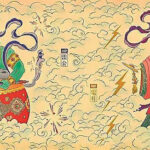
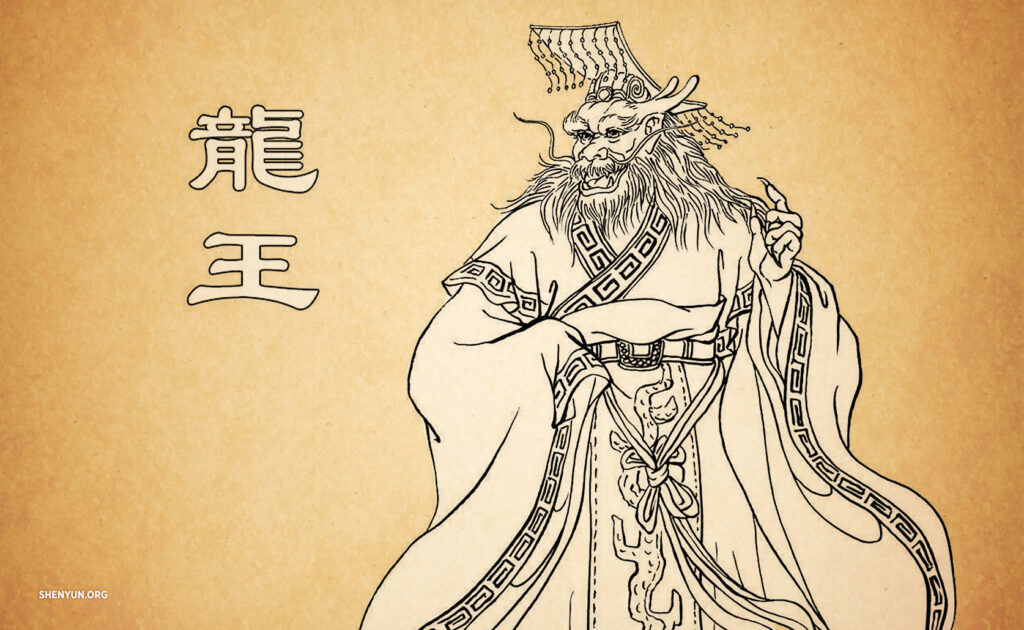
chinese dragon king
How the Dragon King Emerged from the Waves:Some two millennia ago, communities across China began venerating a mythical creature as the sovereign of waters, invoking it for rainfall and protection.
Among the twelve animals of the Chinese zodiac, the dragon—also rendered as loong—is uniquely absent from the natural world. Its inclusion underscores the creature’s exceptional cultural prestige, although its more explicitly divine attributes are less widely recognized.
In early Chinese mythology, the dragon functioned as a potent bringer of rain. During the Han dynasty (202 B.C.–220 A.D.), clay effigies of dragons were fashioned for ritual supplications seeking precipitation. Over time, these localized practices converged with the Buddhist conception of the Dragon King, whom communities came to venerate as the God of Water, gradually supplanting the earlier river deity Hebo, lord of the Yellow River.
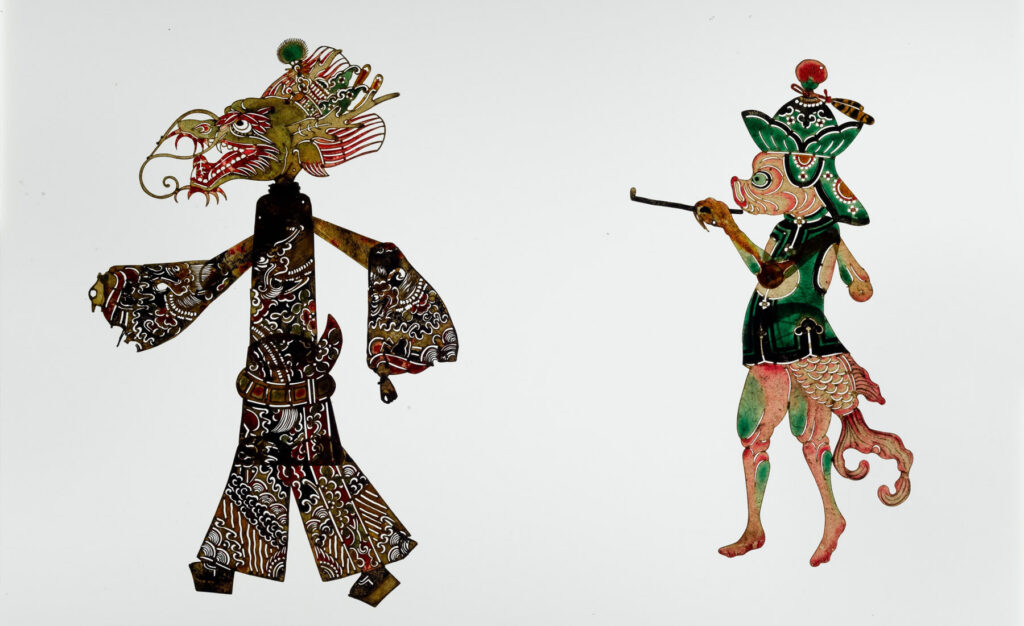
By the Tang dynasty (618–907), offerings to the Dragon King had been incorporated into state-sponsored ritual observances conducted by imperial authorities, and the practice disseminated rapidly across the Central Plains.
Overview
In Chinese mythology, Longwang (龍王) lords over the seas and is known as the “Dragon King.” He is a fearsome guardian deity who controls all dragons, sea creatures, the oceans, and the weather. Although he has a temper, Longwang is seen as a symbol of good fortune and the mythological embodiment of the concept of yang. He is most popular among Chinese coastal communities.
Etymology
Longwang’s name is comprised of the Chinese characters for “dragon,” lóng (龍), and “king,” wáng (王). He is sometimes referred to as Sìhǎi Lóngwáng (四海龍王), meaning the “Dragon King of the Four Seas” or simply as Lóngshén (龍神), or “Dragon God.”
Attributes
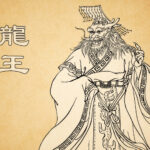
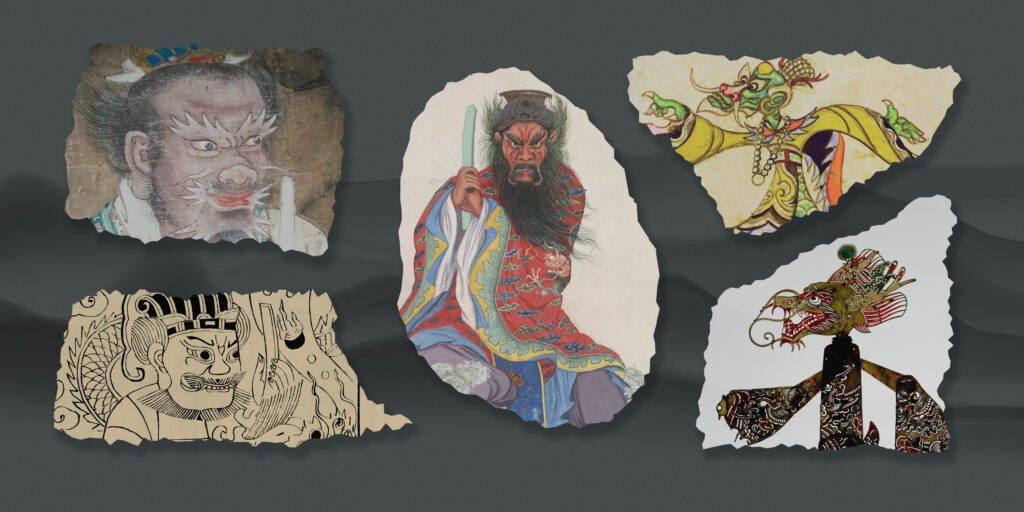
Longwang has two forms: his zoomorphic dragon form and his fierce, warrior lord, human persona. As the latter, Longwang dresses in elaborate royal robes and has blazing red skin, signifying his ferocity. In his animal form, Longwang’s scale color varies based on the artist, but he is typically drawn in the Chinese-dragon style with a serpentine body, sharp horns, a hair-like beard, and large claws. In ancient texts, Longwang is described as having the “head of a horse and the tail of a snake, with wings on its sides.”
Family
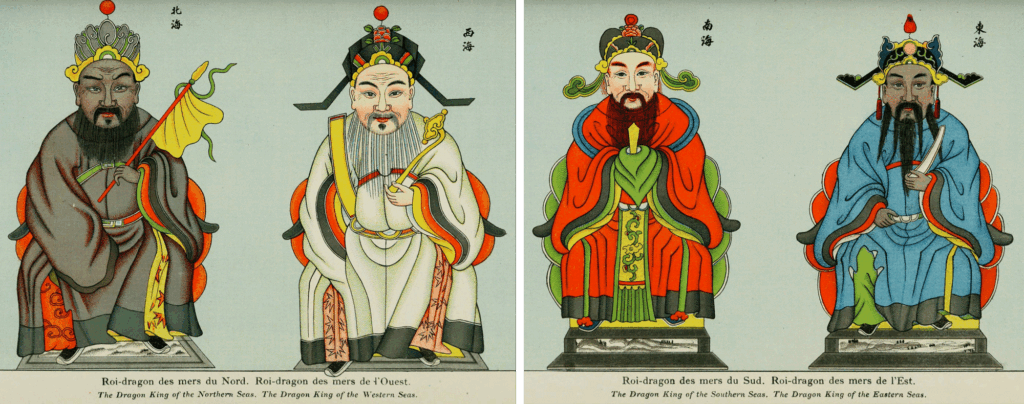
Longwang has four brothers who presides over the Northern, Eastern, Southern, and Western seas. Áo Guǎng (敖廣) rules the Eastern Sea; Áo Qīn (敖欽) controls the South Sea; Áo Rùn (敖閏) governs the West Sea; and Ao Shun (敖順) lords over the North Sea. According to legends, Longwang has thousands of children, including the young girl, Sagara, who achieves buddhahood in The Lotus Sutra. He is still considered to be the symbolic father of all the early Chinese emperors.
Legend holds that the Dragon King governs all marine life, commanding retinues of shrimps and crabs while exercising dominion over terrestrial weather. Yet the figure is not singular but plural: wherever water exists—whether lake, river, sea, or spring—there resides a Dragon King. Foremost among them are the Dragon Kings of the Four Seas, immortalized in the Chinese classic Journey to the West as Ao Guang of the East Sea, Ao Qin of the South Sea, Ao Shun of the North Sea, and Ao Run of the West Sea.
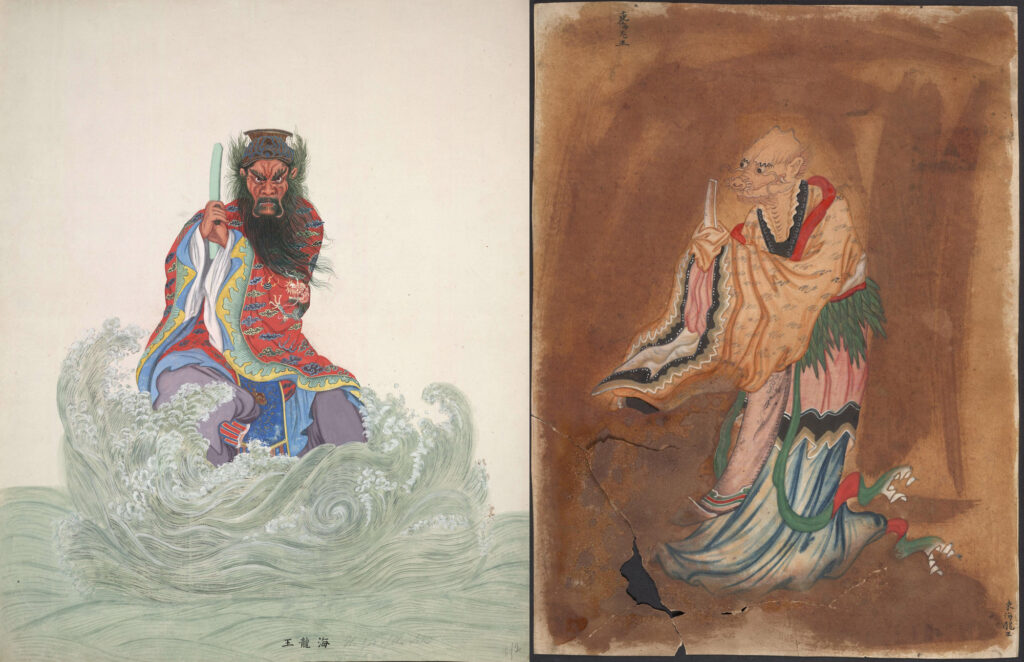
In coastal regions, fishermen offered sacrifices to the Dragon King to secure abundant catches. Inland, farmers performed similar rites in the hope of summoning timely rains during the planting season, thereby ensuring a favorable harvest.
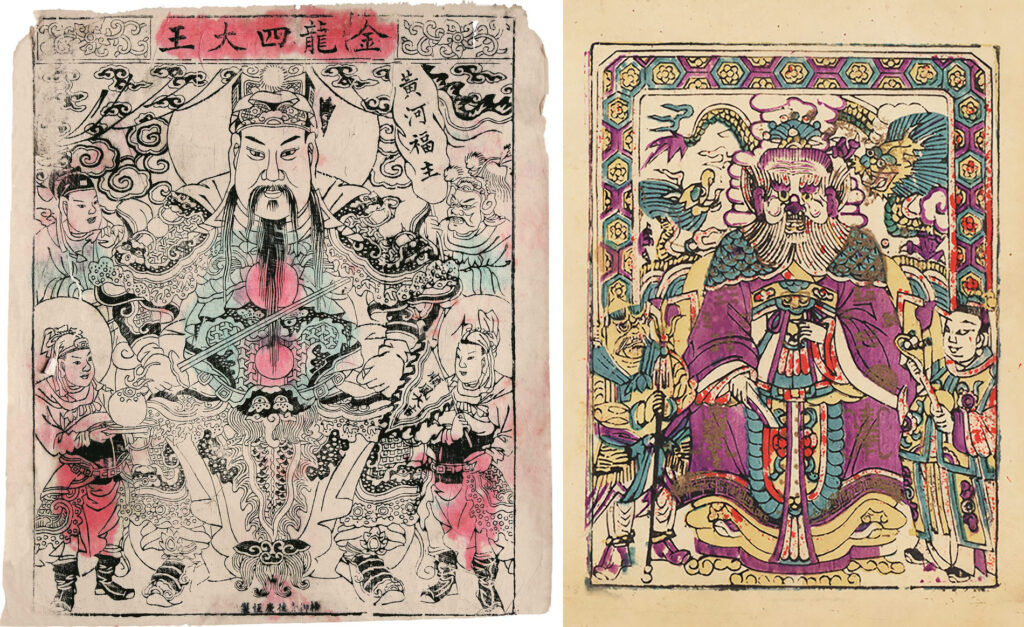
Certain Dragon Kings bore specialized responsibilities. The Golden Dragon King, regarded as the protector of ships, was venerated primarily along the lower reaches of the Yellow River and the north–south Grand Canal. Folklore traces this deity to a virtuous man named Xie Xu, who, during the Southern Song dynasty (1127–1279), is said to have transformed into a dragon to avert catastrophe when the Yellow River overflowed its banks.
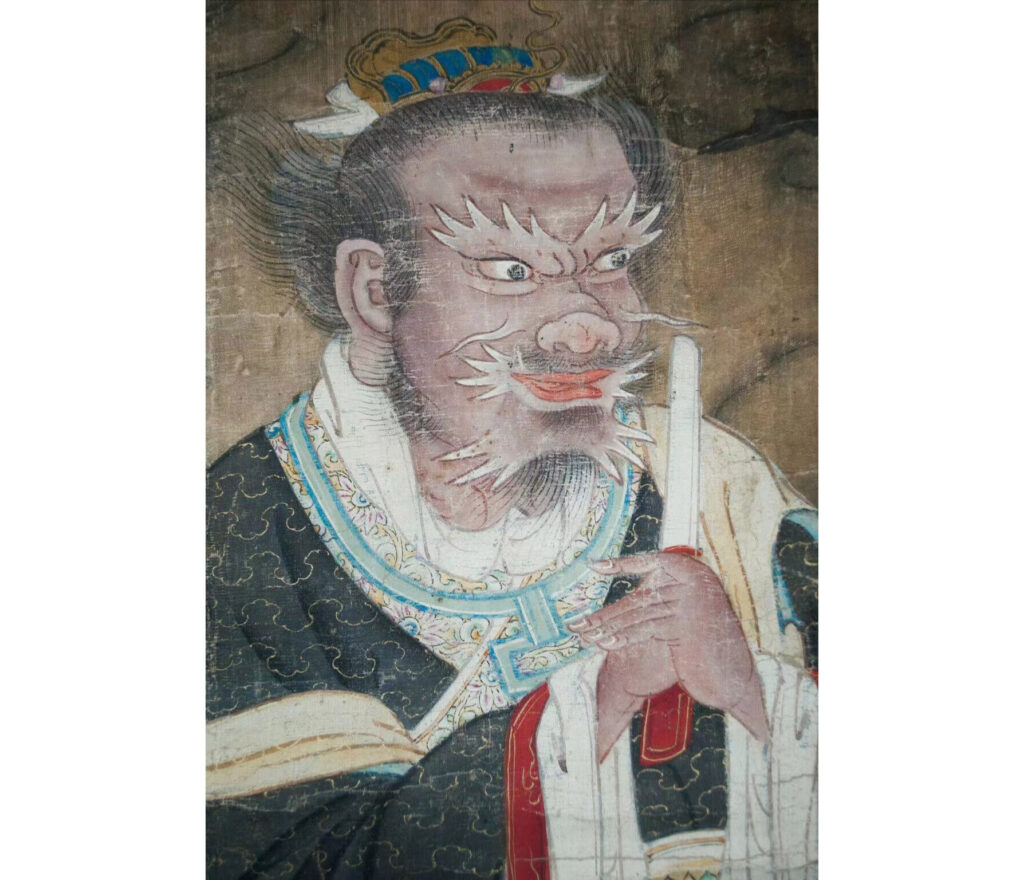
The central stretch of the Grand Canal was also associated with the Water-Dividing Dragon King. This figure emerged during the Ming dynasty (1368–1644), amid a major hydraulic project that redirected water from the Wen River—now the Dawen River in present-day Shandong province—to stabilize canal levels and maintain reliable transport. Although the undertaking represented a triumph of human engineering, local communities believed divine oversight was required to regulate its daily functioning.
Even wells and mountain springs were thought to possess their own Dragon Kings. Despite their limited jurisdictions, these localized deities were regarded by villagers as essential guardians of plentiful and uncontaminated water supplies.
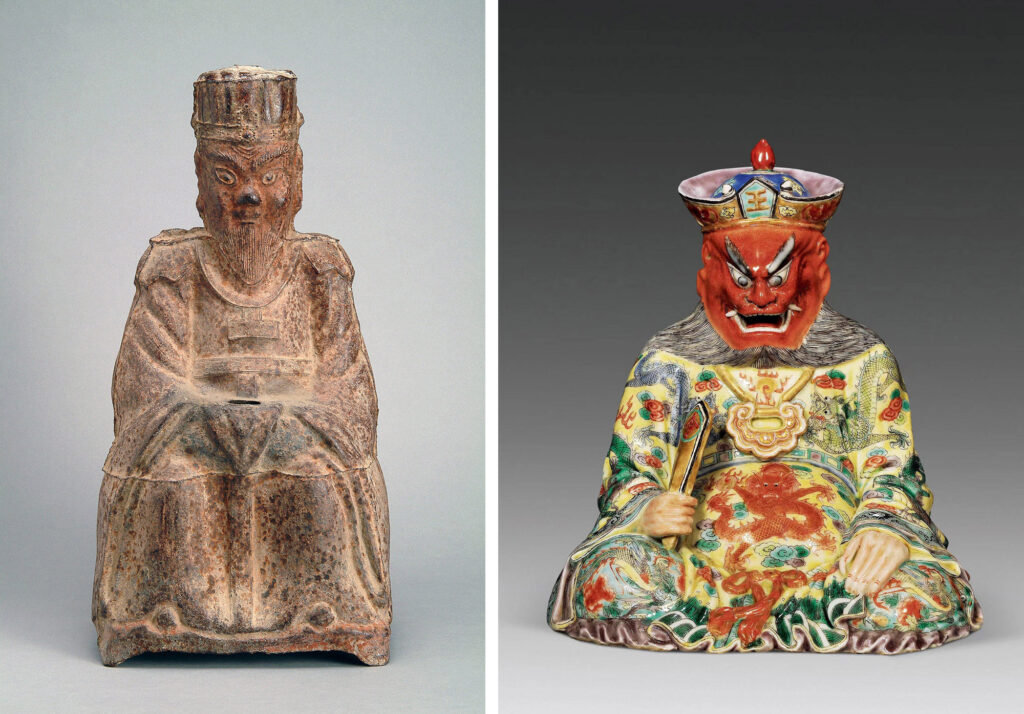
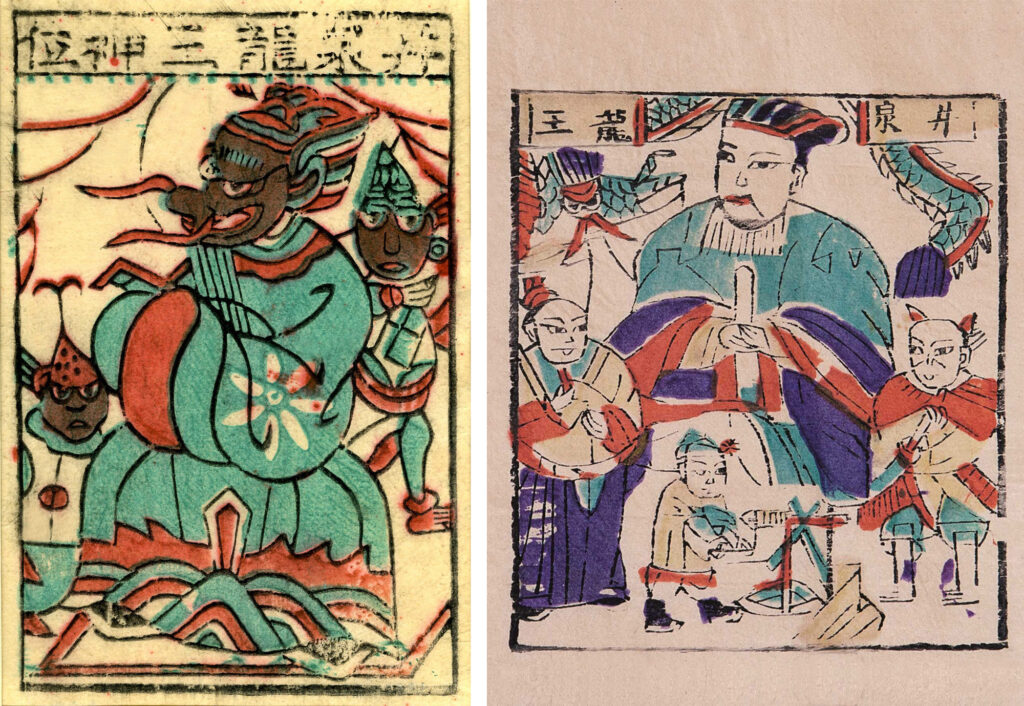
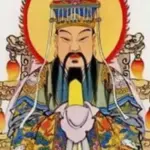
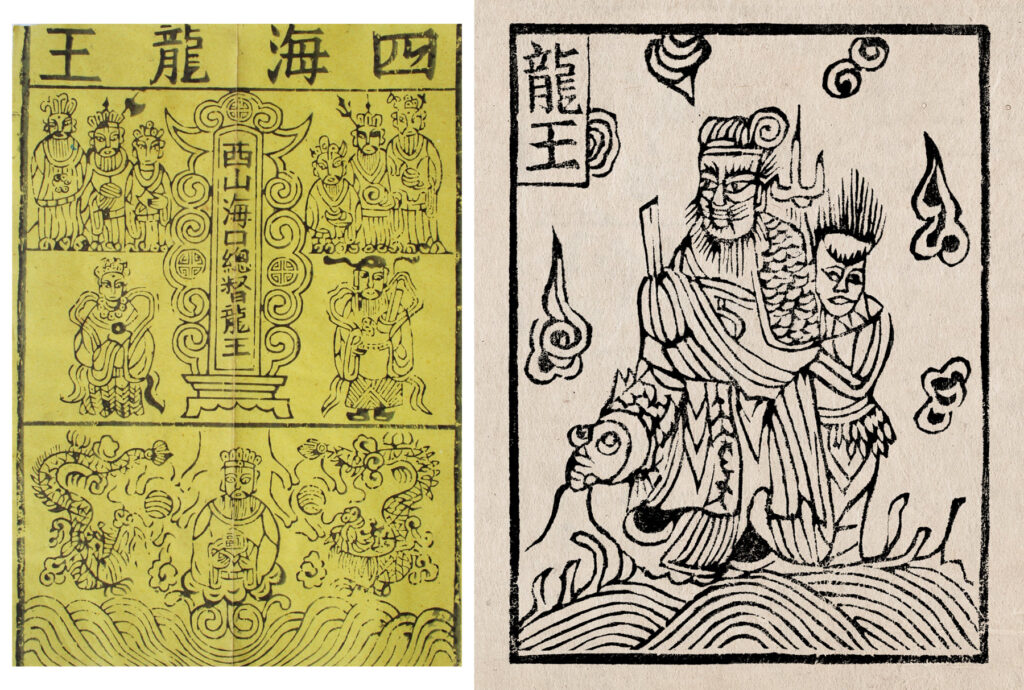
Through woodblock printing techniques known as zhima, artists frequently portrayed the Dragon King wearing a crown and flowing robes, holding an ivory tablet or ceremonial objects reminiscent of earthly sovereignty. Yet his visage remained distinctly draconic—fanged, mouth agape, eyes wide and penetrating. Surrounding him were nature spirits, including the Buddhist yaksha, assisting in the administration of his aquatic palace.
In some depictions, the deity appears in human guise, resembling an imperial official, though occasionally mounted upon a dragon, thereby revealing his supernatural identity. Other images render him serpentine, with exposed fangs and sharp claws, leaping from the waves to assert dominion over his realm. These zhima prints were burned as offerings, hung within ship cabins, displayed in homes, or placed near wells and water vessels as invocations of protection.
The sanctified character attributed to dragons in ancient mythology reflects the profound dependence of traditional Chinese agrarian societies on water for survival. Even today, devotion to the Dragon King persists, as individuals continue to offer tribute in hopes of summoning rain or ensuring safe passage across water.
Dragon Kings of Mythistory
Ancient China was a land where gods and mortals lived in tandem and created a divinely inspired culture. And so it became that early Chinese history and mythology are wholly intertwined. Our new “Mythistory” series introduces you to the main characters of the marvelous legends of China.
Dragons. In Chinese lore they come in all shapes and sizes. They can be benevolent or evil. They soar to the highest heavens and dive deep to the bottom of the sea. They play with phoenix and with pearls. They are symbols of wisdom, of the emperor, and of realms beyond the mortal world.
The benign dragons of China are sacred creatures with the characteristics of nine animals. They also possess a huge range of supernatural abilities: They are manipulators of water, fire, wind, and ice; triphibians; shape-shifters; cloud-breathers; and more.
And, as we’re about to see, those who are dragon kings have legions of prawn soldiers, crab generals, tortoises, and carps under their command.
Dragon Kings 101
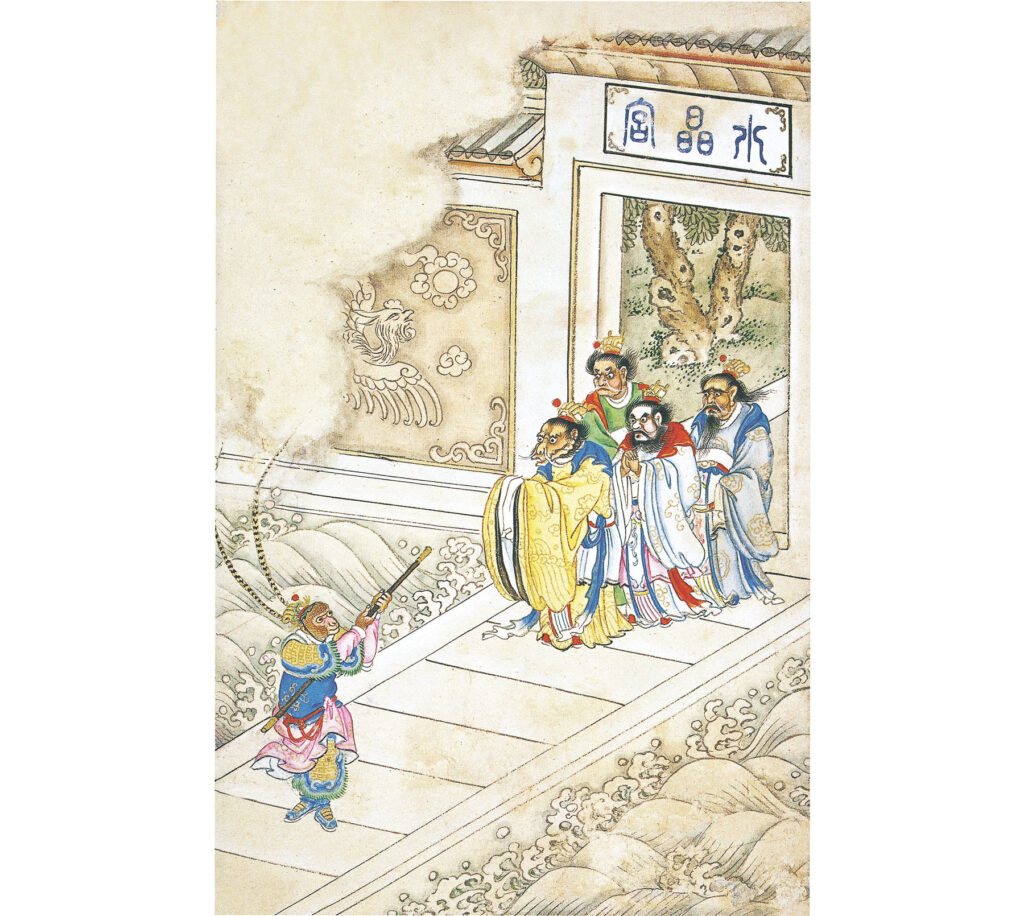
Every single body of water—from the greatest ocean to the tiniest stream, cascade, or even well—is under the jurisdiction of a dragon. Legend has it that the Goddess of Creation (Nü Wa) tasked four dragons with administering the Four Seas surrounding the Eastern Continent. Ever since, these Dragon Kings have held court in grand Crystal Palaces on the ocean floor.
Crystal Palaces are fashioned after their imperial counterparts on land but with exotic underwater features: Grand gates of agate reveal a translucent crystal complex, rainbow clamshell shingles tile sloping roofs, and bas-relief dragons coil around pearl-inlaid pillars. His Highness of the Deep rules from a jadeite throne ornamented with glittering gems galore. Throughout the complex, abalone-paved paths lead to pink coral gardens and luxuriant seaweed lawns are always flowing with the sea currents.
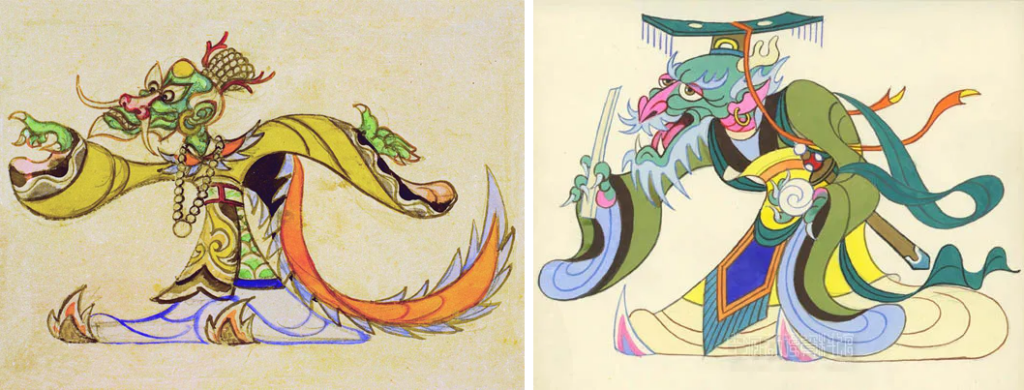
The Dragon Kings of the East, South, West, and North seas usually appear as dragon-headed humanoids decked in regal attire. They’re the protectors of their respective underwater domains and all its creatures. With instructions from the Jade Emperor of the heavens, they control the weather and rainfall for the surrounding lands.
Many historical texts speak of these Dragon Kings. The most popular stories come from Investiture of the Gods and Journey to the West.
By the Books
Throughout the years, episodes from these sagas have appeared as Shen Yun dance programs. But the complete stories contain more details and curiosities than could fit in any dance drama. And the best part? Every anecdote comes from China’s divinely inspired mythistory, and connects into one marvelous tale encompassing heavens, earth, and sea.
Beyond the Stage
Shen Yun 2016’s Monkey King and the Dragon Palace featured the Dragon King of the East Sea. Monkey King, our playful protagonist, is in search of a special weapon. An elder monkey tells him the East Sea Dragon Palace might have one. Monkey dives down under, makes a ruckus in the palace, and helps himself to a magical 13,500-pound staff. He then skedaddles and heads back to his cave, hidden behind a waterfall curtain on Flower-Fruit Mountain.
End of story, right? Not quite. In the unabridged version, Monkey is not yet satisfied. After procuring the perfect weapon, he has the audacity to further demand a dapper outfit to match. Badgered to no end, the Dragon King sounds bells and drums to summon his kingly brothers from their respective seas. Together, they furnish Monkey with a suit of golden chainmail, a phoenix-winged helmet, and lotus cloud-walking boots. Deluxe and snazzy. Only then does the impish ape clear out.
This is same Dragon King of the East who Ne Zha fights in Shen Yun 2014’s
Ne Zha Churns the Sea.
A Fourth Disciple
Shen Yun’s How the Monkey King Came to Be, Monkey Captures Pigsy, and Sand Monk Is Blessed all tell the stories of how three motley disciples are recruited to accompany Tang Monk on his sacred journey. But in the classic novel they have the help of another creature: the White Dragon Horse.
When the Goddess of Mercy is recruiting guardians for the Tang Monk, she chances upon a dragon doomed to execution—the third son of the Dragon King of the West Sea who accidentally destroyed his father’s invaluable pearl.
The goddess contracts this cheerless chap as a horse for the monk, promising him his freedom and original form at the trip’s end. In the final chapter, the princely steed gets to take a dip in the Dragon Transforming Pool. He regains his horns, gold scales, and silver whiskers, and receives a nifty title too.
Rescued by the King of Ice
After they are on friendly terms with Monkey, Monk, and co., the Dragon Kings come to the pilgrims’ rescue several times. In one episode, the foursome are captured by monsters on Lion Mountain and stuffed into a jumbo steamer. (Holy dim sum!) Because one taste of the Tang Monk’s flesh grants immortality, along the route almost every malevolent creature is greedy for a bite.
Fortunately, Monkey manages to summon the Dragon King of the North Sea—lord of ice and snow. Flying in on a magical cloud, the king morphs into a freezing wind to insulate the monks from the cooking fires; sparing them (once again) from becoming a demons’ feast… at least until they encounter the next tribulation on their westward journey.
The Aftermath of Churning the Sea
Shen Yun 2014’s dance drama Ne Zha Churns the Sea is based on one of the 100-plus stories from the classic Investiture of the Gods. After some twists in the plot, the curtain closes on Ne Zha slaying the evil dragon, who happens to be the son of the Dragon King of the East Sea.
But the tale continues: the Dragon King and his brothers threaten to flood Ne Zha’s town. They also bring their grievances to the Jade Emperor’s celestial court to demand for amends from Ne Zha’s family. Conscious stricken, the super-boy sacrifices his own body to save everyone. Affected by Ne Zha’s filial piety, the Dragon King forgoes his vengeance and returns to his Crystal Palace.
It doesn’t end there. In time, a Taoist master resurrects Ne Zha from the essence of lotuses and makes this boy even more super.
The dragons and Ne Zha have plenty more adventures with the countless characters from China’s marvelous Mythistory. We will discover more of these colorful heroes next month.