When people search for the Chinese god of wealth name, the answer most commonly given is Caishen. In Chinese culture, Caishen is one of the most beloved deities, widely honored as the god of wealth, prosperity, and good fortune. For centuries, merchants, families, and worshippers from many walks of life have prayed to him for abundance, success, and financial security.
Caishen is much more than a symbol of money. He represents the traditional Chinese hope for a life of prosperity, stability, and blessing. His image appears in homes, shops, temples, and festive decorations, especially during the Lunar New Year, when people welcome him with incense, offerings, and auspicious greetings.
Who Is the Chinese God of Wealth?
The most widely recognized Chinese god of wealth name is Caishen (also spelled Cai Shen). In Chinese religion and folklore, he is believed to bless his devotees with riches, prosperity, and commercial success. Because of this, he holds a special place in both everyday life and seasonal celebrations.
Caishen is especially popular among merchants and business owners. In traditional Chinese communities, it is common to find his image displayed in stores or workshops, where incense and candles may be offered daily in hopes of attracting fortune and warding off poverty.
In the broader Chinese spiritual tradition, the heavenly world is often imagined as an organized celestial bureaucracy, with different deities overseeing different aspects of life. Within this divine order, Caishen is regarded as the head of the Ministry of Wealth, assisted by attendants who help distribute fortune and abundance.
What Does the Name Caishen Mean?
The name Caishen literally means “God of Wealth” or “Wealth Deity” in Chinese. This is why the term appears so frequently in articles about Chinese mythology, religion, and New Year traditions.
He is sometimes known by other names or titles, and in some traditions he is linked with historical or legendary figures who were later deified. Two of the most famous figures associated with Caishen are Zhao Gongming and Bi Gan.
The Origin of Caishen
Like many figures in mythology, Caishen does not have just one fixed origin story. Instead, different traditions identify him with different individuals.
Caishen as Zhao Gongming
One of the most popular stories connects Caishen with Zhao Gongming, a legendary figure associated with the fall of the Shang dynasty. In later tradition, he was remembered as a powerful and heroic man with supernatural abilities. According to myth, after his death he was honored and canonized as the god of wealth because of his virtue and valor.
This version of the story became especially influential through Chinese mythological literature, where Zhao Gongming was transformed from a historical or legendary warrior into a divine figure presiding over wealth and prosperity.
Caishen as Bi Gan
Another tradition identifies Caishen as Bi Gan, a loyal and upright official related to the last ruler of the Shang dynasty. Bi Gan was said to have criticized the ruler’s immoral behavior and paid for his honesty with his life. Because of his integrity and sacrifice, he was later revered and elevated to divine status.
In this interpretation, Caishen is not only a bringer of wealth but also a moral figure, suggesting that prosperity should be linked with virtue, wisdom, and righteousness.
How Is Caishen Depicted?
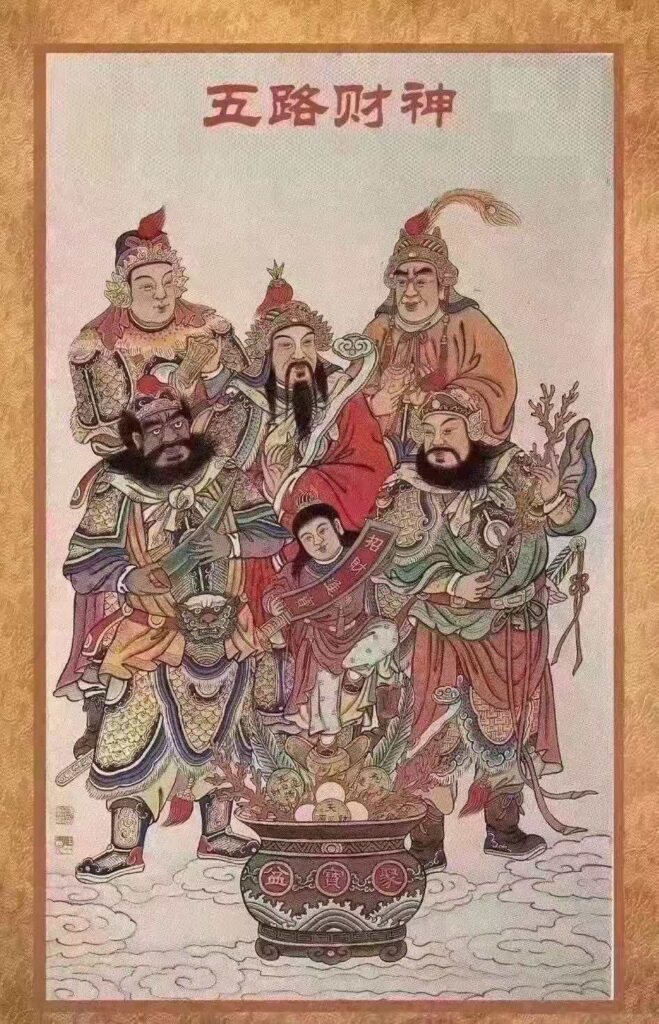
Caishen is often shown in striking and highly symbolic imagery. These visual elements help explain why he remains so recognizable in Chinese art and folk religion.
He is commonly portrayed:
- wearing a red robe, a color associated with luck, happiness, and prosperity
- holding a gold or silver ingot, symbolizing wealth and treasure
- riding a black tiger, which emphasizes power and protection
- standing near a money tree, whose branches are filled with coins and ingots rather than fruit
In some images, Caishen is accompanied by attendants carrying objects connected with abundance and auspicious fortune. In others, he may appear as either a civil god of wealth or a military god of wealth, reflecting different aspects of blessing, authority, and protection.
These rich symbolic details make Caishen one of the most visually distinctive figures in Chinese mythology.
Why Is Caishen Important During Chinese New Year?
Caishen becomes especially significant during Chinese New Year. During this festive period, many families and businesses welcome the god of wealth into their homes or premises in the hope of attracting prosperity for the year ahead.
On this occasion, people may:
- burn incense at temples dedicated to Caishen
- display his image in homes and shops
- offer prayers for luck, money, and success
- exchange the auspicious greeting “Gongxi facai”, meaning “May you become rich”
The fifth day of the first lunar month is particularly associated with Caishen and is traditionally regarded as an important day for honoring him. Rituals, offerings, and celebrations on this day reflect the enduring belief that fortune can be invited through reverence, sincerity, and auspicious timing.
Caishen in Chinese Culture Today
Although Caishen comes from ancient religious and mythological traditions, his influence remains strong in the modern world. He continues to appear in festival decorations, popular media, and even video games, showing how deeply rooted he is in Chinese cultural imagination.
His popularity also reflects a universal human wish: the desire for security, abundance, and a better future. In that sense, Caishen is not just a religious figure but also a cultural symbol of hope and prosperity.
For many people, honoring Caishen is not merely about wealth in the narrow financial sense. It is also about inviting good luck, peace, success in business, and well-being for the whole family.
Is Caishen Worshipped Only in Taoism?
Caishen is most commonly associated with Chinese folk religion and Taoist tradition, but his appeal extends beyond one single religious system. Over time, he has also been respected in Confucian cultural practice and even venerated in some Buddhist contexts.
This broad acceptance helps explain why Caishen became such a familiar and beloved figure across different communities. His role as the god of wealth made him accessible to ordinary people, especially those concerned with daily livelihood, trade, and family prosperity.
Conclusion
So, what is the Chinese god of wealth name? The answer is Caishen. He is one of the most important and widely recognized deities in Chinese mythology and religion, celebrated as the bringer of wealth, luck, and prosperity.
Whether identified with Zhao Gongming, Bi Gan, or a broader divine role within the celestial Ministry of Wealth, Caishen has remained a lasting symbol of abundance in Chinese culture. His importance during Chinese New Year, his rich visual symbolism, and his continued presence in modern life all show why he continues to be honored today.
For anyone exploring Chinese mythology, folklore, or traditional beliefs, Caishen offers a fascinating window into how prosperity, morality, ritual, and symbolism come together in one enduring figure.
FAQ
What is the Chinese god of wealth name?
The most common Chinese god of wealth name is Caishen, also written as Cai Shen.
Who is Caishen?
Caishen is the Chinese god of wealth, prosperity, and good fortune. He is widely worshipped in Chinese folk religion and is especially important during Chinese New Year.
Is Caishen based on a real person?
In different traditions, Caishen is associated with historical or legendary figures such as Zhao Gongming and Bi Gan.
Why do people worship Caishen?
People worship Caishen to pray for wealth, business success, good fortune, and financial stability.
When is Caishen honored?
Caishen is especially honored during Chinese New Year, particularly on the fifth day of the first lunar month.